"We Are Soldiers in the Army" Nonviolent Medicaid Army Songbook
November 13, 2026
Informed by historical research and organizing trips across the country, Jacob Butterly is creating a Nonviolent Medicaid Army Songbook, supported by the Leeway Foundation Residency for Media Artists & Activists. This major contribution to our network will be published through blog posts over Winter 2027, with the aim of a future print publication. Each piece includes history of the song, lyrics, and recordings so you can listen and learn how to teach and use these in your leadership!
By Jacob Butterly
Some songs emerge without much fanfare or history. We Are Soldiers is one such song, but it seems to have come out of the Baptist revival camps in the Reconstructionist South sometime in the late 1870s. The militancy of the time had joined with the popular religious revival of the era and set the stage for its birth. I like to imagine it being sung by Black and white Republicans who had served in the Civil War to secure the victory of the Movement to End Slavery as they fought to expand democracy and human rights. The tears were the result of the counter-revolution which quickly set the new law of the land - Wall Street and Jim Crow.
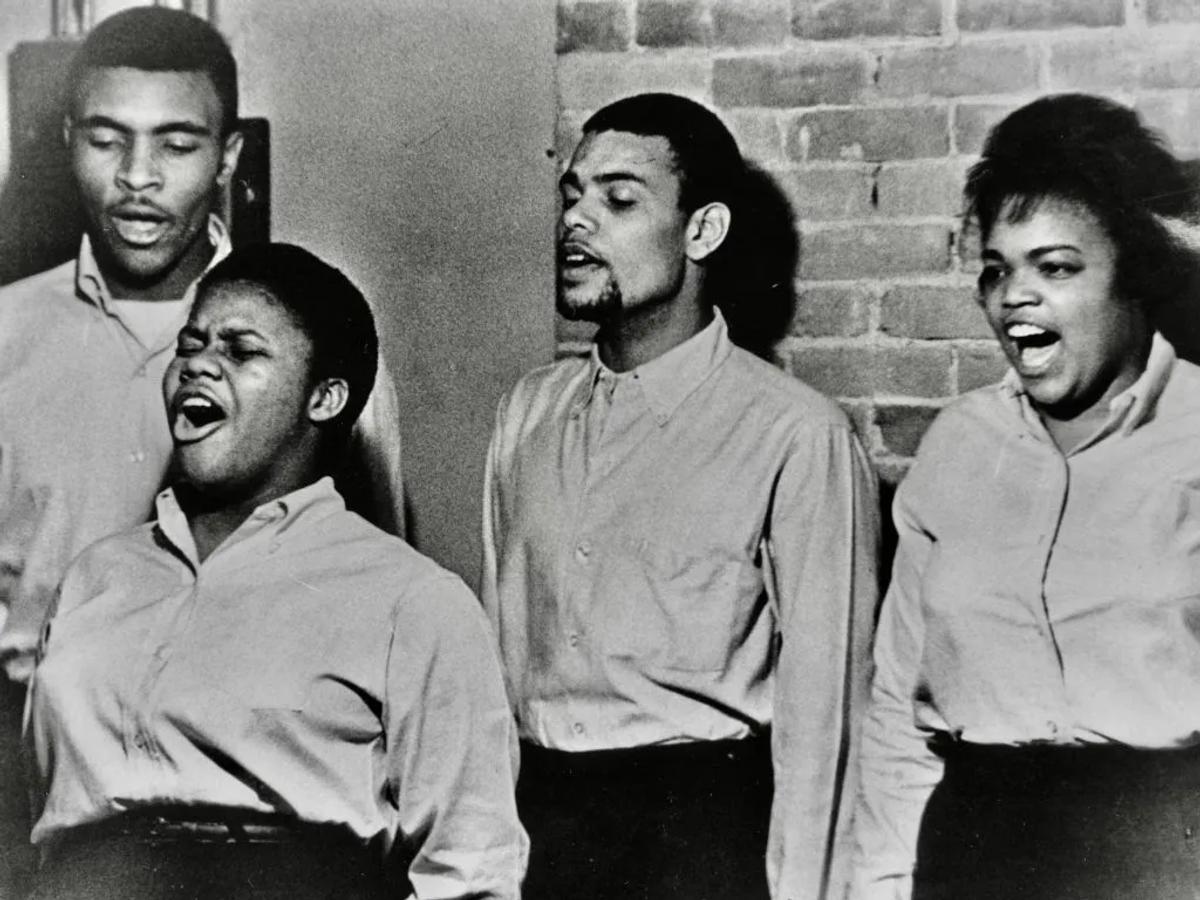
The song lived through the southern Baptist church for decades thereafter until the Civil Rights Movement. The Freedom Singers - composed of Cordell Reagon, Bernice Johnson (Reagon), Rutha Mae Harris and Charles Neblett - lifted the song along with a litany of other church staples for the movement. Rutha Mae recounted the importance of bringing the music out of the churches so the people would follow, “It was the only place we could congregate as blacks, were our churches…“
The quartet was a lightning rod for the burgeoning civil rights movement, which was taken under wing by Pete and Toshi Seeger. Cordell was close friends with the couple, who encouraged him to seriously start up the group. With the decades of relationships the Seegers had to offer and the ambition of SNCC leadership, the Freedom Singers were well provided with a network of supporters, safehouses, venues and demonstrations to hone their skills. A spiritual successor to the Underground Railroad, I wonder how many people felt they were one in an Army of justice.
After the Civil Rights movement, the song continued to live in churches and camps, and into the National Welfare Rights Organization then Union. It had its time in Resurrection City as well, where the burgeoning Nonviolent Army of the Poor rallied after the devastating loss of Dr. King. As the Nonviolent Medicaid Army, it fits as a great anthem for our efforts and is best used to temper our resolve and hold up our spirits. It gives us scope for what we’re rallying and building - an army commensurate with the time we are living in, capable of meeting the system which creates poverty amidst plenty.
As Marge Piercy puts it in the Low Road,
“But two people fighting
back to back can cut through
a mob, a snake-dancing file
can break a cordon, an army
can meet an army.
It goes on one at a time,
it starts when you care
to act, it starts when you do
it again and they said no,
it starts when you say We
and know who you mean,
and each day you mean one more.”
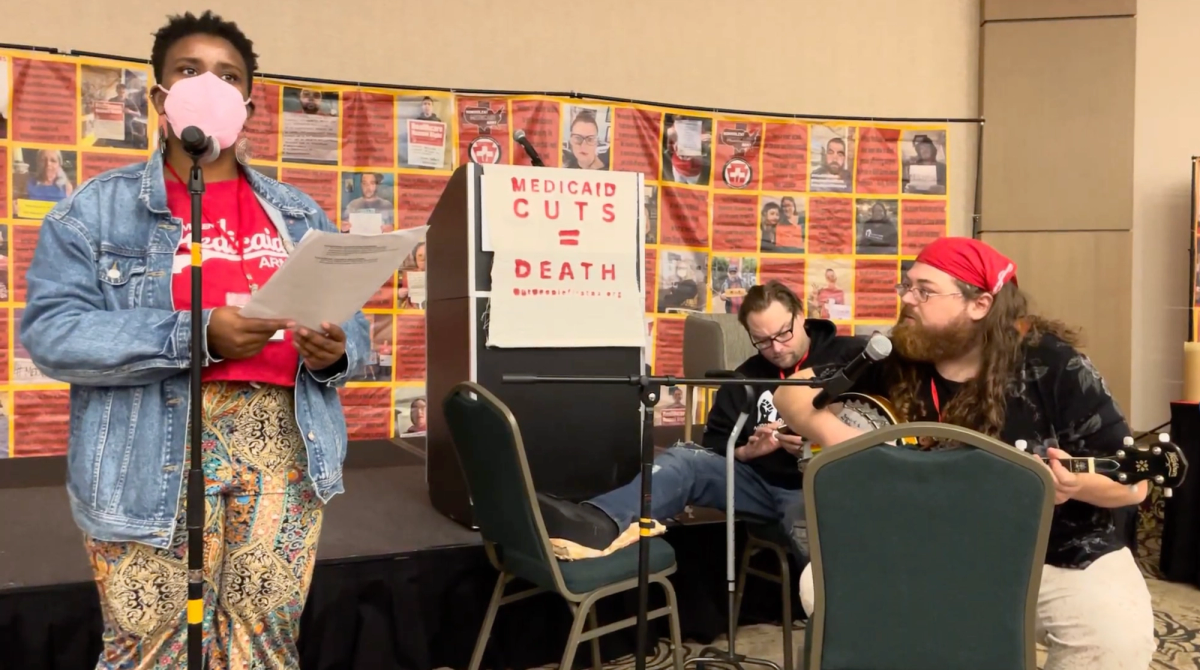
Audio recording of Briann Moye singing "We are Soldiers in the Army"
Lyrics in [brackets] are zippers that can be substituted for alternatives as you sing.
G - - D / - G - - / - - C - / G - D G
We are soldiers in the army,
We’ve got to fight, although we’ve got to cry
We’ve got to hold up the blood-stained banner
We’ve got to hold it up until we die
[My mother] was a soldier, [Mother, father, sister, brother, specific ancestor]
She had her hands on the [justice] plow, [gospel, freedom, etc]
One day she got [old], she couldn’t fight on any more [old, sick, lost, hurt]
She said, “I’ll stand here and fight anyhow!”
I'’m so glad that I'm a Soldier
I’ve got my hand on the justice Plow,
One day I'll get old, and can't fight anymore,
And I'll stand here and fight anyhow.
[Martin] was a soldier, [movement ancestor]
had his hand on the justice plow,
Said “I might not make it, but I’ll give my life
to fight on anyhow!”
Recordings:
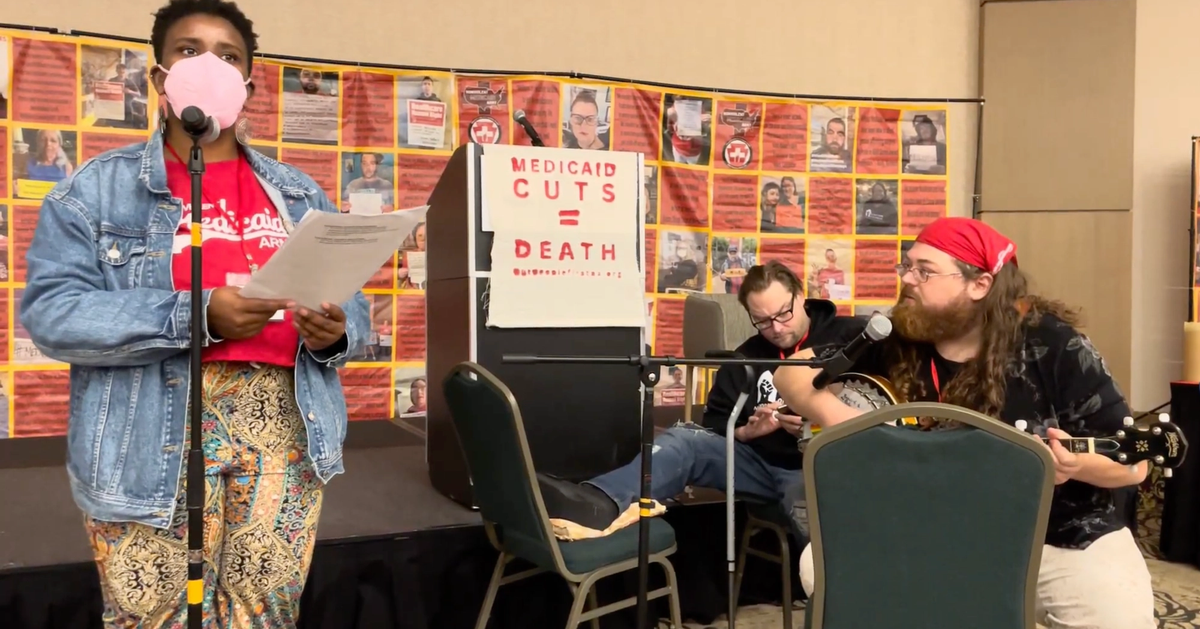
- Video of Nonviolent Medicaid Army Leaders Briann Moye and Jacob Butterly Singing "We Are Soldiers in the Army" at the Put People First! PA Membership Assembly
- Audio recording of Briann Moye singing "We are Soldiers in the Army"
- We are Soldiers in the Army by Freedom Singers
- We are Soldiers in the Army with lyrics sung in a traditional fashion in church
- We are Soldiers in the Army Pete Seeger singing it, good modeling for song-leading