News & updates
Blog
Stories, updates, and dispatches from the movement.
2026
29 posts
September E-news: Watch LIVE Saturday & Assembly Final Week to Register!
Join us Saturday, September 19th on the Capitol Steps in Harrisburg for "Hoops & Hurdles: The Medicaid Maze" — and register by September 25th for the 14th Annual Membership Assembly.
Read more →
August E-news 📣 Register TODAY! 📝 Mass Action for Medicaid & 14th Membership Assembly!
Mass Action for Medicaid! Pennsylvania On Saturday, September 19th in Harrisburg, join with people from across the state who are ON or EXCLUDED from Medicaid to be visible, bold, and unapologetic in uniting for our healthcare rights. We will publicly expose the impact of Medicaid cuts, work…
Read more → August E-news 📣 Art Build for Medicaid this Saturday!
Art Build: PA Mass Action for Medicaid Join Put People First! PA, the PA Poor People’s Campaign and the Nonviolent Medicaid Army in Pennsylvania on Saturday, August 15th from 12 – 3 pm at Christ Lutheran Church in Harrisburg as we create powerful art and visuals to prepare for our National Day of…
Read more →Register here for Upcoming Events!
Upcoming Events:
Read more →
July E-news 📣 Member Stories & Summer Highlights
Statewide Call: Our Hospitals are on Life Support Wednesday, July 15th from 7 – 8 PM ETEvery third Wednesday of the month from 7-8 pm ET, Put People First! PA, a statewide, member-led, staff-free organization holds our Statewide Membership Call. This call is for active members, mobilizers, and…
Read more →For Immediate Release: WE NEED OUR TEETH: Pennsylvanians Demand Restoration of Adult Dental Benefit Coverage Under Medicaid
FOR IMMEDIATE RELEASE: PRESS RELEASE Contact: Nijmie Dzurinko 814-205-3982; nijmied@gmail.com Jamie Blair 412-913-4308; jamiebokanblair@gmail.com On Monday, June 8 over 60 residents from across Pennsylvania converged on Harrisburg to demand, “We need our teeth!” Directly impacted Pennsylvanians…
Read more →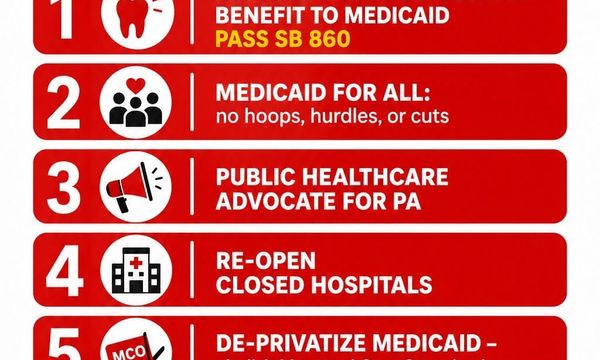
June E-News 📣 2 Ways to Take Action TODAY to Restore the Adult Dental Benefit to Medicaid
Two Ways to Join Crowd the Capitol from Home Today TODAY more than six dozen leaders from McKeesport to Montoursville, from Williamsport to West Norriton, from Jenkintown to Johnstown, from Berwick to Bethlehem, will come together in Harrisburg to declare WE NEED OUR TEETH. Pennsylvania plans to…
Read more → Call In to Crowd the Capitol for Dental Care MONDAY, 6/8!
Join our Advocacy Day on Monday, June 8th, demanding the Senate pass SB 860 to Restore the Adult Dental Benefit to Medicaid. Below is guidance on how to make these calls to your legislators. INSTRUCTIONS In case nobody answers the phone, be prepared to leave a message*. Call Script: My name is…
Read more →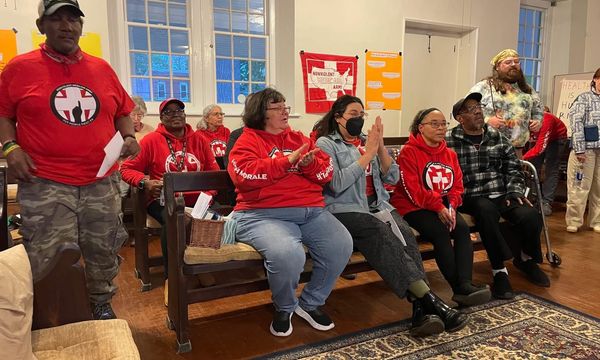
Crozer Anniversary Community Meal, Teach In, Speak Out!
On May 2nd, the one year anniversary of the closing of the Crozer health system, several dozen community members gathered at Chester Friends Meeting to share a cookout and potluck meal together, hosted by members of the Put People First! PA (PPF-PA) Southeast PA Healthcare Rights Committee. We came…
Read more →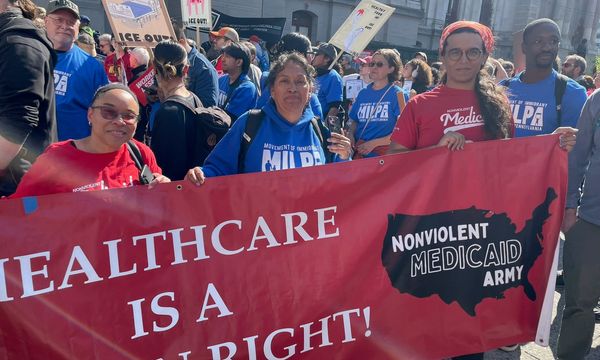
May E-news 📣 Understand the PA Legislature TONIGHT, then Crowd the Capitol JUNE 8!
May Statewide Call: Understanding the PA Legislature Join us TONIGHT, Wednesday, May 20th from 7 – 8 pm. Zoom info below. Every third Wednesday of the month from 7-8 pm ET, Put People First! PA holds our Statewide Membership Call. This call is for active members, mobilizers, and anyone who is…
Read more →Southeast PA joined Chester Residents Concerned for Quality Living (CRCQL)
On May 2nd, Put People First! PA members from Southeast PA joined Chester Residents Concerned for Quality Living (CRCQL) and other local groups for a powerful action in Chester, Delaware County. The day began with a rally in front of Chester City Hall and continued with a 90 minute walk to the…
Read more →Put People First! PA joins thousands, demands Workers Over Billionaires!
On May 1, 2026, also known as May Day or International Workers’ Day, the AFL-CIO Philadelphia lead a Workers Over Billionaires Rally and March in Center City Philadelphia. This rally was the culmination of months of unions and community organizations of our class like Put People First! PA and our…
Read more →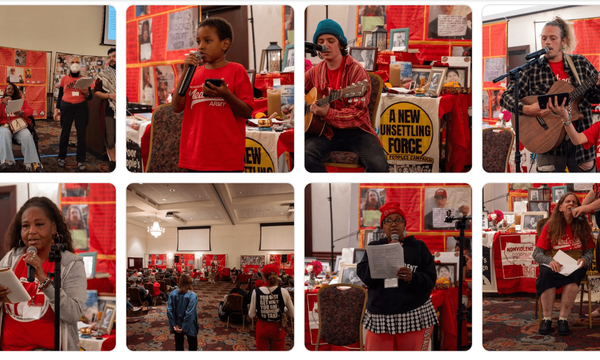
Doctoring as a Revolutionary Act
Doctoring as a Revolutionary Act by Taka Yamaguchi, Massachusetts Nonviolent Medicaid Army “I need you to survive”I need, you to survive (A)I need you, to survive (B) The question is not how to doctor in an anti-capitalist way (A).The question is how to make doctoring revolutionary (B). Being a…
Read more →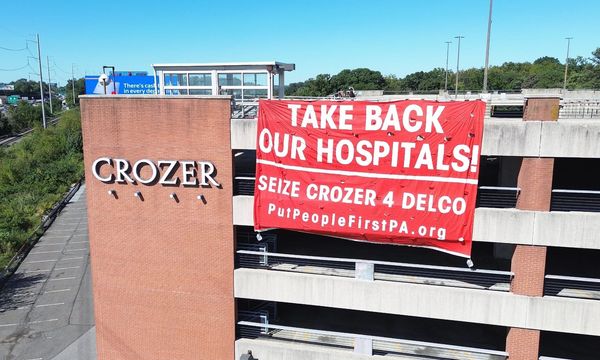
Status Report: One year without Hospitals
What’s going on with the Crozer Health System?! Status Report: One year without Hospitals In 2016, Prospect Medical Holdings, a for-profit private equity firm, purchased Crozer Health, the main healthcare system in Delaware County. Immediately, Prospect began looting the hospital system, making the…
Read more → E-news 📣 Base Building Season kicks off across PA!
April Statewide Call: Medicaid for All! Abolish Managed Care to Stop the Cuts Every third Wednesday of the month from 7-8 pm ET, Put People First! PA, a statewide, member-led, staff-free organization holds our Statewide Membership Call. This call is for active members, mobilizers, and anyone who is…
Read more →Community Organizations Host Vigil Calling for an End to Local ICE Presence and Investment in Peoples Needs
FOR IMMEDIATE RELEASE January 31, 2026 Community Organizations Host Vigil Calling for an End to Local ICE Presence and Investment in Peoples Needs Vigil participants demand, “Hospitals in, ICE out! Housing in, ICE out!” Upper Darby, PA. On Friday January 30th from 4:30 to 5:30 pm, community members…
Read more →Statement of Solidarity with the Bradford community, McKean County and Save Bradford Hospital Group
Statement of Solidarity with the Bradford community, McKean County and Save Bradford Hospital Group from the regional Healthcare Rights Committees of Put People First! PA “We Get Sick, They Get Rich! It Does Not Have To Be Like This” These lines are from a song written by one of our members about…
Read more → E-news 📣 Advocate for your Welfare Rights | New VIDEO, Community Care National Call, “Hospitals in, ICE out!” Vigil & More!
February Statewide Call: Advocating for your Welfare Rights Join us TONIGHT, February 18 at 7 PM ET. Zoom info below. Every third Wednesday of the month from 7-8 pm ET, Put People First! PA, a statewide, member-led, staff-free organization holds our Statewide Membership Call. This call is for…
Read more → E-news 📣 TONIGHT’s Statewide Call, The Keystone PUBLISHED & More!
TONIGHT @ 7 PM January Statewide Call Leadership Across Difference and the Movement to Abolish Poverty Every third Wednesday of the month from 7-8 pm ET, Put People First! PA, a statewide, member-led, staff-free organization holds our Statewide Membership Call. This call is for active members…
Read more →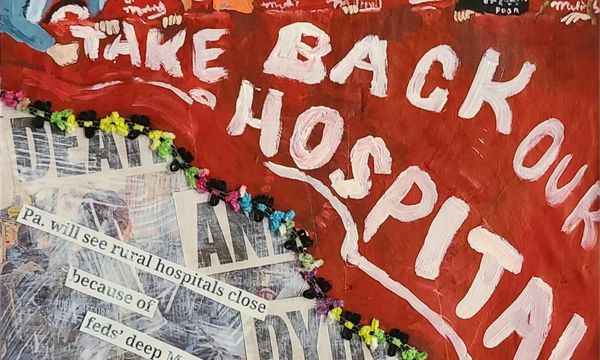
THE KEYSTONE Winter/Spring ’26
The Put People First! PA Media & Communications Team is proud to announce the publication of our member-created newsletter, The Keystone Winter/Spring 2026 edition. Click here to read a digital magazine version of The Keystone Winter/Spring 2026 edition. Share the Keystone here…
Read more →Massachusetts Delegation: Lessons from the 2025 Membership Assembly
Massachusetts Delegation: Lessons from the 2025 Membership Assembly The Massachusetts Nonviolent Medicaid Army (Mass NVMA) is a two-year-old state formation, started when a former Put People First! PA (PPF-PA) leader moved to Massachusetts. A small core of leaders cohered in Eastern and Western…
Read more →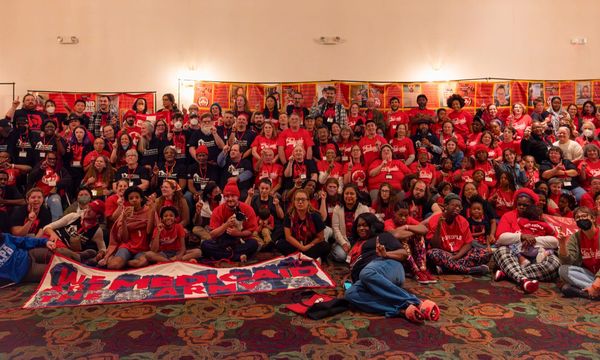
Reporting from the 2025 Membership Assembly
The 13th Annual Membership Assembly kicked off in sunny State College, Pennsylvania, on October 17th, 2025. This was Put People First! PA’s largest Membership Assembly to date with over 160 adults and 40 youth in person as well as virtual participants attending on zoom. A third of those in the room…
Read more →“If I Were A Rich Man”
By Zevi K. Southeast PA Healthcare Rights Committee Put People First! PA I adapted the song “If I Were A Rich Man” from Fiddler on the Roof… So many of us learn to believe all our problems would be solved if only we, as individuals, had more money. But really, that won’t save us and …
Read more →That Which is Invisible?
That Which is Invisible?By Melissa Wiertz, United Workers, Maryland Do you see the personWho is dealing with mental illness?Do you know the personWho hurts to walk?Do you see that which is invisible? Do you see the personWho cannot afford to buy groceries?Do you know the personWho needs to get…
Read more →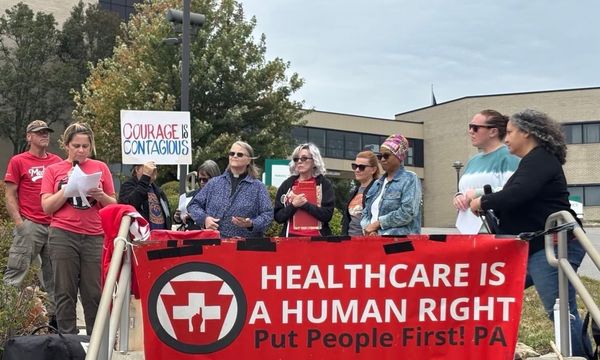
“Our Hospitals Are Being Erased” The Medicaid Army in McKees Rocks
The Medicaid Army in McKees Rocks In Southwest PA, Put People First! PA members rallied outside of recently shuttered Heritage Valley Kennedy in McKees Rocks, PA. Lezlee, who helped organize the action, cries, “Our Hospitals Are Being Erased. Our Communities Are Paying the Price. 10 hospitals…
Read more →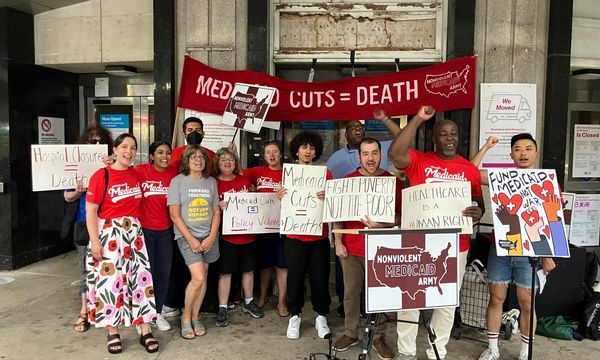
Projects of Survival across the New York Boroughs
By Kelly S. The Nonviolent Medicaid Army Week of Action has played a large part in the development of the New York Nonviolent Medicaid Army state formation. Not only did the 2024 Week of Action mark the official launch of our group, this year’s Day of Action went a long way in consolidating and…
Read more →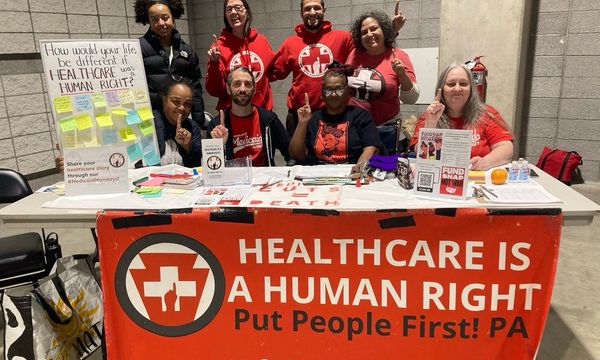
More Than a Meal: Finding Our Power at the Thanksgiving Distribution
More Than a Meal: Finding Our Power at the Thanksgiving Distribution by Lezlee November 22, while volunteers handed out bags and boxes of food at the Urban League of Pittsburgh’s annual Thanksgiving distribution, members of Southwest Put People First! PA were doing more than addressing hunger. We…
Read more →Crozer Hospital Closure Testimonies (Summer 2025)
In 2025, Put People First! PA (PPF-PA) members talked to hundreds of community members in Delaware County about how the Crozer Hospitals and health system closures were affecting them. In September, eight members held a peaceful sit-in in the lobby of Crozer-Chester to demand the shuttered hospital…
Read more →FAQs about our Campaign & Organizing Plan
Frequently asked questions about Put People First! PA’s Campaign and Organizing plan and the arc of the year By Nijmie D., Legislative & Research Team & Root Coordinator How do we create our Campaign and Organizing Plan? The specifics evolve a bit every year, because we are a learning organization…
Read more →2025 41 posts
Our Response to AI
Our Response to AI By Rebecca, Northeast PAPut People First! PA Governor Shapiro has repeatedly stated that building AI data centers will bring ‘economic prosperity’ to Pennsylvania. Politicians are scrambling to change zoning ordinances to allow this to happen. Emergency Town Hall meetings are…
Read more →
National Union of the Homeless Winter Offensive
NUH 2025 WINTER OFFENSIVE STATEMENT During the Holiday Season The National Union of the Homeless comes together across 5 U.S. regions (the South, Appalachia, Midwest, West and the Northeast) to declare: Housing and Healthcare NOW. An End to Genocide and the War Economy! No more death on the streets…
Read more →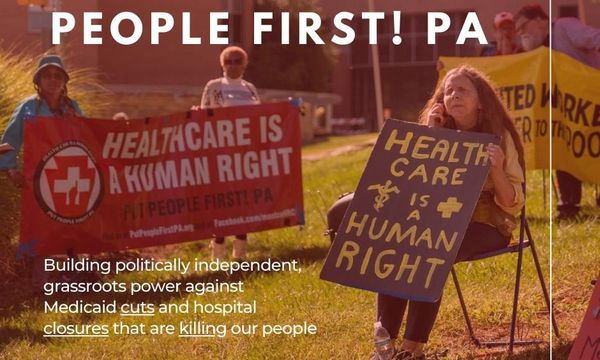
Donate on #GivingTuesday to Put People First! PA’s member-led, staff-free work!
Donate on #GivingTuesday to Put People First! PA’s member-led, staff-free work! Did you know? Put People First! PA is the only organization in Pennsylvania that is led by people who are on or unfairly excluded from Medicaid. We are also member-led and staff-free, meaning that all of our resources…
Read more →Day of Action Nonviolent Medicaid Army Statement & Highlights 2025
In September, the Nonviolent Medicaid Army held simultaneous actions across more than 12 states with additional actions in the following days. At the beginning of each of these actions, leaders read this statement to politically ground and unify the action. Click here or below the watch the video…
Read more → E-news 📣 Fight for Our Food Stamps, Assembly highlights & more!
Fight for Our Food Stamps! The Nonviolent Medicaid Army is a growing militant force of poor and dispossessed working class people united across race, region, and religion who are on or unjustly excluded from Medicaid. We’re made up of people who know from our life experience that we need to unite…
Read more →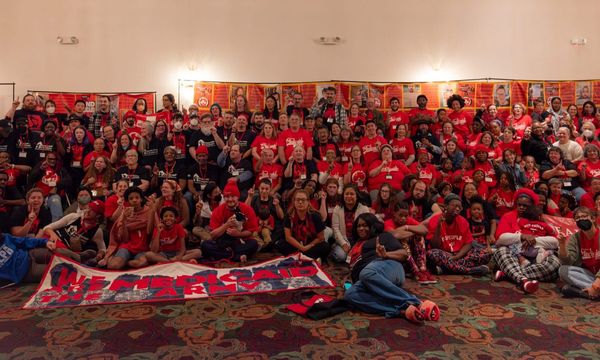
13th Annual Membership Assembly Report back!
The 13th Annual Membership Assembly kicked off in sunny State College, Pennsylvania, on October 17th, 2025. This was Put People First! PA’s largest Membership Assembly to date with over 160 adults and 40 youth in person as well as virtual participants attending on zoom. A third of those in the room…
Read more →When the Healers are Sent Away, the Prophets Must Rise
Read this powerful blog post written by Marcelle Martin, a Delaware County quaker, who attended the preliminary court hearing on Thursday, October 16th for “The Crozer 8.” The Crozer 8 are the eight Put People First! PA and Nonviolent Medicaid Army leaders who were arrested and charged with 3rd…
Read more →Put People First! PA & Nonviolent Medicaid Army SNAP Organizing Toolkit
Put People First! PA & Nonviolent Medicaid Army SNAP Organizing Toolkit The Nonviolent Medicaid Army is a growing militant force of poor and dispossessed working class people united across race, region, and religion who are on or unjustly excluded from Medicaid. We’re made up of people who know…
Read more →
E-news 📣 8 Arrested in Peaceful Sit-In & Day of Action Highlights!
Nonviolent Medicaid Army National Day of Action Highlights From September 6 – 8th, Nonviolent Medicaid Army actions took place in 12 states, including 4 actions here in Pennsylvania to fight back against Medicaid Cuts and hospital closures. To see highlights from across the country visit the…
Read more →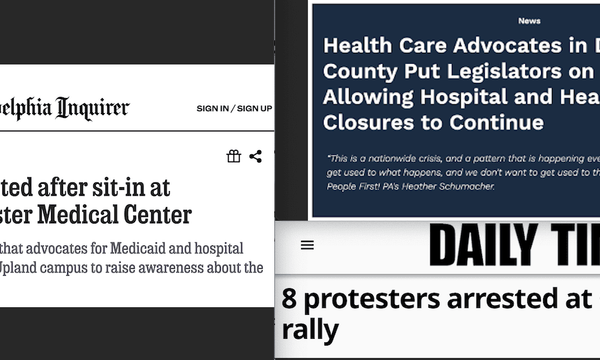
Media Round Up: Crozer-Chester Peaceful Sit-In & Rally
Media Round Up from Put People First! PA’s Monday, September 8th’s Peaceful Sit-In and Rally at Crozer-Chester Medical Center in Upland, PA in Southeast PA. Healthcare workers, local residents and community organizations rallied peacefully on September 8th at Crozer-Chester Medical Center in…
Read more →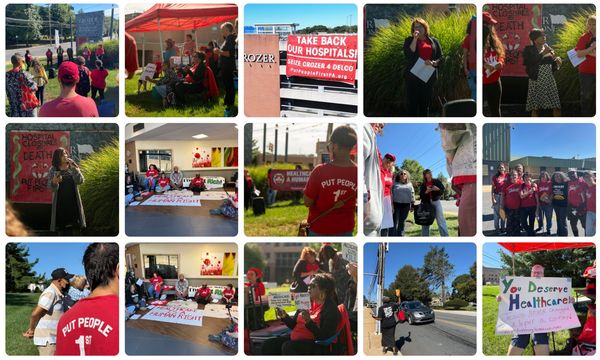
Sit In & Rally at Crozer-Chester, call on MLK’s legacy
Shutting down hospitals should be against the law, not a peaceful demonstration demanding the county reopens them! Healthcare workers, local residents and community organizations rallied peacefully on September 8th at Crozer-Chester Medical Center in Upland, PA, calling on Delaware County Council…
Read more →Delco Times: “Another Call for Eminent Domain!”
Put People First! PA received press prior to last week’s action at Crozer-Chester in Delaware County, Southeast PA. Check it out from the Delco Times below by Kathleen Carey. Crozer Transition Center closes; hospital reopen rally planned for Monday Another call for county council to take over…
Read more →National Day of Action – SEPA – Speak out @ Crozer!
On Monday September 8th at 10 AM, join us for a RALLY & SPEAK OUT outside of the closed down Crozer-Chester Medical Center. Date: Monday, September 8th at 10 AMLocation: Crozer-Chester Medical Center Click here for the facebook event! Come to share your story and to demand the reopening of our…
Read more →National Day of Action – SWPA
Join the Southwest PA Healthcare Rights Committee of Put People First! PA, the National Union of the Homeless, the PA Poor People’s Campaign and other partners as we join the National Day of Action for Medicaid with the Nonviolent Medicaid Army. Click here for the facebook event. Date: Saturday…
Read more →National Day of Action for Medicaid – NEPA
Join the Northeast PA Healthcare Rights Committee of Put People First! PA, the National Union of the Homeless, the PA Poor People’s Campaign and other partners as we join the National Day of Action for Medicaid with the Nonviolent Medicaid Army. Click here for the facebook event and more details…
Read more →September Statewide Call: From Mobilization to Organization
Wednesday, September 17th at 7 PM ET Click here for the facebook event! Every third Wednesday of the month from 7-8 pm ET, Put People First! PA, a statewide, member-led, staff-free organization holds our Statewide Membership Call. This call is for active members, mobilizers, and anyone who is…
Read more →
E-News 📣 National Day of Action for Medicaid, September 6!
Nonviolent Medicaid Army gears up for a National Day of Action, Sept. 6 Join the Nonviolent Medicaid Army’s National Day of Action for Medicaid on September 6 in a city or town near you! Register here to get involved or learn more. Put People First! PA is planning three actions all at shuttered…
Read more →Healthcare Rights Committees bring demands leading up to the Sept Day of Action
As Put People First! PA (PPF-PA) builds towards the Nonviolent Medicaid Army’s National Day of Action for Medicaid in early September, community members are making demands. PPF-PA is planning three actions all at shuttered hospitals. On Saturday, September 6th actions in Southwest PA at Heritage…
Read more →Community Day at Crawford Village
On Saturday, July 26th, 2025, Southwest PA Healthcare Rights Committee members Lezlee, Beni, Loui and Barbara held a People’s Clinic at Crawford Village in Mckeesport. We joined many people in the community for their Community Day with bouncy houses for the kids, a barbecue and prizes giveaways. We…
Read more →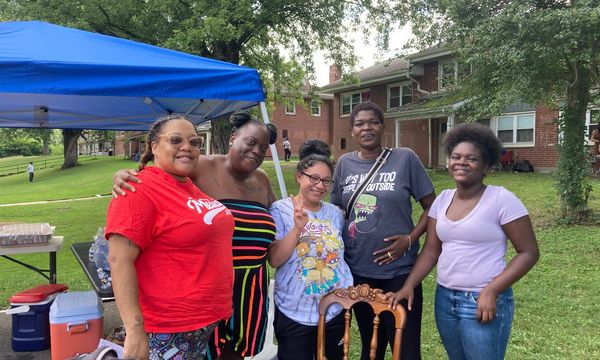
Justice Jam at Oakhurst Homes, big success!
On July 19th, 2025, members of Put People First! PA Central Appalachia Healthcare Rights Committee (CAPA HRC) alongside local residents held a “Justice Jam” at Oakhurst Homes. We came together to sing songs, eat food, play games, sign up for benefits and share healthcare stories. The songs we…
Read more →👉🏽👉🏽New Video!! Voices from across PA
👉🏽👉🏽👉🏽New Video!! Voices from across Pennsylvania Coming together for support, survival and strategy. Put People First! PA is the only statewide organization in PA led by people who are on or excluded from Medicaid #healthcareisahumanright #nonviolentmedicaidarmy #unitethepoor #putpeoplefirstpa…
Read more →Register TODAY: 13th Annual Membership Assembly October 17th – 19th, 2025!
The Put People First! PA (PPF-PA) Membership Assembly is our largest yearly gathering, open to brand new folks and experienced members. Join us from 5 pm Friday, October 17th, to 2 pm Sunday, October 19th, 2025 at a hotel & conference center in State College, PA. We’re coming together from across…
Read more →We NEED our hospitals! Reopen Crozer-Chester!
Southeast PA Healthcare Rights Committee took to the streets again to door knock and table around the shuttered Crozer-Chester Medical Center on Saturday. We continued to connect with community members about how the hospital closures are impacting people and what we need from our local healthcare…
Read more →
NEPA Homeless Union SPEAK OUT!
On Friday, July 11th from 2 – 4 PM the Northeast PA Chapter on the National Union of the Homeless, along with the Nonviolent Medicaid Army and Put People First! PA held a SPEAK OUT about the impact that the closing of Keystone Mission’s shelters will have on our community. The speak out took place …
Read more →HEALTHCARE IN THE CROZER CRISIS
Hi Delco, what are the websites, phone numbers, offices, clinics you’ve found to help meet your healthcare needs in the wake of the Crozer crisis? Put People First! PA is gathering resources to help people get healthcare after the Crozer system closure. Our demand remains to REOPEN THE HOSPITAL…
Read more → E-news 📣 Fund Medicaid & SNAP, not War & Deportations!
Fund Medicaid & SNAP, Not War & Deportations! The Nonviolent Medicaid Army demands: Fund Medicaid, Not War & Deportations! As Congress moves closer to enacting devastating cuts and taking money from healthcare, housing and food to give to detention, war and billionaires, we cry out NO! From sharing…
Read more →Justice Jam 7/19 @ Oakhurst!
On Saturday, July 19 from 11 am 2 pm, the Central Appalachia Healthcare Rights Committee will hold a Justice Jam in conjunction with residents at Oakhurst Homes in Johnstown. The event which is free and open to all ages will feature: a cook-out, singing movement songs, learning people’s history of…
Read more →Take Action: Fund Medicaid Not War!
Fund Medicaid Not War! w/ the Nonviolent Medicaid Army The Nonviolent Medicaid Army is picking up Rev. Dr. Martin Luther King Jr.’s call to build a nonviolent army of the poor to end poverty. We are uniting across all lines of division including the party divide and the urban/rural divide. We come…
Read more →Sunny Day Basebuilding in Mckeesport
It was a sunny Saturday in Southwest PA on June 21st. The Nonviolent Medicaid Army warriors Barbara, Rica, Beni, Joe, Melanie, and Wendy gathered at Crawford Village in McKeesport to base build. This team was ready to bring in new people and get them involved in the movement to end poverty. Wendy…
Read more →South Central at “Peace in the Streets” Block Party
Put People First! PA South Central Healthcare Rights Committee joined the “Peace In The Streets” Block Party event on June 14th at Culliton Park in Lancaster! The event was held in honor of Kendell Cook and in remembrance of all the lives lost to gun violence to raise awareness, support healing…
Read more →Documentary screening of Healthcare in Cuba, a video about the 2024 Nonviolent Medicaid Army Brigade to Cuba
Documentary screening of Healthcare in Cuba, a video about the 2024 Nonviolent Medicaid Army Brigade to Cuba May 20, 2025 What if you could get the health care you need when you need it without worrying about a bill? Whether dental, medical, wellness, maternity, mental/behavioral, physical therapy…
Read more →
We Demand Our Hospital Back!
Basebuilding near Crozer-Chester: We Demand Our Hospital Back! On Saturday, June 14, Put People First! PA members from the Southeast PA Healthcare Rights Committee held a People’s clinic outside of a grocery market and went door-to-door in the neighborhood around the shuttered Crozer-Chester…
Read more →NEW VIDEO: Fighting back against Hospital Closures in PA
Footage of Put People First! PA members fighting back against Hospital Closures across Pennsylvania to the song “Mean Things Happening in this Land,” sung by Jacob Butterly at the Southeast PA Healthcare Rights Committee Vigil and Rally outside of the shuttered Crozer-Chester Medical Center in…
Read more → Put People First! PA E-News June 12, 2025
June Statewide Call: Take Back our Hospitals! Every third Wednesday of the month from 7-8 pm ET, Put People First! PA, a statewide, member-led, staff-free organization holds our Statewide Membership Call. This call is for active members, mobilizers, and anyone who is interested in finding out more…
Read more →
South Central PA Songs & Celebration: Art, Sing out & Speak out!
Put People First – PA and the Pennsylvania Union of the Homeless hosted a “Songs & Celebration: Art, Singout & Speak Out!” event on Sunday June 1st at St. John’s Episcopal Church in Lancaster, PA To learn more about Put People First! PA go to our website at: www.putpeoplefirstpa.org To learn more…
Read more →
PPF-PA celebrates the passage of HB 1460, demands more
Put People First! PA welcomes the passage of HB 1460 from committee in the PA House, a bill which takes a step toward more accountability for Wall Street private equity firms that run our hospitals into the ground, then close them and put our families’ lives at risk. The closure of the Crozer…
Read more →Southeast PA Basebuilding in Phoenixville
On Saturday, May 10th, the Southeast PA (SEPA) Healthcare Rights Committee members gathered bright and early for our monthly basebuilding event at a local leader Robin’s beloved food bank in Phoenixville, PA. At the event, Put People First! PA members listened to people share their healthcare…
Read more →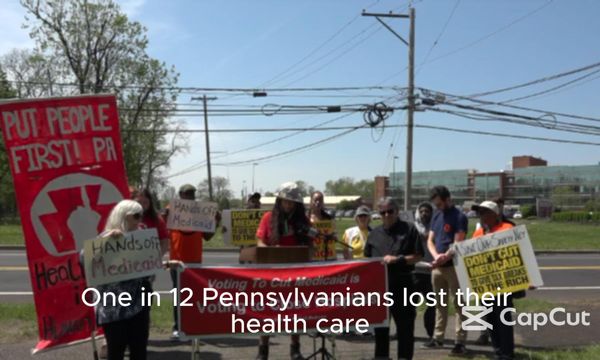
“Hospital Closures, Medicaid Cuts = Death!” Rally at Lower Bucks Hospital
On April 24th, 2025, Put People First! PA joined with the Philadelphia Unemployment Project for an action outside of the Lower Bucks Hospital in Bristol to call attention to the Medicaid Cuts. Lower Bucks Hospital is in dire financial straits. The action named “Medicaid Cuts = Hospital Closures.”…
Read more →
Put People First! PA in The Nation
On May 30th, 2025, Put People First! PA members were published in The Nation talking about the effects of medicaid cuts and how the organization is fighting back. Click here for the article. Politics / Rethinking Rural / May 30, 2025 Republicans’ “Big Beautiful” Medicaid Cuts Spur Rural Organizing…
Read more →
Media Advisory: Memorial Day Budget Deadline Looms; Medicaid Recipients in Pennsylvania Refuse to Die
CONTACT: Tammy Rosing | tammyrojas1977@gmail.com | 717-350-3224Nijmie Zakkiyyah Dzurinko | nijmied@gmail.com | 215-667-0066 Memorial Day Budget Deadline Looms; Medicaid Recipients in Pennsylvania Refuse to Die Put People First! PA is the only organization in Pennsylvania that is both politically…
Read more →
Williamsport Sun Gazette Op-Ed
On May 28th Northeast PA Healthcare Rights Committee Leader, Rebecca, was published in her local newspaper, Williamsport Sun-Gazette. Here’s the link to read and share and below is Rebecca’s powerful story. My name is Rebecca. I’m a constituent of Meuser. I’m a factory worker. I’m a single mother…
Read more →2024 30 posts
Southwest Thanksgiving Food Distribution ’24
On Saturday, November 23d, members of the Put People First! PA Southwest PA Healthcare Rights committee gathered at the Convention Center in Pittsburgh for the annual Thanksgiving food distribution from 8 am to 3 pm. We talked & listened to people coming there to get food and services, asking how…
Read more →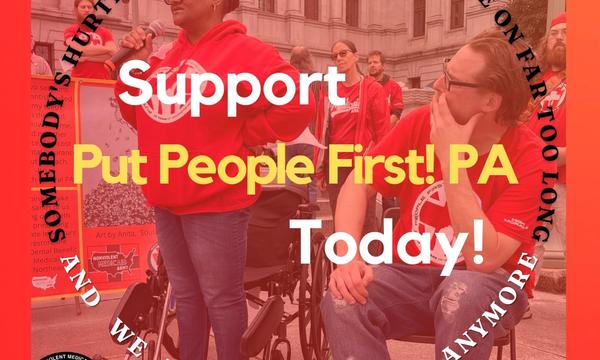
Support Our Year End Fundraiser!
Support Our Year End Fundraiser! Click here to support our mightycause fundraiser! Put People First! PA is a politically independent organization of everyday people from across PA uniting for Healthcare As A Human Right! Our organization is 12 years old, and we are completely member-led and staff…
Read more →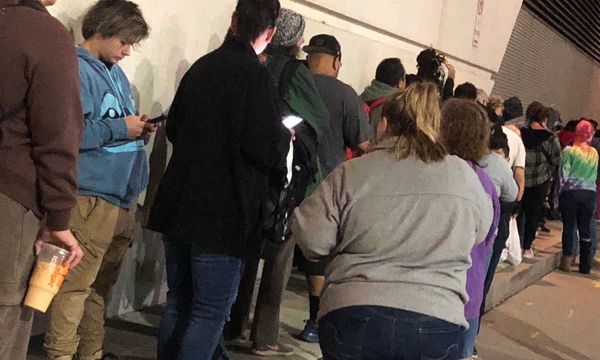
Southwest PA members build connections through Urgent Dental Care
Southwest PA Members build connections through Urgent Dental Care The Mission of Mercy dental clinic offering free dental, vision and hearing care, was in Pittsburgh Nov. 1 & 2, 2024 at the convention center downtown. Put People First! PA Healthcare Rights Committee (HRC) members and mobilizers…
Read more →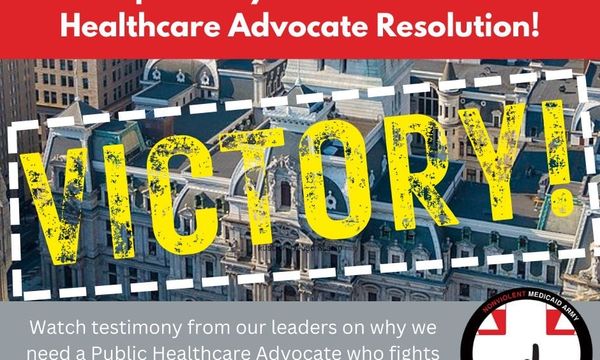
Philadelphia City Council Endorses the Public Healthcare Advocate!
Philadelphia City Council Endorses the Public Healthcare Advocate! Thursday, November 14th, 2024, Philadelphia City Council passed a resolution to call on the Commonwealth of Pennsylvania to establish an Office of the Public Healthcare Advocate within the Office of the Attorney General. Minority…
Read more → FOR IMMEDIATE RELEASE: Resolution Endorsing Pennsylvania Office of the Public Healthcare Advocate Brought Before Philadelphia City Council by Minority Leader Kendra Brooks
Resolution Endorsing Pennsylvania Office of the Public Healthcare Advocate Brought Before Philadelphia City Council by Minority Leader Kendra Brooks Philly Residents to Speak At Council Meeting In Favor – New State Office Would Advocate for PA Residents and Safeguard Philadelphian’s Healthcare…
Read more →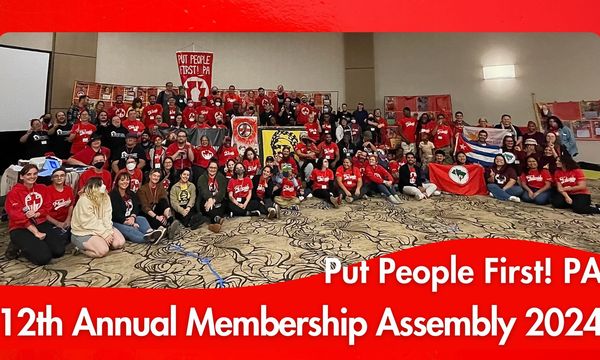
Photo Report Back: 12th Annual Membership Assembly 2024!
From October 25-27th, 2024, Put People First! PA (PPF-PA) held our annual Membership Assembly, where we brought together PPF-PA leaders new and old from across Pennsylvania, as well as representatives of the Nonviolent Medicaid Army (NVMA) from across the country. This year we were also honored to…
Read more →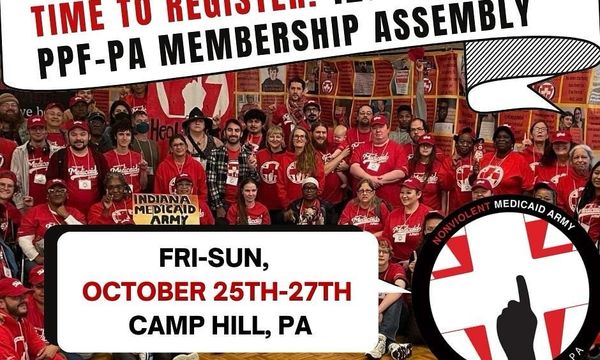
RSVP Today: Membership Assembly 2024, Oct 25-27!
Register here for the 12th Annual Put People First! PA Membership Assembly, Friday-Sunday, October 25-27, 2024! The Put People First! PA (PPF-PA) Membership Assembly is our largest yearly gathering, open to brand new folks and experienced members. Join us from 5 pm Friday, October 25th, to 12 pm…
Read more →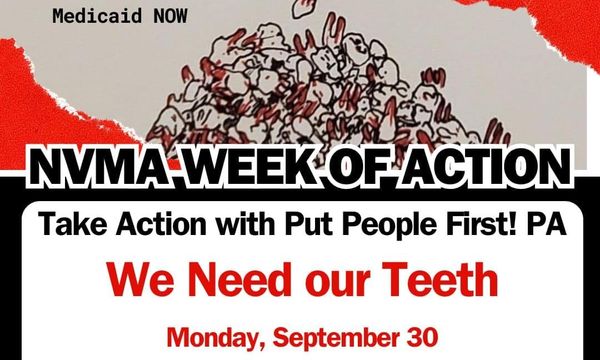
Nonviolent Medicaid Army (NVMA) Week of Action, Sept 21-30, 2024
Take action with Put People First! PA and the PA Poor People’s Campaign to demand the PA Legislature Restore the Adult Dental Benefit in Medicaid NOW! Join us Monday, September 30th in Harrisburg! Register here: https://bit.ly/WOARegistration2024 We need our teeth! Our teeth are NOT luxury bones…
Read more →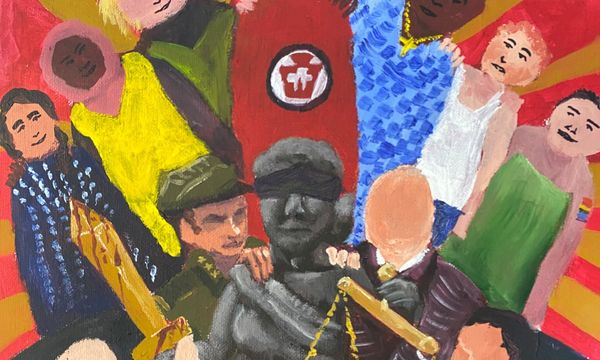
The KEYSTONE: SUMMER/FALL 2024 EDITION
Hot off the press: Put People First! PA’s bi-annual newsletter, The Keystone SUMMER/FALL 2024 edition. Click here to read the Keystone: https://bit.ly/KeystoneSummerFall2024 This newsletter is put together by all volunteer members of the Media & Communications Team of Put People First! PA (PPF-PA)…
Read more →Arts & Culture: Products of Empire
Products of Empire is the latest painting from working class artist and organizer, David Greene, member of the Put People First! PA Southeast PA Healthcare Rights Committee. David writes, “My most recent painting about the many attacks on our working class. Like the poor and working people before…
Read more →Guest Blog: What I Learned Captaining a Bus to DC for the 2024 Mass Poor People’s & Low-Wage Workers’ Assembly & Moral March on Washington DC and to the Polls
Below is a Guest Blog from Becca Forsyth, leader with the New York State Poor People’s Campaign & Freedom Church of the Poor. August 2, 2024 By Becca ForsythNew York State Poor People’s Campaign & Freedom Church of the Poor (Photo: members of the NYS PPC sitting in front of the District Courthouse…
Read more →Receiving Care Under Medicaid, Coming from a Genderfluid Perspective
By Ramona Rose, Member of Southeast PA Healthcare Committee If there is one thing that no one likes when it comes to scheduling doctors appointments, it is the concern of insurance standing in the way. Whether it’s with an NSI number just so you can see a specialist, or being told you cannot access…
Read more →Divide and Conquer and How to Combat It in Lancaster County, PA
By Put People First! PA South Central Healthcare Rights Committee From late February to late March of this year in Lancaster County, PA, the ruling class strategy of deflection through divide and conquer tactics was carried out by City, County and State elected officials. February 27, 2024…
Read more →Member Reflection: My Father John’s Story
By Rebecca, Northeast PA Healthcare Rights Committee Co-coordinator My father taught me so much about how to survive under poverty. He would be gone all week, driving day in and day out as a truck driver, but still made time to help our neighbors on the weekends. Sometimes it just so happened that…
Read more →What are Projects of Survival?
By Put People First! PA Base-building Team Coordinators Kristin and Harrison What are Projects of Survival? In September 1968, FBI Director J. Edgar Hoover described the Black Panthers (BPP) as “the greatest threat to the internal security of the country”. For many it was thought that this…
Read more →Highlights from Spring-Summer 2024 Base-building across the PA!
Put People First! PA members have been out in our Regional Healthcare Rights Committees in different areas across the state almost every week since March! Members go out together and knock on doors to meet people at their homes or set up in public places like food pantries or at community events…
Read more →South Central HRC joins “Peace in the Streets Block Party”
On June 8th the Put People First! PA South Central Healthcare Rights Committee joined the “Peace in the Streets Block Party” at Culliton Park in Lancaster, PA organized by the Kendall Movement, dedicated to Kendall Cook and all those who lost their lives due to gun violence, Paying it Forward, a…
Read more →Medicaid Appeal Victory! Jen’s testimony
Did you get a notice saying you no longer qualify for your Medicaid benefits? Did you know that you have a legal right to appeal this decision? Put People First! PA will help you fight back. Here’s a testimony from Jen, a Put People First! PA member in Southeast PA, who recently won her Medicaid …
Read more →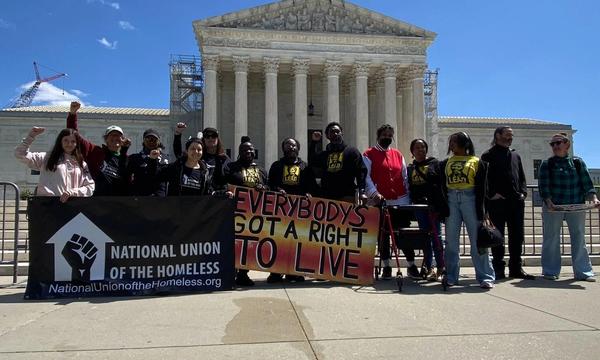
Supreme Court case Grants Pass v Johnson: Will Homelessness Be Criminalized!?
By Tammy Rosing, South Central Healthcare Rights Committee, PA Poor People’s Campaign: A National Call for Moral Revival, National Union of the Homeless On Friday, January 12, 2024, the United States Supreme Court announced it would take up the case of Grants Pass v. Johnson, which is the most…
Read more →Nonviolent Medicaid Army Cuba Brigade Spring 2024
Read more →It’s Time For a Public Healthcare Advocate
by Benita Campbell, Ande Ciampa and Anita Knisely-Durham of the PPF-PA Campaign/Legislative Team On May 13th, 2024, Put People First! PA (PPF-PA) hosted Pennsylvania’s first Public Healthcare Advocate Forum (PHA)! Co-sponsored by Partners for Dignity & Rights and members of the PA Poor People’s…
Read more →Put People First! PA decries insulin price-fixing and names larger for-profit system
On Monday March 25th, members of Put People First! PA shared testimony about the challenges of getting life-sustaining insulin because of the for-profit healthcare system at a press conference with the Philadelphia District Attorney’s office. Testimony was shared by Jesse, a public school teacher…
Read more →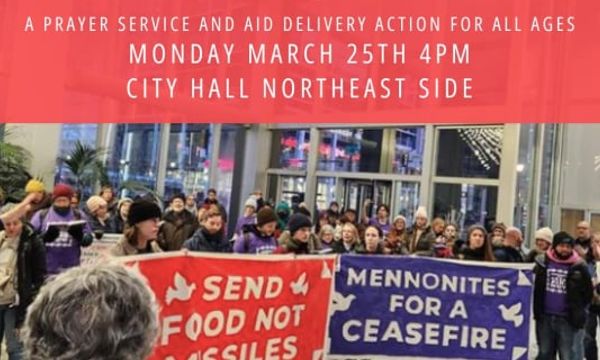
Put People First! PA joins Philly Mennonite Action to support a Ceasefire in Gaza
Put People First! PA joined Philly Mennonite Action in urging City Council members to support a Ceasefire in Gaza at City Hall on Monday, March 25. Unexpectedly, the more than 70 people in attendance were refused entrance to the building. Only two adults and three children were allowed to enter and…
Read more →
Winter 2024 Keystone Published!
We are publishing Put People First! PA’s bi-annual newsletter, The Keystone, in the season of the longest night of the year; cold, isolating and bitter. Some of us are unhoused, others sick and many have died. We memorialize those we have lost, welcome the newborn, and tell our stories of struggle…
Read more →
Members Speak Out #WeNeedOurTeeth
January Put People First! PA and the Nonviolent Medicaid Army launched our 2024 #MedicaidMondays where people post selfies and stories about what Medicaid means to them on social media. This year, as we ramp up our campaign to restore the Adult Dental Benefit to Medicaid in Pennsylvania, we’re also…
Read more →Basebuilding Highlights Summer – Fall 2023
Basebuilding The summer marked the high activity time in our Medicaid Cutoffs Organizing Drive. Across the state, Put People First! PA held 7 People’s Clinics, where we offered blood pressure screenings and benefits sign-ups, and supported people across the state to file 15 Medicaid applications…
Read more →NVMA Arts & Culture Night, dedicated to Erro
In December 2023, the Nonviolent Medicaid Army held an Arts & Culture night dedicated to Wyoming NVMA leader, Erro Lynd. At the end of art, songs and poems together, Erro’s partner Julia shared these words. When Erro and I met 17 years ago, we were already on our own organizing paths. We had…
Read more →#Medicaid Mondays: Share your Healthcare Story!
Movement begin with the telling of untold stories. Every Monday Put People First! PA (PPF-PA) and the Nonviolent Medicaid Army (NVMA) are sharing our stories on Medicaid, SNAP, Dental Care and any healthcare story or struggle for our basic needs. Sharing our stories breaks our isolation and builds…
Read more →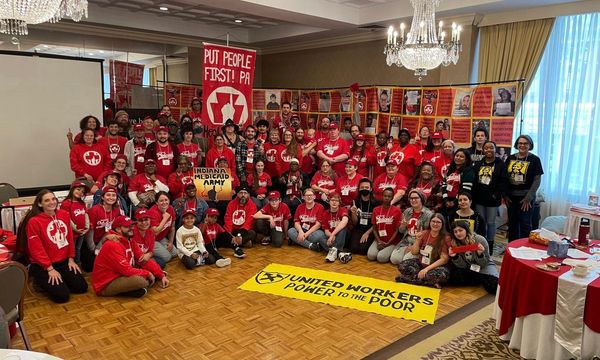
11th Annual Membership Assembly Reflections
October 20-22nd, 2023 Put People First! PA held our 11th Annual Membership Assembly in Williamsport, Northeast PA. This was our first time having a statewide, all together in-person – with virtual option – Assembly since 2019, and it was a big success! The Membership Assembly is our largest yearly…
Read more →
Media Advisory: New data indicates 99% of all Medicaid redetermination appeals denied by DHS
FOR IMMEDIATE RELEASE: November 2023 CONTACT: Zachary Hershman | zacharyhershman@gmail.com | (267) 571-9503Put People First! PA | putpeoplefirstpa.org New data indicates 99% of all Medicaid redetermination appeals denied by DHS Pennsylvania residents cut from Medicaid face significant health and…
Read more →2023 36 posts

5 Years Fighting: Restore the Adult Dental Benefit THIS YEAR!
Put People First! PA is waging a campaign for the restoration of the Adult Dental Benefit (ADB) to Medicaid. By Anita of the Campaign & Legislative Team Background: In 2011, Governor Tom Corbett, under direction from the Obama administration, cut the benefit from Medicaid under pressure to cut…
Read more → Members Stories: Restore the Adult Dental Benefit to Medicaid!
In December, Put People First! PA asked our members to share their experience with accessing dental care as part of a campaign to pressure the Pennsylvania legislature to restore the Adult Dental Benefit to Medicaid. Do you have a story to share? Reach out to Harrison (harrisonjfarina@gmail.com) or…
Read more → How many of your teeth are in this pile?
How many of your teeth are in this pile? If we counted up all the lost teeth in PA because we couldn’t get the care we needed it would be in the millions. This is a direct result of the cut to the adult dental benefit in Medicaid that has been in place since 2011. …
Read more →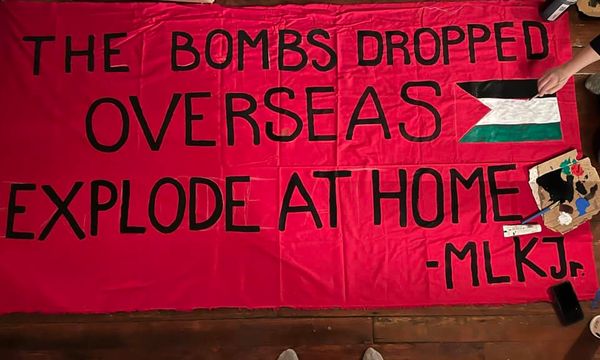
Healthcare Organizing and the Fight to End the War Economy
The genocidal devastation of the healthcare system in Gaza is funded by the U.S. government as poor and dispossessed people here are being kicked off of Medicaid by the millions. Poverty in America is a death sentence – it is the 4th leading cause of death in the United States. There is no American…
Read more → CEASEFIRE NOW: From Johnstown to Gaza, we must unite!
In November, Put People First! PA Healthcare Rights Committees held three actions – two in person, one virtual – to connect the genocidal devastation of the healthcare system in Gaza, funded by the U.S. government, to the poor and dispossessed people here are being kicked off of Medicaid by the…
Read more → CEASEFIRE NOW! From Al-Shifa to Hahnemann, END the WAR ECONOMY!
In November, Put People First! PA Healthcare Rights Committees held three actions – two in person, one virtual – to connect the genocidal devastation of the healthcare system in Gaza, funded by the U.S. government, to the poor and dispossessed people here are being kicked off of Medicaid by the…
Read more →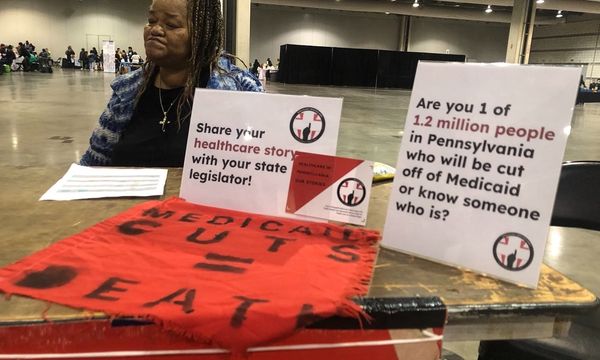
Basebuilding in Southwest PA, Fall 2023
Members of the Southwest PA Healthcare Rights Committee tabled at the Mission of Mercy clinic at the Convention Center in Pittsburgh, PA on October 27th & 28th. We met people who had waited in line for 3 hours or more to receive dental, hearing or vision services. Many of these folks are on…
Read more →PPF-PA & NUH HOSTS ‘LONGEST NIGHT’ MEMORIAL COMMEMORATING ALL THOSE WHOSE LIVES WERE LOST TO POVERTY
FOR IMMEDIATE RELEASE CONTACT: Tammy Rosing | tammyrojas1977@gmail.com | (717) 350-3224Put People First! PA | putpeoplefirstpa.org PUT PEOPLE FIRST! PA & NATIONAL UNION of the HOMELESS HOSTS ‘LONGEST NIGHT’ MEMORIAL COMMEMORATING ALL THOSE WHOSE LIVES WERE LOST TO POVERTY DEMANDS TO STOP THE…
Read more →
Do you like stickers or tote bags?
Donate to Put People First! PA in our 11th year of organizing Pennsylvania! Help us build a statewide, multiracial, working class movement to win healthcare as a human right. PPF-PA’s year end grassroots fundraising drive is crucial for securing the future of the organization and maintaining our…
Read more →
Press Release: Nonviolent Medicaid Army Caravan Brings Medicaid Stories Quilt To Harrisburg, Delivering Petition To Sec. Arkoosh And Governor Shapiro To End Medicaid Cutoffs
FOR IMMEDIATE RELEASE CONTACT: Zachary Hershman | zacharyhershman@gmail.com | (267) 571-9503 Put People First! PA | putpeoplefirstpa.orgNonviolent Medicaid Army Caravan Brings Medicaid Stories Quilt To Harrisburg, Delivering Petition To Sec. Arkoosh And Governor Shapiro To End Medicaid Cutoffs…
Read more →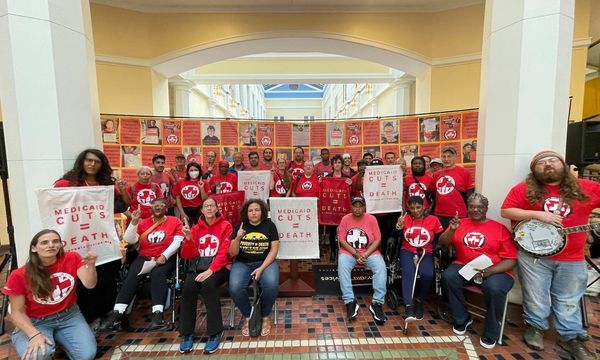
Nonviolent Medicaid Army Week of Action 2023!
Over the course of Tuesday September 19 afternoon/evening and Wednesday morning September 20, residents on or excluded from Medicaid came together in powerful actions across the Southwest, Central-Appalachia, South Central, Southeast and Northeast regions of our state. After local actions lifting…
Read more →Register TODAY for the 2023 Membership Assembly!
Click here to join Put People First! PA Friday to Sunday, October 20-22, 2023 for our 11th Annual Membership Assembly in Williamsport, PA. Transportation, meals, housing and childcare included. Join us for our biggest event of the year! Register TODAY for the Membership Assembly…
Read more →NVMA Week of Action Line Up!
Help us get to 1,000 signatures! We who are on or excluded from Medicaid will converge on Harrisburg to bring our voices, needs and demands together and deliver our petition to Governor Shapiro and Secretary Arkoosh.Please sign the petition here: bit.ly/PetitionAgainstMedicaidCutsPA Preparing for…
Read more →Report back from Healthcare Rights Committees
We’re continuing our summer basebuilding activities and preparing for the week of action! Across the state our Healthcare Rights Committees have been busy connecting across difference to fight for Healthcare as a Human Right! Northeast PA/Southeast PA Basebuilding Exchange Members from the…
Read more →
“Nonviolent Medicaid Army” Takes Action Around The Country
CONTACT: Zachary Hershman | zacharyhershman@gmail.com | 201.264.2200 Put People First! PA | putpeoplefirstpa.org Medicaid Cuts = Death “Nonviolent Medicaid Army” Takes Action Around The Country From People’s Clinics to demonstrations outside Medicaid appeals courts, Medicaid recipients raise their…
Read more →
In memoriam: Lucy Fisher
Lucy Fisher, South Central PA Lucile Ellen Fisher, was born in Lancaster County PA at St. Joseph’s hospital on February 26th 1955. She left this world Wednesday August 16, 2023, at 68 years old, at Reading hospital in Berks County. She is survived by her children,Tammy Rosing (daughter) and her…
Read more →
MEDIA ADVISORY: RESIDENTS DEMAND GOV. SHAPIRO HALT MEDICAID CUTOFFS AFTER 12 STATES REPRIMANDED FOR FAILURE TO COMPLY WITH FEDERAL RULES
For Immediate Release: August 7th, 2023 Contact: Zachary Hershman | zacharyhershman@gmail.com | 201.264.2200 Put People First! PA | putpeoplefirstpa.org RESIDENTS DEMAND GOV. SHAPIRO HALT MEDICAID CUTOFFS AFTER 12 STATES REPRIMANDED FOR FAILURE TO COMPLY WITH FEDERAL RULES CMS (CENTERS FOR MEDICARE…
Read more →Medicaid Mondays: Story Share Social Media Campaign 2023 with the Put People First! PA and the Nonviolent Medicaid Army
Every Monday, Medicaid recipients or those unfairly excluded from Medicaid are posting on social media to briefly share their story about why Medicaid is important to them and or why it’s important to expand Medicaid to all residents. This is part of Put People First! PA’s Medicaid Cut-offs…
Read more → RESIDENTS ORGANIZE & SPEAK OUT ACROSS PA IN OPPOSITION TO MEDICAID CUTS
For Immediate Release: July 5th, 2023 Contact: Barbara White | bawhite2012@gmail.com | 412-381-6886Put People First! PA | putpeoplefirstpa.org RESIDENTS ORGANIZE & SPEAK OUT ACROSS PA IN OPPOSITION TO MEDICAID CUTS 90,000 PENNSYLVANIANS HAVE LOST COVERAGE AFTER TWO MONTHS, NEARLY HALF FROM MISSING…
Read more →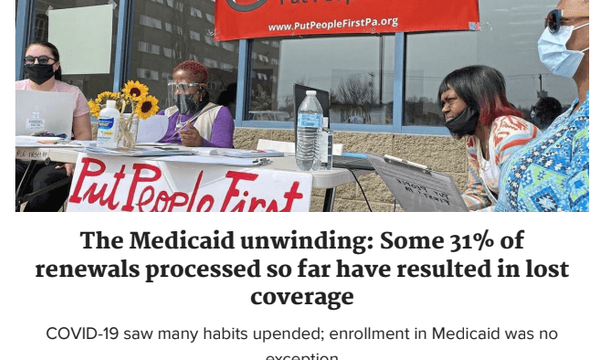
Press Coverage: The Medicaid unwinding: Some 31% of renewals processed so far have resulted in lost coverage
The Medicaid unwinding: Some 31% of renewals processed so far have resulted in lost coverage COVID-19 saw many habits upended; enrollment in Medicaid was no exception POLLY HIGGINSPittsburgh Post-Gazettephiggings@post-gazette.com JUN 15, 2023 9:54 AM Tammy Rojas was “stressed out of my mind.” They…
Read more →Media Coverage: 90K Pennsylvanians have lost Medicaid coverage since the end of pandemic-era rule
The Southwest PA Healthcare Rights Committee of Put People First! PA held our first Medicaid Cut Off Appeal Action on Thursday, June 15th for Gary Rush. Here is media coverage. 90K Pennsylvanians have lost Medicaid coverage since the end of pandemic-era rule 90.5 WESA By Kate Giammarise Since the…
Read more →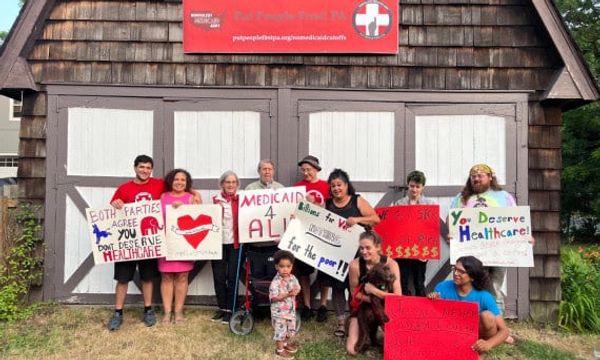
Reporting Back from Our Activities Across PA
Last weekend all five of Put People First! PA’s Healthcare Rights Committees (HRC) were out in our communities taking action. In Southwest PA, the HRC took action for our first Medicaid Cut Off Appeal. In Northeast PA, the HRC hosted a People’s Clinic. In Central Appalachia, members knocked doors…
Read more → PUT PEOPLE FIRST! PA RALLY IN DOWNTOWN PITTSBURGH TO SUPPORT PITTSBURGH RESIDENT APPEALING LOSS OF MEDICAID
For Immediate Release: June 12th, 2023 Contact: Barbara White | bawhite2012@gmail.com | 412-381-6886 Put People First! PA | putpeoplefirstpa.org PITTSBURGH SENIOR GARY RUSH COULD LOSE HIS MEDICAID COVERAGE – THOUSANDS OF PITTSBURGH RESIDENTS FACE SIMILAR FATE Who: Pittsburgh residents, Southwest…
Read more → IMPACTED RESIDENTS OPPOSING MEDICAID CUTOFFS HOLD PRESS CONFERENCE, DEMONSTRATION & LOBBY DAY AT PENNSYLVANIA STATE CAPITOL
For Immediate Release: June 5th, 2023 Contact: Barbara White | bawhite2012@gmail.com | 412-381-6886 Put People First! PA | putpeoplefirstpa.org IMPACTED RESIDENTS OPPOSING MEDICAID CUTOFFS HOLD PRESS CONFERENCE, DEMONSTRATION & LOBBY DAY AT PENNSYLVANIA STATE CAPITOL“Caroling the Crisis”…
Read more →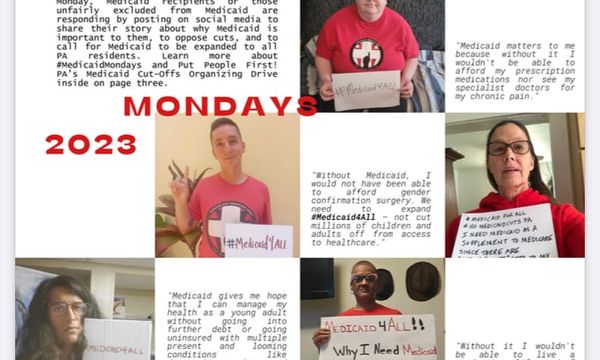
Spring/Summer ‘23 KEYSTONE Released!
Spring/Summer ‘23 KEYSTONE Released! Hot off the press! Created by the Media & Communications Team, the Keystone is Put People First! PA member created Newsletter Released twice every year! Click here to read or share this link: https://heyzine.com/flip-book/b4bb7f20d3.html
Read more →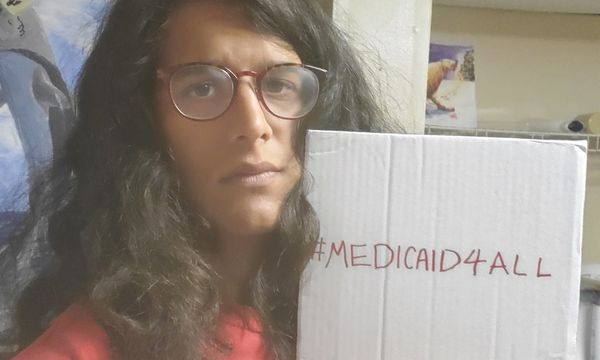
Medicaid Mondays Round Up
Medicaid Mondays: Story Share Social Media Campaign 2023 with the Put People First! PA and the Nonviolent Medicaid Army Every Monday, Medicaid recipients or those unfairly excluded from Medicaid are posting on social media to briefly share their story about why Medicaid is important to them and or…
Read more →
Medicaid Mondays: Story Share Social Media Campaign 2023 Guide from Put People First! PA and the Nonviolent Medicaid Army
Medicaid Mondays: Story Share Social Media Campaign 2023 Guide from Put People First! PA and the Nonviolent Medicaid Army This is being organized as a social media campaign action as part of our Medicaid Cut-offs Organizing Drive. We will have “Medicaid Monday’s Story Share” beginning on April 3…
Read more →Medicaid checks
On April 23, 2023, The Philadelphia Inquirer published Southeast PA Healthcare Rights Committee Leader, Harrison Farina’s Letter to the Editor. Medicaid checks On April 1, our state resumed Medicaid eligibility checks, potentially cutting off more than a million Pennsylvanians from their Medicaid…
Read more →MEDICAID CUTOFFS: AN AMERICAN HORROR STORY
On April 12th, 2023, otherwords.org published this Letter to the Editor by Put People First! PA leader, Nijmie Dzurinko. MEDICAID CUTOFFS: AN AMERICAN HORROR STORY Some 15 million Americans on Medicaid are now being thrown off the program. No elected official should stand for this. By Nijmie…
Read more →Medicaid disaster
Southwest PA Healthcare Rights Committee leader, Barbara White, had this Letter to the Editor published in the Pittsburgh Post-Gazette on April 9th, 2023. Medicaid disaster 9 Apr 2023 Thank you for “The Elder Law Guys: the Pandemic pause on Medicaid eligibility is about to end” (Mar. 27). This will…
Read more → Medicaid Appeal and Renewal Process Plagued By Problems as Cutoffs Loom for 1.2 Million PA Residents
For Immediate Release: May 1st, 2023Contact: Barbara White 412-381-6886bawhite2012@gmail.com Tammy Rojas 717-350-3224tammyrojas1977@gmail.comPut People First! PAPutpeoplefirstpa.org Medicaid Appeal and Renewal Process Plagued By Problems as Cutoffs Loom for 1.2 Million PA Residents Late…
Read more →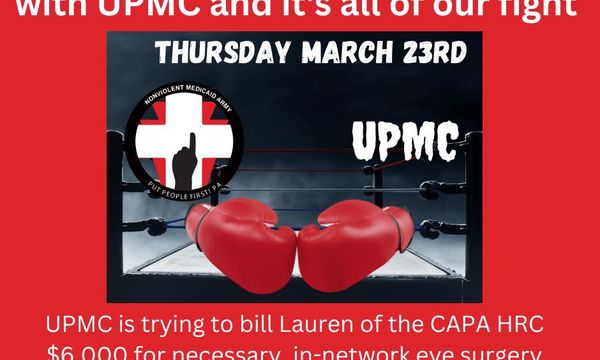
When we fight we win!
Collective Pressure Gets $6k Medical Bill Cancelled for Central-Appalachia Leader On Thursday March 23rd, Put People First! PA held a call in day for Central-Appalachia Healthcare Rights Committee member Lauren to demand UPMC cover an in-network vision-saving eye surgery. Despite the surgery being…
Read more →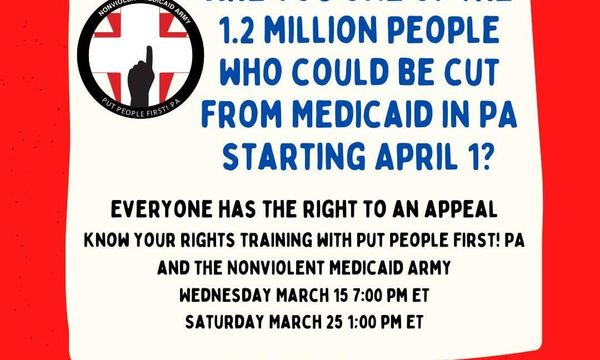
REGISTER TODAY: Medicaid Know Your Rights Training – WED, 3/15 & SAT, 3/25
Click Here to Register! Starting on April 1st, Health and Human Services Departments in states across the U.S. will begin issuing letters cutting 18 million people from Medicaid. More than 1,200,000 people in Pennsylvania will lose their healthcare during this process, creating a huge crisis in our…
Read more →“A Healthcare Cliff is Coming” PPF-PA in the Media
Put People First! PA leader LT Talarico recently shared their story about what Medicaid access has meant to them — and what it will mean if they’re forced off of it in the coming months. Read their story reprinted below or share here: https://otherwords.org/a-health-care-cliff-is-coming/ A HEALTH…
Read more →PPF-PA Media Coverage in Spotlight PA
Published by Spotlight PA and reprinted by dozens of Press outlets in the past several weeks, read Put People First! PA leader Cassie Hill’s story about how the Medicaid Cuts Offs will effect her and what we can do about it. Read the article reprinted below or here: Philadelphia Inquirer…
Read more → For Immediate Release: Pennsylvania Nonviolent Medicaid Army rejects plans to strip Medicaid from 1.2 million low-income residents
For Immediate Release: 9 February 2023 Contacts: Harrison Farina 770-362-0564 harrisonjfarina@gmail.com Tammy Rojas 717-350-3224 tammyrojas1977@gmail.com Pennsylvania Nonviolent Medicaid Army rejects plans to strip Medicaid from 1.2 million low-income residents Pennsylvania—Medicaid recipients and…
Read more →2022 4 posts
The Keystone F/W 22-23 Published!
The Keystone is Put People First! PA’s bi-annual, member-created newsletter that includes updates about our campaign, stories from our members about their health care struggles and the work of the organization, reports from our local Human Rights Committees, and poetry and art from members across…
Read more →
Register TODAY! Put People First! PA 10th Annual Membership Assembly, Oct. 7 – 9, 2022
Register for Put People First! PA’s 10th Annual Membership Assembly here today! The Put People First! PA (PPF-PA) Membership Assembly is the largest yearly gathering of PPF-PA, open to brand new and experienced members. Join us in celebrating a BIG milestone: Put People First! PA’s 10 year…
Read more →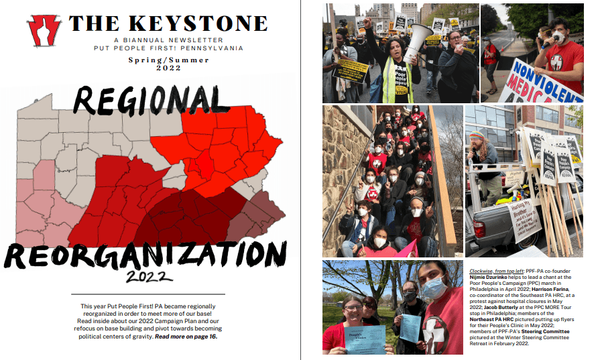
The Keystone Spring/Summer 2022 is here!
We’re excited to announce the release of the newest edition of The Keystone, our member-created magazine produced with love and edited by the Put People First! PA Media & Communications team! In this edition you’ll find member’s healthcare stories, updates on our campaign for a Public Healthcare…
Read more →What is Freedom? What does freedom define for you?
By Megan Keller, Lancaster Bail Fund and Put PeopleFirst! PA Freedom By definition, freedom is the power or right to act, speak, or think as one wants without hindrance or restraint. Freedom is: absence of subjection to foreign domination or despotic government. the state of not being imprisoned or…
Read more →2021 8 posts
Fall/Winter Newsletter: The Keystone is here!
We’re excited to announce the release of the newest edition of The Keystone, our member-created magazine produced with love and editing by the Media & Communications team! In this edition you’ll find updates on our campaign for a Public Healthcare Advocate for PA, reports from our basebuilding…
Read more →We Demand a Just and Moral Budget & a Third Reconstruction!
On Monday, June 7th, the PA Poor People’s Campaign: A National Call for Moral Revival (PAPPC:NCMR) joined states around the country and Washington DC to put our US Representatives on notice. Drawing on the transformational history of the First Reconstruction following the Civil War and the Second…
Read more →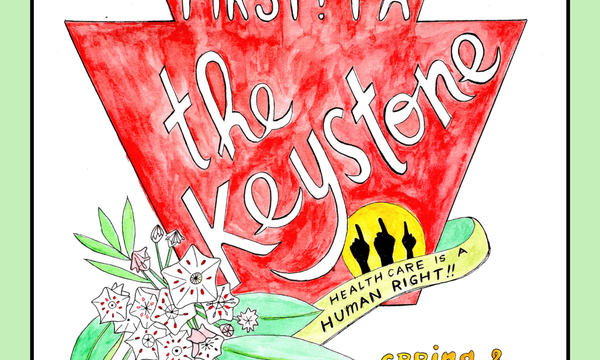
New Release: The Keystone – Spring / Summer 2021
We are ecstatic to release the Spring / Summer 2021 edition of The Keystone, Put People First! PA’s member created, biannual newsletter. Read it here in virtual magazine form. Download the KEYSTONE PDF here. The Keystone is a labor of love produced by Put People First! PA’s Media and Communications…
Read more →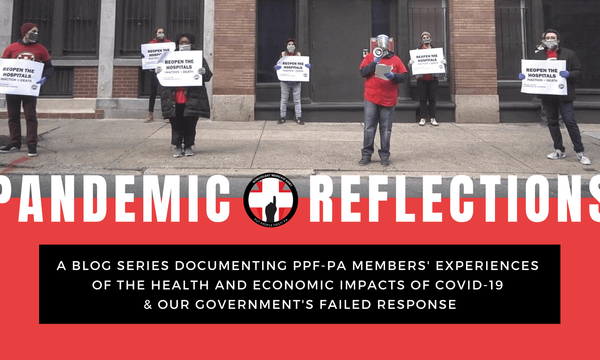
Pandemic Reflections: Are our lives essential, or only our work?
PPF-PA Member and custodial worker reflects on pandemic working conditions and organizing for our survival By Chris, PPF-PA Member I am a custodian at a private liberal arts college in Pennsylvania, and therefore, I am an essential worker. I work in the residential dorms. It’s hard to put this…
Read more → Pandemic Reflections: Tammy Rojas
PPF-PA Member Tammy Rojas Reflects on Covid-19 illness, longterm symptoms, and barriers to Covid-19 testing and care By Tammy Rojas, PPF-PA Lancaster Healthcare Rights Committee I contracted Covid-19 the end of January 2021 and the lasting health effects make it extremely difficult to do the…
Read more → New! Pandemic Reflections Blog Series
One Year Later: PPF-PA Members Reflect on the Pandemic and the Failures of the State On the day the United States official Covid-19 death count reached half a million, PPF-PA member Tammy Rojas posted on Facebook reflecting on the Covid-19 demands PPF-PA put forward to Pennsylvania Governor Tom…
Read more →In their Remembrance: Pennsylvania actions on Moral Monday National Day of Mourning to honor lives lost to COVID-19 and demand just relief
Reposted from the Pennsylvania Poor People’s Campaign, January 26 2021 On November 23, 2020, the Poor People’s Campaign: A National Call for Moral Revival coordinated car caravans across the country to mourn more than a quarter of a million lives lost to COVID-19 in the United States, to demand a…
Read more →
Poetry in Our Movement: New Year’s “People’s Poetry” Workshop and Arts & Culture Night
On January 10, PPF-PA hosted a virtual “People’s Poetry” workshop followed by Arts and Culture night. The event was put on by the Community Care and Base Building teams, with the idea that expressing ourselves together can be a way of taking care of each other in painful, isolating times, as well…
Read more →2020 69 posts
Count Every Vote & Poor People’s Hearings
Count Every Vote & Poor People’s Hearings This past week Healthcare Rights Committees across the state demanded that every vote be counted and a full democracy for the poor and dispossessed! It is our duty to make clear that as we support the democratic process, we won’t experience democracy as the…
Read more →
Hot off the Press!! 2020 Fall – 2021 Winter KEYSTONE
Hot off the Press!! Fall 2020 – Winter 2021 KEYSTONE Presenting: THE KEYSTONE: Fall 2020/Winter 2021 Edition, Put People First! PA’s member created, biannual newsletter. The Keystone tells the stories of PPF-PA members and our organizing over the past half year. Many PPF-PA members from across the…
Read more →COVID-19 Member Reflection Series: Immigrant struggles then and now (Keystone Fall 2020)
NEPA member reflects on racism, divide and conquer of immigrants By Rose Yanko, Northeast PA Healthcare Rights Committee I come from a small town in Northeast PA (NEPA) and grew up on a property with several houses on a 15-acre lot. My father was born to an immigrant family in a nearby town. The…
Read more →COVID-19 Member Reflection Series: Combating fear with facts (Keystone Fall 2020)
Member fights to give community access to facts By Paul Ricci, Johnstown Healthcare Rights Committee I have created an online database for my home county, Cambria County. I have tracked cases, testing and deaths in the county since the first case was reported here on March 23. The sources for these…
Read more →COVID-19 Member Reflection Series: A parent, a test subject in COVID times (Keystone Fall 2020)
A parent watching real life Hunger Games play out By Jen Frank, Lancaster Healthcare Rights Committee Submitted as a local Letter to the Editor Covid-19 has affected all aspects of life and community. But, in reality, such a disaster has exposed the shortcomings of our country and painted a picture…
Read more →COVID-19 Member Reflection Series: City budget cuts and job loss (Keystone Fall 2020)
City increases funding for police, Cuts essential services By Larry Newbury, Montgomery County Healthcare Rights Committee When the pandemic started, I was working two part-time jobs, one of which I no longer have due to the pandemic. The job I lost was a grant-based job I had with a local…
Read more →COVID-19 Member Reflection Series: Organizing as a nurse, during a pandemic (Keystone Fall 2020)
Organizing for human rights as a nurse, during a pandemic By Priyank Jindal, Philadelphia Healthcare Rights Committee When I was a kid, the community college near me was offering free LPN classes, so my mom enrolled and got her degree, eventually going on to get her RN. I remember her graduation…
Read more →COVID-19 Member Reflection Series: First year teacher, during a pandemic (Keystone Fall 2020)
Harder than Surviving Cancer, My First Year Teaching Virtually By Farrah Samuels, Philadelphia Healthcare Rights Committee If anyone had told me that teaching online as a first year teacher during a pandemic would be harder than surviving a rare form of stage IV cancer, I would’ve laughed them…
Read more →COVID-19 Member Reflection Series: Grad students fight (Keystone Fall 2020)
Graduate Students fight for Healthcare at Villanova University By Harrison Farina, Montgomery County Healthcare Rights Committee The COVID-19 pandemic has ignited a flame of graduate student-organizing at Villanova University, where I study and teach. Villanova conveniently classifies us as…
Read more →Short Video Philly Medicaid March
Short video from the Philadelphia Medicaid March! Video by Tyler Burdenski#MedicaidMarch #MedicaidForAll #MarchForMedicaid #NonviolentMedicaidArmy #UniteThePoor #PoorPeoplesCampaign #HealthcareIsAHumanRight
Read more →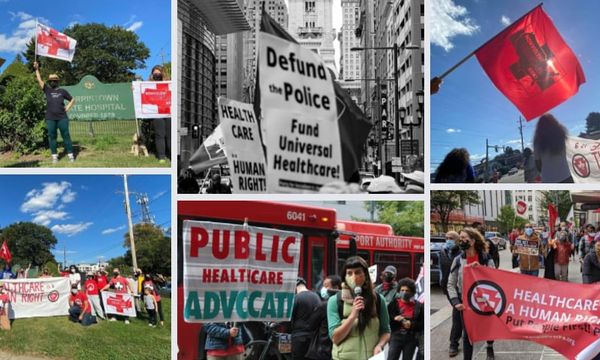
Getting into Step! Seven Medicaid Marches in PA during Week of Action
Statewide Action: Medicaid Marches! People First! PA, a grassroots human rights organization with nine Healthcare Rights Committees representing members across the state, held MEDICAID MARCHES in seven locations across Pennsylvania during the first week of October. Marches were held in Altoona…
Read more →Medicaid March Press Coverage
Links to Coverage about PPF-PA Medicaid Marches Multiple local news outlets covered the Medicaid Marches across the state. Stay tuned for additions! Shout out to Put People First! PA’s Media & Communications team for extensive work on press releases, calls and follow up. Johnstown Tribune-Democrat…
Read more →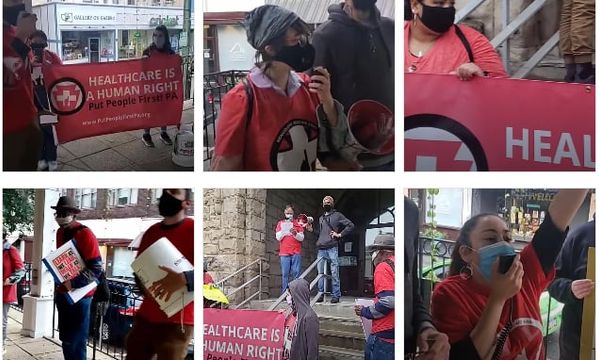
Johnstown HRC brings demands to City Council
From the Johnstown Healthcare Rights Committee’s Medicaid March: Today we brought our demands to City Hall, we gave them this letter: September 29th, 2019 Dear Mayor Janakovic and City Council: The Johnstown Healthcare Rights Committee of Put People First! PA is alarmed at City Council’s plans to…
Read more → PRESS RELEASE: HUNDREDS TURN OUT LOCALLY FOR “MEDICAID MARCHES”
*For Immediate Release* PRESS CONTACT:Nijmie DzurinkoPhone: 215-667-0066Email: nijmied@gmail.comPut People First! PAPutpeoplefirstpa.org HUNDREDS TURN OUT LOCALLY FOR “MEDICAID MARCHES” IN JOHNSTOWN, ALTOONA, PITTSBURGH, PHILADELPHIA, WILKES-BARRE, MONTCO, AND LANCASTER PA MARCHES RESPOND TO GOV…
Read more →South Central Medicaid March Letter to the Editor Series
South Central Medicaid March Letter to the Editor Series “Why I’m joining the South Central PA Medicaid March on October 3rd” Medicaid Marches started in Vermont by the Vermont Workers Center a couple of years ago. They found them a very effective tactic especially for consolidating their base…
Read more →Medicaid Marches: We have to stay in the streets!
We have to stay in the streets! Join Put People First! PA and partners for our statewide week of action: Medicaid Marches! Below are basic details and links. Please RSVP on facebook and share the event so we can get a strong turn out across the state and country! Johnstown March for Medicaid…
Read more →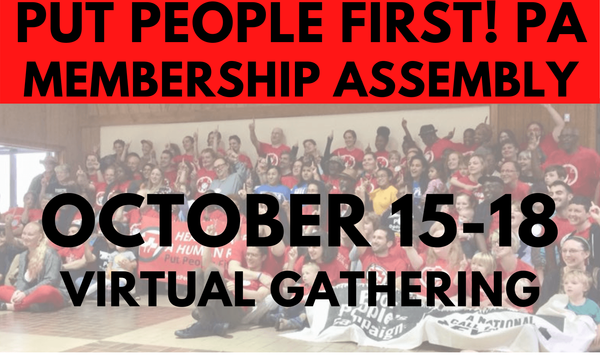
SAVE THE DATE! 8th Annual Membership Assembly Oct 15-18
The 2020 Membership Assembly is almost here! Our eighth annual membership assembly will be a virtual gathering this year, with various sessions taking place between the evening of Thursday October 15 and the afternoon of Sunday October 18th. We’ll begin on Thursday evening with a PPF-PA 101 for…
Read more →Letter to the Editor Workshop
Have you ever read over the Letter to the Editor section in a newspaper and thought: “How the heck did that get published?!” Well we have, too! The thing is good writing and an important message alone won’t get you published. There is a formula for writing a letter to the editor. They’re clear…
Read more →Altoona “OUT TO LUNCH AND OUT OF TOUCH!” action
Altoona “OUT TO LUNCH AND OUT OF TOUCH!” action The Altoona Healthcare Rights Committee held a rally outside the office of Representative John Joyce (R-13) to protest the failure of Congress to pass a COVID-19 relief bill before taking recess until September. Altoona residents and speakers…
Read more →Lancaster: Projects of Survival and Direct Action
Lancaster: Projects of Survival and Direct Action Throughout August and into September the Lancaster Healthcare Rights Committee has been working hard to expand their “Projects of Survival” plan by taking direct action and organizing local fundraisers to get their donated van inspected and support…
Read more →PPF-PA in Solidarity with BLM march facing violence in Central PA
Put People First! PA in Solidarity with Black Lives Matter (BLM) march facing violence in Central PA On Monday night August 24th, a group of Black Lives Matter protesters was the target of a shooting by a resident in Bedford County, PA. One protestor was shot. He was treated at Conemaugh Hospital…
Read more →Lancaster Residents Speak Out Against Inhumane Conditions and Public Health Crisis at Lancaster County Prison
Lancaster Residents Speak Out Against Inhumane Conditions and Public Health Crisis at Lancaster County Prison On Saturday, August 22nd, the Party for Socialism and Liberation (PSL)-Lancaster hosted an emergency speak-out rally on the steps of the Lancaster County Courthouse to stand with those…
Read more →Put People First! PA Statement of Solidarity with Quilombo Campo Grande, MST
Put People First! PA Statement of Solidarity with Quilombo Campo Grande, MST Context: Landless Workers Movement, Movimento dos Trabalhadores Rurais Sem Terra (MST) in Portuguese, is a mass social movement in Brazil, formed by rural workers and by all those who want to fight for land reform and…
Read more →Johnstown: March against police violence; Fight for Human Rights
JOHNSTOWN – On Saturday, August 1st, Put People First! PA and supporters held a ‘March against police violence; Fight for Human Rights’ in Johnstown starting at Central Park and continuing on to the police station to then City Hall and the Conemaugh hospital Lee campus. Demands during the march…
Read more →Video: We declare Jubilee!
On June 14th, 2020 the PA Poor People’s Campaign: A National Call for Moral Revival held a statewide caravan in Pittsburgh, Harrisburg, Philadelphia and Northeast PA, lifting up 15 sites of systemic injustice to advance campaigns on various fronts of struggle while uniting our class across lines of…
Read more →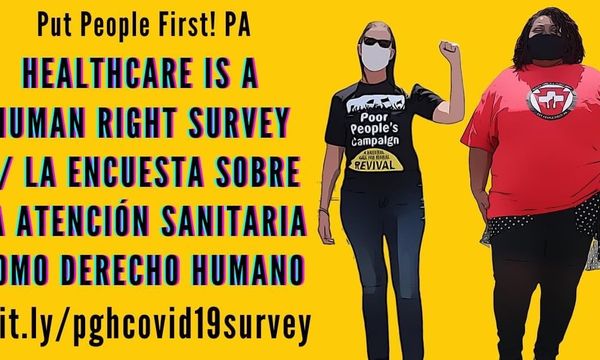
SWPA: Healthcare is Human Right Survey // La Encuesta Sobre la Atención Sanitaria como Derecho Humano
We need your input! If you live in Southwestern PA click here bit.ly/pghcovid19survey to take our survey on your healthcare experience during the pandemic. Millions of us are losing health insurance, can’t pay for medications, and still can’t get a Covid19 test. We are documenting these experiences…
Read more →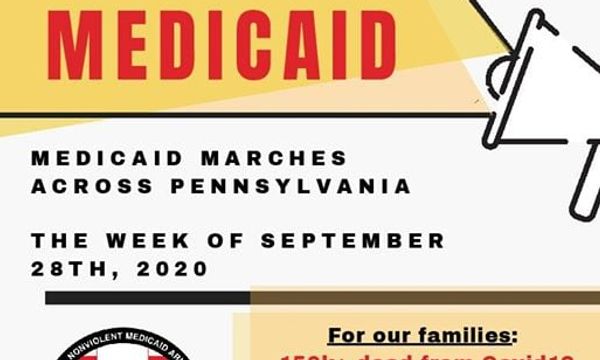
Save the date: Medicaid Marches Week of 9/28
SAVE THE DATE: Medicaid Marches across PA week of September 28th! March for Medicaid! *For our families: 150k+ dead from COVID. *For our people: the 700 people already dying every day from poverty! *Change comes from below, not above! Join us! We are building the Nonviolent Medicaid Army. The…
Read more →
MontCo: Where do we go from here?
Montgomery County Healthcare Rights Committee held its first ever action on August 8th in Willow Grove on the theme of Where do we go from here? It was a call to get organized after an incredible summer of multiracial protest. We highlighted the three interrelated crises of racist police violence…
Read more →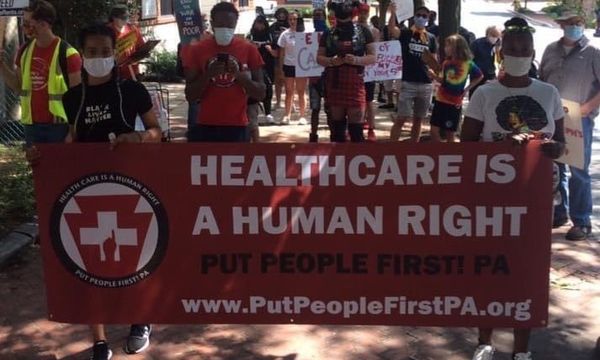
March for Human Rights Ends with State Violence
On Wednesday August 5th, 2020 Put People First! PA’s Lancaster Healthcare Rights Committee called for a “March to End State Violence: Fight for Human Rights”. The purpose of the event was to hold all power holders accountable to ending state violence in all its forms and to refocus our community’s…
Read more →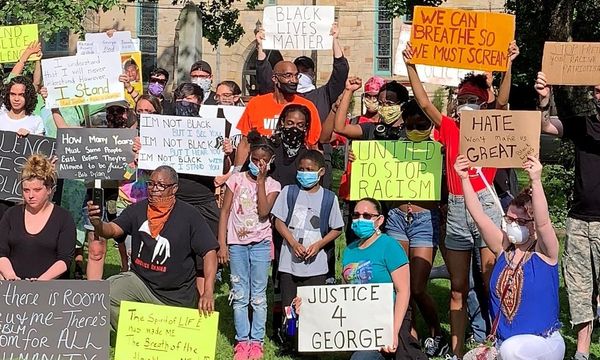
Put People First! PA condemns state violence against people in need of healthcare
Recently, three incidents of state violence against people in need of healthcare have wracked Pennsylvania. Residents in physical and/or mental health crisis need medical attention, not police violence. These are only the most recent examples of our for-profit healthcare system discriminating…
Read more →MontCo HRC Co-leads Rally Against Wastewater Privatization in Norristown
Frances Gilmore MontCo Healthcare Rights Committee co-coordinator Jacob Butterly responded to a last-minute request to help organize a rally in Norristown on Saturday, July 11th, to protest the privatization of the city’s sewage and wastewater treatment. Requests came from Norristown Opposed to…
Read more →Internal Lobby Day Sharpens our Understanding of the Public Healthcare Advocate
Barbara White On July 9th, the Campaign Team led 33 PPF-PA members and friends in a deep dive into the nature and importance of a Public Healthcare Advocate (PHA) for Pennsylvania. Achieving legislation to create this statewide office is one of our two medium-term campaigns. PPF-PA conducts this…
Read more →Ending State Violence – Popular Education with Put People First! PA
Last Saturday 7.11.20 long-time and new members of PPF Joined in our July, Monthly Political Education session from 11:00 am to 12:30 pm. Normally the session is held on the first Saturday of the month, but it was postponed this month due to July 4th. This session focused on the systemic…
Read more →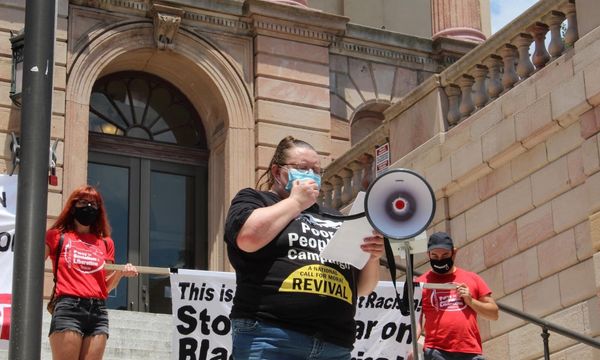
“End the Cruel Conditions in Lancaster County Prison”
Tammy Rojas On July 5, 2020 the Lancaster Healthcare Rights Committee CoHosted an action with Party for Socialism and Liberation- Lancaster “End the Cruel Conditions in Lancaster County Prison” to protest the recent death of an inmate at the Lancaster County Prison (LCP). We were also joined by a…
Read more →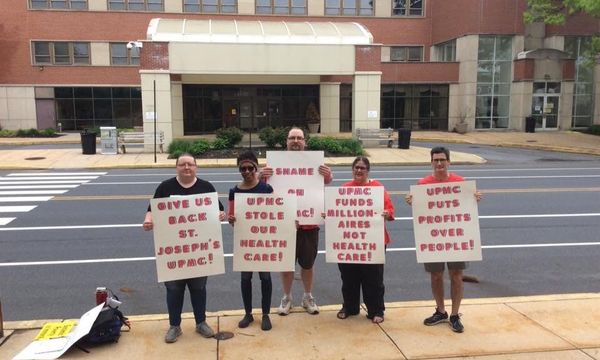
Does UPMC Have Too Much Power in PA? Virtual Town Hall held June 4th proclaims a strong “Yes”
“Recently Harrisburg Democrats and their allies waged a campaign to get Speaker Turzai to resign over his cover-up of a COVID19 infection in the legislature. However when he allows UMPC to write legislation of which they are a direct beneficiary, we don’t hear a peep,” remarked Nijmie Dzurinko…
Read more →
“Let’s get organized”
by Terrell Turner of Stewartstown, York County Campaigns come and go, and it seems like that’s a rollercoaster a lot of us are tired of, especially in defeat. At the end of it all there’s a lot of broken relationships, distrust, and helplessness. People we consider heroes show us just how human…
Read more →
FreeThePeople hunger strike to free state prisoners
by Frances Gilmore, Montgomery County Healthcare Rights Committee We’ve all experienced quarantine now, not bad for those with roomy living space, very tough for families crowded into small spaces, for undocumented families receiving no government benefits, and for the unhoused community. But…
Read more →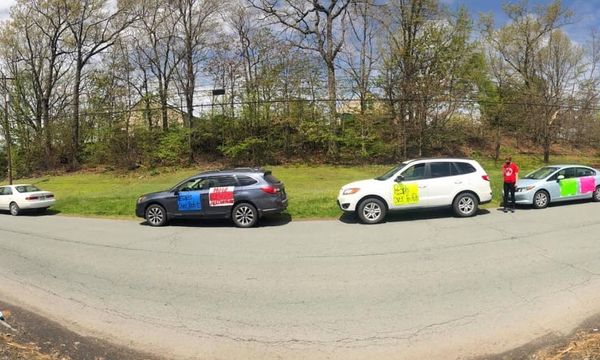
From the Frontlines PPF-PA May 2020 Actions and Updates
Statewide Call Report BackOur May Statewide Membership Call had five dozen participants from across the state tuning in for a chance to dialogue with special guests Dr. Armen Henderson of the Dream Defenders and Kristin Colangelo of the National Union of the Homeless. Dr. Henderson made national…
Read more →NEPA’s First Car Caravan Action
From the frontlines: The First Northeast PA Healthcare Rights Committee Action! On Sunday May 17th, the Northeast PA Healthcare Rights Committee took their first public action with a car caravan of solidarity to nursing home workers and residents. Community members including healthcare workers from…
Read more →COVID-19 actions continue, members speak out!
People’s Strike: Fighting for Our Lives, Forging Our Future On May 1st, International Workers Day, Put People First! PA accepted an invitation to be part of a day-long streaming event with Cooperation Jackson about organizing around the country. PPF-PA members Nijmie, Terrell, Karim, and Hope…
Read more →May Virtual Lobby Day
Virtual lobby day May 7, 2020 Barbara White, Pittsburgh HRC Put People First! PA is dedicated to achieving a Public Healthcare Advocate Office at the state level for Pennsylvania residents. Especially during the Covid-19 pandemic, this office would focus on advocating for patient-residents as a…
Read more →
Letter to the Editor, The Tribune- Democrat
Rev Calvin Hart, Johnstown February is Black History Month, and the Rev. Martin Luther King is one of the many contributors to shine a light on black history. Commonly known because he was a reverend, he is being studied more because of his political stances. Coming more from a strict religious…
Read more →
Restore the Adult Dental Benefit in Medicaid NOW!
Barbara White, Pittsburgh HRC, Campaign Team On April 2d, 2020, Put People First! PA hosted our first Virtual Lobby Day. We had planned to join an in-person lobby day in Harrisburg on March 17th with the Oral Health Coalition, but it was canceled due to the Coronavirus pandemic. Undaunted, we…
Read more →
The Latest KEYSTONE Spring/Summer 2020 Edition
Click here to read the latest edition of The KEYSTONE: Spring/Summer 2020, a Biannual Newsletter by Put People First! PA. 24 pages of member created content! Articles will be uploaded to the blog shortly. OR read it in magazine form here: http://online.fliphtml5.com/kmdcb/anqt/ We still plan on…
Read more →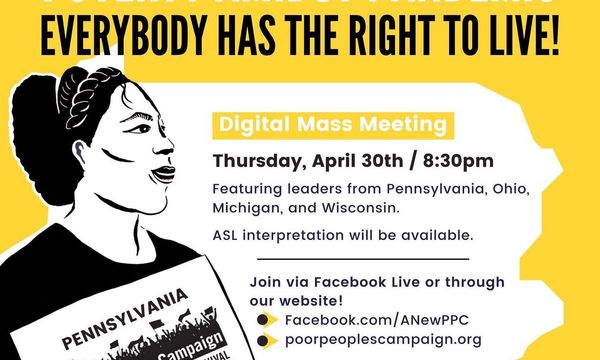
Digital Mass Meeting: Thursday, 8:30 pm
MASS DIGITAL MEETING: Poverty amidst pandemic! Everybody has the right to live! Next Thursday: April 30th @ 8:30 pm. ASL interpretation available. Join PPF-PA and the PA Poor People’s Campaign: A National Call for Moral Revival. Featuring leaders from Pennsylvania, Ohio, Michigan and Wisconsin…
Read more →Watch: Video with PPF-PA & The People’s Forum in series: the People’s Response to the Crisis
Read more →Read: Analysis by PPF-PA Healthcare Worker
Read: Analysis by PPF-PA Healthcare Worker I WORK AT A NEW YORK SAFETY-NET HEALTH SYSTEM that serves poor folks who are mostly Black and brown. The primary-care clinic where I am a resident closed two weeks ago: like most major hospital systems throughout the US, the hospital has put a stop to all…
Read more →Statement to Philadelphia & Pennsylvania Government Officials: We Won’t Let You Leave Our People Behind!
Statement to Philadelphia & Pennsylvania Government Officials: We Won’t Let You Leave Our People Behind! PPF-PF joined with various organizations this week to call on our city and state government to do more: Our immigrant communities, the poor, and the working class have always been left out of…
Read more →“Philly Can’t Wait! Re-open Hahnemann!”
April 02, 2020FOR IMMEDIATE RELEASE Press Contact:Clarissa O’Conor717-203-4097clarissaoconor@gmail.comPhiladelphia Healthcare Rights Committee, Put People First! PA “Philly Can’t Wait! Re-open Hahnemann!” Community members, including healthcare workers, took action outside closed Hahnemann Hospital…
Read more →Reopen Hahnemann: COVID ACTION!
PPF-PA Hahnemann Reopening Action Remarks April 2, 2020 For recorded live stream of Hahnemann action, go to PPF-PA’s facebook page here. Karim Nathan Put People First! PA Member www.putpeoplefirstpa.org My name is Karim Nathan. I am a doctor and a member of Put People First! PA. Put People First…
Read more →How the crisis affects you Request for Reflections
Request for Reflections: How the crisis affects you The Media & Communications Team is looking for members to write reflections on the current pandemic crisis to post on the Put People First! PA website blog. We’re looking for personal stories on how you’re being affected and the organizing work…
Read more →Report from the Front lines on COVID-19
Report from the Front lines on covid-19 Statewide On March 27th at 10 am Put People First! PA held a virtual rally and demand delivery to Governor Wolf calling on the state to: Immediately re-open closed hospitals such as Hahnemann in Philadelphia, UPMC Pinnacle in Lancaster (Formerly St…
Read more →COVID-19 Decreasing Panic and Increasing Awareness / Disminuyendo el pánico y aumentando la conciencia
COVID-19 Decreasing Panic and Increasing Awareness / Disminuyendo el pánico y aumentando la conciencia Español abajo SymptomsSymptoms are different for every body, could be: cough, fatigue, sore throat, and/or fever. Symptoms range from none (asymptomatic) to mild, moderate or severe. If it is…
Read more →Community Care Virtual Events!
The Community Care Team is continuing our weekly virtual-social events through the month of April: Movie Nights (Thursday Evenings) Join to enjoy a movie and optional discussion! We will alternate between “Family Movie Nights” featuring kid-friendly fun films, and movies with a political education…
Read more →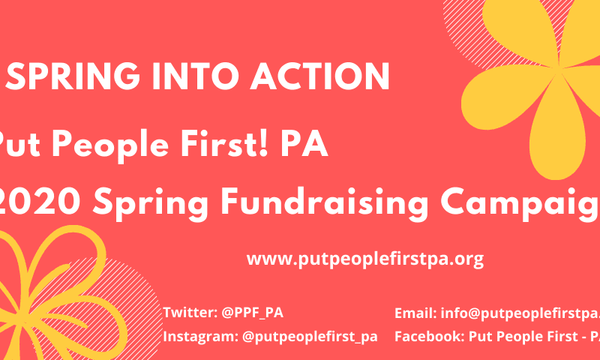
Direct Support to Members – PPF-PA Community Care Fund
Announcing Put People First! PA’s Spring Into Action Fundraising Campaign! PPF-PA recently established a Community Care Fund to support the material needs of our coordinators & active members during this crisis – lost wages, rent, utility bills, food, childcare, & other basic needs. Donations go…
Read more → I’m a laid off union worker, my healthcare is not guaranteed
I’m a laid off union worker, my healthcare is not guaranteed by Amalia Kalisz Tonsor How are you being affected by the pandemic? Below is a personal reflection from Amalia, a PPF-PA member living in Pittsburgh who was laid off in mid-March. In the past two weeks, 830,000 Pennsylvanians have…
Read more →From Elections to Politics
by Nijmie Zakkiyyah Dzurinko, with edits and contributions from Iaan Reynolds and Borja Gutiérrez Every day it is more apparent that the world is both ripe with possibility and on the brink of destruction. We are living through an ecological collapse and we are at the beginning of a global…
Read more →Community Care Virtual Social Events!
Community Care Virtual Social Events! Movie Nights Hop onto the PPF Zoom Line to enjoy a movie with your favorite comrades — and no need to sneak in the snacks! This works best for those with video call capabilities. If you have questions, contact Jacob Butterly. Thursday, March 19th at 8:00pm…
Read more →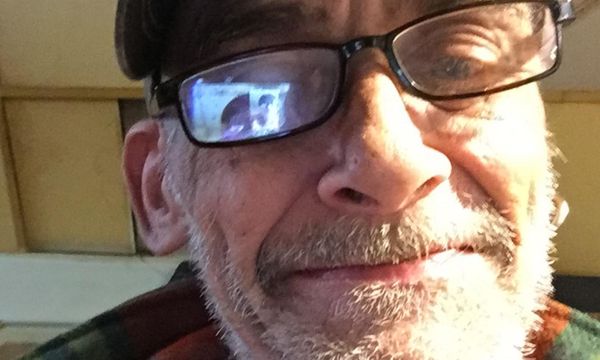
Remembering Put People First! PA member Brett
Thursday, March 12 was a day like any other. People went about their lives.The sun was shining. The earth continued to spin on its axis. But I didn’t notice those things. The only thing I remember is that on that particular day, Brett Majorowicz died in the early hours of the morning. On Wednesday…
Read more →
Mauna Kea & The Indigenous Voices of the Poor People’s Campaign: A National Call for Moral Revival
Mikalani is the Indigenous woman who came to us – The Indigenous Voices of the Poor People’s Campaign: A National Call for Moral Revival – asking for our support and to help bring awareness to whats happening there. Mauna Kea is a sacred mountain, on sovereign land – the U.S. government never asked…
Read more →
Addiction is a Healthcare Issue
The Addiction is a Healthcare Issue event was co-sponsored by Put People First! PA and The Center county DSA. This event was focused not around blaming or shaming addicts, but around education and life saving knowledge. We 1st spoke about the social conditions that contribute to addiction and the…
Read more →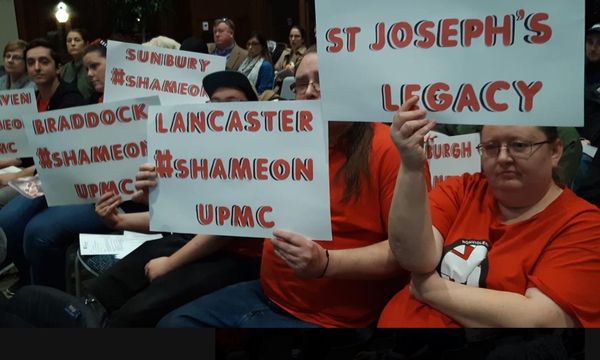
Stop the UPMC Rezoning Petition! Videos & Media Coverage
On Martin Luther King Jr. birthday the Lancaster Healthcare Rights Committee of Put People First! PA took action at the Lancaster City Planning Commission Meeting to stop the UPMC rezoning petition. Tammy Rojas, Put People First! PA, mentioned poverty stats for Lancaster, PA and shared a vision for…
Read more →
Dark Was the Night, Cold Was the Ground – Theo-Musicologist Reflections from the Struggle
Jacob is a Co- Coordinator of the Montgomery Healthcare RIghts Committee and a PA Poor People’s Campaign: A National Call for Moral Revival Theo-Musicologist. December 21, 2019, I was fortunate enough to join the Lancaster County Homeless Union and Put People First PA Lancaster Healthcare Rights…
Read more →Lancaster Healthcare Rights Committee Hosts “Week of Action” (Part 3/3) Vigil: Day of Remembrance
Action Three “Vigil: Day of Remembrance” Binns Park: National Homeless Memorial Day: December 21, 2019 The Lancaster Healthcare Rights Committee joined the Lancaster County Homeless Union for a “Vigil: Day In Remembrance” event to culminate our “Week of Action.” Homeless Union chapters all over the…
Read more →Lancaster Healthcare Rights Committee Hosts “Week of Action” (Part 2/3) Stop the UPMC Rezoning Petition
“Call to Action! Stop the UPMC Rezoning Petition” Lancaster City Planning Commission Meeting Action: December 18, 2019 Wednesday December 18, 2019 marked the one year anniversary of when our fight to “Save St. Joseph’s Hospital” began and we once again found ourselves in City Hall in battle with…
Read more →Lancaster Healthcare Rights Committee Hosts “Week of Action” (Part 1/3) Stop the Water Shut Offs!
Lancaster Healthcare Rights Committee Hosts a “Week of Action” Sunday December 15th through Saturday December 21st Prequel to the “Week of Action” Throughout the month of November and leading into the month of December there was a political shift that took place in Lancaster, PA. The working class…
Read more →End Family Separation! Rally & Candlelight Vigil
Members of Put People First! PA, and Every Mother is a Working Mother supported by the PA Poor People’s Campaign a National Call for Moral Revival hosted a vigil on December 18, 2019 outside the Blair County Courthouse to demand an end to family separation. Families from across Pennsylvania…
Read more →Final call: Next week join PPF-PA’s Winter Reading Group!
Final call: Next week join PPF-PA’s Winter Reading Group! This January and February, Put People First! PA hold our 3rd Annual Winter Reading Group. This year we’ll be studying the politics and economics of health care. The Winter Reading Group is all about preparing the leaders of our organization…
Read more →
We did it! Over $11,500 in Year End Fundraising
We did it! Over $11,500 in Year End Fundraising! Thank you for your support. Put People First! PA, being an organization of and for the working class, relies on everyday, working class folks for support of our work. This makes grassroots fundraising efforts extremely important. In mid-November, we…
Read more →2019 59 posts
PPF-PA Montgomery County stands with laid off Tower workers
Healthcare Profiteering Hurts Workers and Patients: Put People First Stands with Laid-Off Workers at Chestnut Hill and Pottstown Hospitals Join the fight for Healthcare as a Human Right with Put People First! PA The Montgomery County Healthcare Rights Committee of Put People First! PA (PPF) stands…
Read more →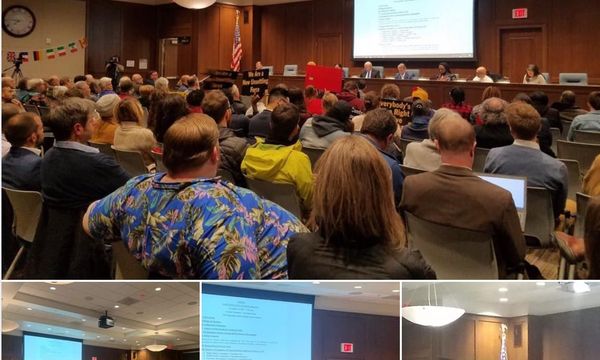
Lancaster City Council Action: “Fight Poverty Not the Poor”
The Lancaster Healthcare Rights Committee of Put People First! PA held an action at Lancaster City Hall on Tuesday November 12th, they had great support from those in the community. A previous Lancaster City Mayor expressed he stands by the Lancaster HRC and wishes the city would address the issue…
Read more →Pittsburgh Beauty and Order Team – Reportback from the 2019 Membership Assembly
For the 7th Annual Membership Assembly, the Pittsburgh HRC Beauty and Order team decided to design and assemble fabric banners for the opening ceremony and to decorate the Sanctuary where we held meetings on Saturday October 12th. For the opening ceremony, we displayed a banner: “All Our Health Is…
Read more →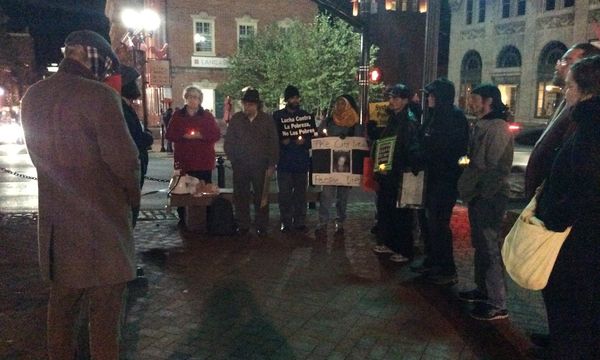
Lancaster County Homeless Union takes first action
On Friday Nov 1, 2019 at 6:45 pm, the newly formed Lancaster County Homeless Union took its first action at Penn Square in Lancaster Pennsylvania. They partnered with the Lancaster Healthcare Rights Committee of Put People First! PA to host a vigil for Desierie Quintero, a leader in the California…
Read more →In Memory Of (Keystone Fall 2019/Winter 2020 Blog Series)
Felicia Lanceby LaMetta Davis Remember Felicia Lance with smiles for all the joy through all the years. She came to Put People First! PA’s Leadership Institute and the Membership Assembly last year. She was about to become a regular member. I bless the memories within my heart because I can’t see…
Read more →Arts & Culture (Keystone Fall 2019/Winter 2020 Blog Series)
I’m on the Side of the Earth lyrics by John Peacefire There’s so many more of us than there are of them. So many of our kin are just born into this mess. I don’t know why the police aren’t on our side. I don’t know why we’re not all on the same side. I’m …
Read more →Sing, People, Sing! Which Side Are You On? (Keystone Fall 2019/Winter 2020 Blog Series)
Within Put People First! PA, singing is a growing practice of our organization that deepens our collectivity and solidarity with one another. As we struggle together to end the systems of oppression that we live under, we are creating a collective identity of our class that is rooted in the…
Read more →Draft PPF-PA Community Care Fund Policy – July 2019 (Keystone Fall 2019/Winter 2020 Blog Series)
by The Community Care Team Put People First! PA members struggle daily to meet basic material needs. We choose between paying for prescriptions or our utility bills. We ask ourselves is the priority next month’s rent or putting food on the table this month? PPF-PA’s Community Care Team is…
Read more →Lancaster Healthcare Rights Committee Timeline: A Roadmap (Keystone Fall 2019/Winter 2020 Blog Series)
The Lancaster Healthcare Rights Committee has come a long way over this past year. We have held bi-monthly Committee meetings, contributed to the work on some of the statewide teams, met with state and local representatives, and made base building and outreach a priority. through every action we…
Read more →Indigenous Voices of the Poor People’s Campaign (Keystone Fall 2019/Winter 2020 Blog Series)
by Jennina Rose Gorman aka Katsitsioasta and Rachel Ishikawa Rachel: Could just start by saying a little intro your name who you are? Jennina: My name is Jennina Rose Gorman in English and Katsitsioasta in Haudenosaunee, which is my father’s language. My father led the first Civil Rights March on…
Read more →Lessons from the Popular Education Project’s Summer School of Resistance 2019 (Keystone Fall 2019/Winter 2020 Blog Series)
by the delegation to the Political Education Project (PEP) school with support from the Political Education and Leadership Development team For three weeks this summer, Kiki, Tammy, Hope and Jae attended the Popular Education Project’s Summer School of Resistance as the delegation from Put People…
Read more →Put People First! PA’s Demand for a Public Healthcare Advocate (Keystone Fall 2019/Winter 2020 Blog Series)
By the Campaign Team What is a Public Healthcare Advocate?A public advocate (sometimes called an ombudsman) is an appointed public official who helps protect the people against abuse by private and public powers. In our proposal, a Public Healthcare Advocate would manage an office whose whole staff…
Read more →Dispatches from the UK (Keystone Fall 2019/Winter 2020 Blog Series)
My name is Philip. I have had the privilege of visiting the US several times over the last few years. Two times on a J1 visa to work over the summer and another for a shorter but still sweet visit. I struggle to stay away: the wide open spaces, impressive vistas but mostly importantly, the …
Read more →
Member Reflection: Nathaniel Warren (Keystone Fall 2019/Winter 2020 Blog Series)
The first time I heard of Put People First! PA was when the Lancaster HRC began organizing around the closing of St. Joseph’s Hospital. At the time I couldn’t participate much, but I started to talk with members and helped put up posters about the action. About half a year later I was finally able …
Read more →RIP Medical Debt (Keystone Fall 2019/Winter 2020 Blog Series)
By Nijmie Dzurinko Did you know that some scholars believe that Jesus died for our debt, not our sins? According to economist Michael Hudson, the word for sin and debt is the same in almost every language. He and other scholars like the Rev. Dr. Liz Theoharis assert that the Bible is about…
Read more →The Closing of Hahnemann Hospital (Keystone Fall 2019/Winter 2020 Blog Series)
This Spring, Hahnemann Hospital, a 150+ year old Philadelphia Institution, declared bankruptcy and began the process of closing its doors. Here is the story of Hahnemann through member stories. Member Remarks given at the Poor People’s Campaign: A National Call for Moral Revival Hearing Clarissa…
Read more →Transitions and Transformations: Building the Philadelphia Healthcare Rights Committee (Keystone Fall 2019/Winter 2020 Blog Series)
With support from the statewide Base Building team, we identified in the Spring of 2019 that the Southwest Philly Healthcare Rights Committee (HRC) was not becoming a political center of gravity in our region, even after several years of work. The HRC played a key role in winning our first ever…
Read more →Struggle is a School (Keystone Fall 2019/Winter 2020 Blog Series)
By the Political Education Leadership Development (PELD) Team Put People First! PA is building the power of the Pennsylvanian poor and dispossessed through uniting across difference and taking action together. In the struggle for our basic human rights, we come up against the most powerful groups…
Read more →La lucha es una escuela (Keystone Fall 2019/Winter 2020 Blog Series)
Put People First! PA está construyendo el poder de las personas oprimidas y desposeídas en Pensilvania por medio de la unión a través de las diferencias y al tomar acción juntos. En nuestra lucha por los derechos humanos básicos, nos enfrentamos a los grupos más poderosos de nuestra sociedad…
Read more →Member Reflection: Kim J Atland The Air We Breathe (Keystone Fall 2019/Winter 2020 Blog Series)
I am Kim J Altland, I was born one-half of a set of conjoined twins. My brother failed to develop fully. I have had over 50 reconstructive surgeries. At 18 my doctors asked if I wanted disability, I said no. I believed the lie, “If you work hard and you try your best, help would …
Read more →Join the Base Building Intensive Group (BBIG) this Winter! (Keystone Fall 2019/Winter 2020 Blog Series)
Join the Base Building Intensive Group (BBIG) this Winter! Last winter Put People First! PA’s statewide Base Building team put on a program over two months called the Base Building Intensive Group, or the BBIG. We envisioned this group to be a place where people from Healthcare Rights Committees…
Read more →Medicaid March Reflections: Blog Series (Part 3: Lancaster)
The week of September 16th, in three sites across Pennsylvania, Put People First! PA Healthcare Rights Committees (HRCs) and sibling organizations in the PA Poor People’s Campaign: A National Call for Moral Revival took to the streets to make the invisible visible and target healthcare profiteers…
Read more →Medicaid March Reflections: Blog Series (Part 2: Johnstown)
The week of September 16th, in three sites across Pennsylvania, Put People First! PA Healthcare Rights Committees (HRCs) and sibling organizations in the PA Poor People’s Campaign: A National Call for Moral Revival took to the streets to make the invisible visible and target healthcare profiteers…
Read more →Medicaid March Reflections: Blog Series (Part 1: Philadelphia)
The week of September 16th, in three sites across Pennsylvania, Put People First! PA Healthcare Rights Committees (HRCs) and sibling organizations in the PA Poor People’s Campaign: A National Call for Moral Revival took to the streets to make the invisible visible and target healthcare profiteers…
Read more →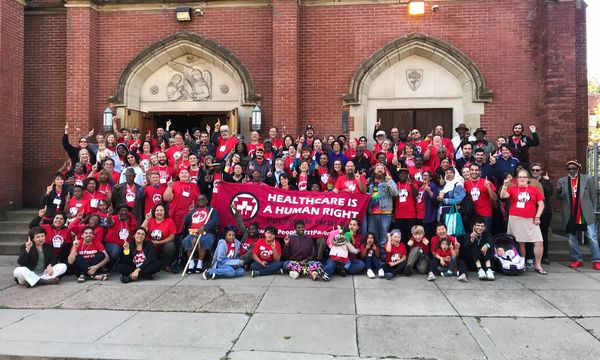
Reflections from the 7th Annual Membership Assembly in Pittsburgh
The Put People First! PA Membership Assembly happens once a year in the fall. It’s PPF-PA’s largest weekend long gathering of our membership from across the state and our family reunion of sorts where members reconnect with folks we may not have seen since the year before and welcome new members…
Read more →The Price the Poor Pay For Gentrification
“The Price the Poor Pay For Gentrification” by Tammy Rojas October 15, 2019 This article is reposted below and was first published on Medium.com (linked here). Joe Walker and his partner Carol have very graciously agreed to allow us to share their story in hopes the people of Lancaster, PA will…
Read more →Latest edition of the KEYSTONE out now!
Our semi-annual newsletter, The Keystone, is a great introduction to Put People First! PA, our work, and our community. It’s all written by our members for our own communication and education, and for supporters and new relationships to get to know us better. Each issue features reports from our…
Read more →Register: 2019 Membership Assembly
Join us for our 7th Annual Membership Assembly in Pittsburgh! Unase a nuestra septima Asamblea Anual de Membresia en Pittsburgh! Oct 11 – 13 register here / Inscribase aqui Our 7th annual Membership Assembly will be held the 2nd weekend of October in Allegheny County at the Pittsburgh Project, 2801…
Read more →Thank you! $1.6 MILLION in Medical Debt abolished!
Thank you! $1.6 MILLION in Medical Debt abolished! Put People First! PA fundraised $16,000 to abolish medical debt for thousands in Western PA Over the summer, Put People First! PA worked with RIP Medical Debt and Mark Fichman of Pittsburgh to absolve over $1,600,000 of medical debt from families…
Read more →Speak out on Hahnemann! Will you write a Letter to the Editor into Philly newspapers?
Speak out on Hahnemann! Will you write a Letter to the Editor into Philly newspapers? Hahnemann is one of Philadelphia’s oldest hospitals and sees over 50,000 patients every year. Hahnemann’s patient population is largely poor Philadelphians. More than any other, this is the hospital that serves…
Read more →Reflecting on the first Grassroots Organizing Base-Building Exchange!
Reflecting on the first Grassroots Organizing Exchange! Hosted by: Popular Education Project and Put People First! PA July 12-15th, 2019 Put People First! PA hosted 30 people from 10 States for a base-building exchange in collaboration with the Popular Education Project. People came from Alabama…
Read more →July 12-15: Event Details for Grassroots base-building exchange
Join PPF and national partners for a base-building exchange across the state this weekend From July 12 – 15, Put People First! PA will host our first ever Grassroots Organizing Exchange. The exchange will bring around 30 grassroots leaders from sister organizations from across the country to…
Read more →Immediate Release: Protest the closure of Hahnemann Hospital!
July 7, 2019 For Immediate Release Press Contact: Clarissa O’Conor(717) 203-4097clarissaoconor@gmail.com Put People First! PA member Drexel medical student Medical students join with Put People First! PA, patients, staff, nurses, and doctors to protest the closure of Hahnemann Hospital! What…
Read more →Put People First! PA Leaders Reflect on the Poor People’s Campaign Moral Action Congress (Series)
Put People First! PA Leaders Reflect on the Poor People’s Campaign Moral Action Congress (Series) By Tammy, Lancaster A lot took place during the three day action in Washington D.C and it took a few days afterwards for everything that took place to really sink in for me. Each day went by fast and…
Read more →Put People First! PA Leaders Reflect on the Poor People’s Campaign Moral Action Congress (Series)
Put People First! PA Leaders Reflect on the Poor People’s Campaign Moral Action Congress (Series) By Savannah, Johnstown Hello, my name is Savannah Kinsey Co- Coordinator of the Johnstown Healthcare Rights Committee, and part of the base building, and fundraising teams. After attending the Poor…
Read more →Put People First! PA Leaders Reflect on the Poor People’s Campaign Moral Action Congress (Series)
Put People First! PA Leaders Reflect on the Poor People’s Campaign Moral Action Congress (Series) By Kiki, Johnstown The Moral Action Congress was an amazing show of unity. I don’t think there was any gathering of working class people from all over the country as big or significant. Pennsylvania’s…
Read more →Put People First! PA Leaders Reflect on the Poor People’s Campaign Moral Action Congress (Series)
Put People First! PA Leaders Reflect on the Poor People’s Campaign Moral Action Congress (Series) By Jennina, Altoona This year, I was fortunate enough to be able to go to the 3 day Poor People’s Campaign Moral Congress in DC. Leaders and organizations comprised of the Poor and working class, came…
Read more →Put People First! PA Leaders Reflect on the Poor People’s Campaign Moral Action Congress (Series)
Put People First! PA Leaders Reflect on the Poor People’s Campaign Moral Action Congress (Series) Karim, Philadelphia For me, the 2019 Moral Action Congress with the Poor People’s Campaign came at a time when I’ve been reflecting more actively on how racism and the war economy have affected my…
Read more →“Poor people got an audience with Democratic candidates. Many were skeptical that politicians can help them.”
Put People First! PA was all over print, video and radio news over the past week – highlighted from our role in the Poor People’s Moral Action Congress in Washington, D.C. Here are a few of our recent media mentions: “Poor people got an audience with Democratic candidates. Many were skeptical that…
Read more →Meet Put People First! PA’s 2019 Mother Jones Leadership Program leaders
Meet Put People First! PA’s 2019 Mother Jones Leadership Program Leaders MJLP launches with six Healthcare Rights Committee (HRC) Leaders from across the state On June 2nd and 3rd, the 4th annual Mother Jones Leadership Program launched with a retreat at beautiful Camp Sequanota in western PA. The…
Read more →Excelsior! 3 Hours of Comradery and a Window into Community
By Jennina Rose Gorman, Altoona First and foremost, I am a nerd. I need you to understand that to preface this story. I come from a long line of family who love The Shire, wished others to “Live long and Prosper”, believed in the power of the force, and looked up to Stan Lee and …
Read more →Hot off the Press: 2019 Spring/Summer KEYSTONE now Available!
Our semi-annual newsletter, The Keystone, is a great introduction to Put People First! PA, our work, and our community. It’s all written by our members for our own communication and education, and for supporters and new relationships to get to know us better. Each issue features reports from our…
Read more →VICTORY! Lancaster City Council unanimously votes YES for a Public Healthcare Advocate
VICTORY! Lancaster City Council unanimously votes YES for a Public Healthcare Advocate Tuesday, April 9 — The Lancaster City Council unanimously voted YES for Put People First! PA’s resolution for a Public Healthcare Advocate for the state of Pennsylvania, making Lancaster the first city to do so…
Read more →Pittsburgh Put People First Statement on the Rosfeld Verdict March 2019
Pittsburgh Put People First Statement on the Rosfeld Verdict March 2019 Thank you to Put People First Johnstown (March 27th) and Put People First Lancaster (March 29th) for holding vigils to lift up voices for Antwon Rose II, a teenager who had been shot in the back by a police officer last summer…
Read more →Johnstown Vigil in honor of Antwon Rose II and for those demanding justice
Johnstown Vigil in honor of Antwon Rose II and for those demanding justice Put People Frist! PA’s Johnstown Healthcare Rights Committee and the Unity Coalition of the Southern Alleghenies, both Johnstown based, organized a vigil in Johnstown’s Central Park on March 27, 2019 to stand in unity with…
Read more →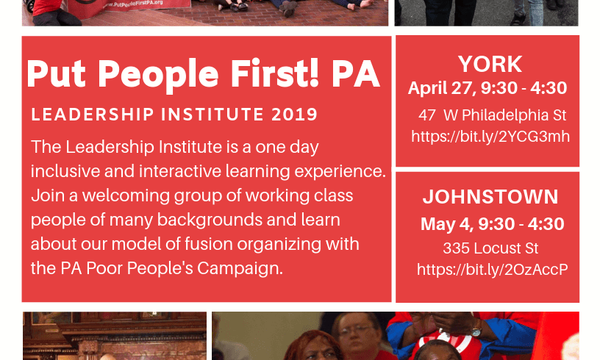
Registration Open: PPF 2019 Leadership Institutes in York & Johnstown
Registration Open: PPF 2019 Leadership Institutes in York & Johnstown The Leadership Institute is a one day inclusive and interactive learning experience. No prior experience in organizing or with Put People First! PA required. Join a welcoming group of working class people of many backgrounds and…
Read more →
Put People First! PA to erase $1.5 million of medical debt in Western PA
Put People First! PA to erase $1.5 million of medical debt in Western PA WHO: Put People First! PA and RIP Medical Debt WHAT: Campaign to Abolish Medical Debt in Western Pennsylvania WHERE: Online at https://secure.qgiv.com/event/putpeoplefirst WHEN: Launches April 2, 2019 Pittsburgh, PA— Put…
Read more →Reflection: January 2019 Winter Reading Group
As part of ongoing work to promote political clarity in PPF! PA, the Political Education and Leadership Development Team (PELD) and PPF members statewide participated in a January 2019 Winter Reading Group (WRG). The group read four chapters of the forthcoming Kairos Center book; A New and…
Read more →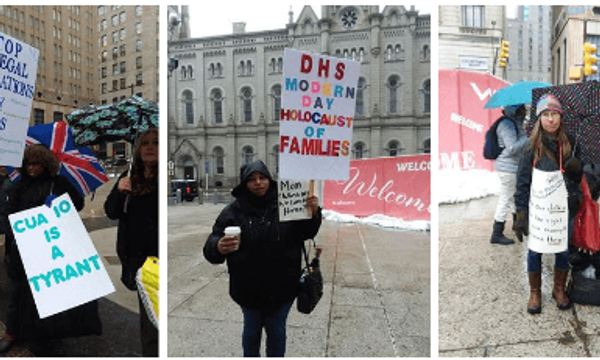
PA Poor People’s Campaign Underground Railroad Action Alert: DHS Stop kidnapping our children!
On February 12, 2019 parents in Philadelphia and across the PA descended on Philadelphia City Hall for an action and public hearing to testify to the abuses of the Department of Human Services (DHS) and to demand an end to the forced separation of children from their parents. Philadelphia has the…
Read more →The Keystone: Fayette Health Justice Issue Winter 2019
Check out this new edition of The Keystone: Fayette Health Justice Issue Winter 2019. The Keystone is a publication by members of Put People First! PA that comes out twice a year. This is a special edition created by the Fayette Health Justice Healthcare Rights Committee. The Keystone: Fayette…
Read more →“Take Back St. Joseph’s – Part Three: Weekend of Action & Final Chapel Service
This is the third post of a three part series by Tammy and the Lancaster Healthcare Rights Committee (HRC). In December 2018, Lancaster community members were told UPMC Pinnacle Lancaster — one of only two hospitals in Lancaster City — was slated to close by March 1st. UPMC had owned the hospital…
Read more →“Take Back St. Joseph’s – Part Two: Personal & Spiritual Connection”
This is the second post of a three part series by Tammy and the Lancaster Healthcare Rights Committee (HRC). In December 2018, Lancaster community members were told UPMC Pinnacle Lancaster — one of only two hospitals in Lancaster City — was slated to close by March 1st. UPMC had owned the hospital…
Read more →
“Take Back St. Joseph’s – Part One: History”
This is the first post of a three part series by Tammy and the Lancaster Healthcare Rights Committee (HRC). In December 2018, Lancaster community members were told UPMC Pinnacle Lancaster — one of only two hospitals in Lancaster City — was slated to close by March 1st. UPMC had owned the hospital…
Read more →Residents Host Community Forum and Vigil Final Weekend before UPMC Closes Doors
February 20, 2019FOR IMMEDIATE RELEASE Press Contact: Tammy Rojas (717) 205-3230tammyrojas1977@gmail.com Lancaster Healthcare Rights CommitteePut People First! PA Residents Host Community Forum and Vigil Final Weekend before UPMC Closes Doors Put People First! PA – Lancaster Healthcare Rights…
Read more →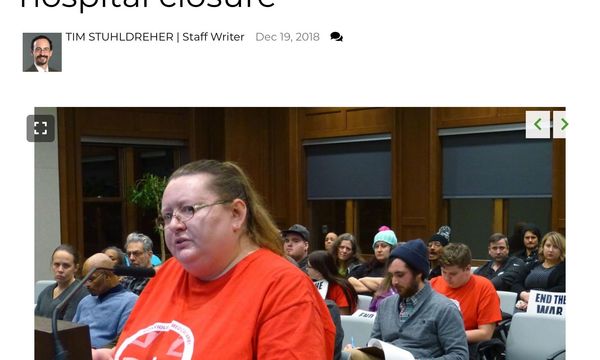
Give UPMC an earful! Write a Letter to the Editor by March 1st
Keep UPMC Pinnacle Lancaster Open: Write a Letter to the Editor by March 1st Lancaster HRC is asking for solidarity from across the state in the struggle to keep UPMC Pinnacle Lancaster open and accountable to the people. Will you write a Letter to the Editor (LTE) to show where you stand? Here’s a…
Read more →Winter Base Building Intensive Group (BBIG)
Are you ready to ramp up your base-building? Gain skills and become more confident in reaching folks in your community The Base Building team is coordinating a Winter Base Building Intensive Group (BBIG) of people throughout the organization who are committed to working on their base building…
Read more →Patients, Providers, and the Working Class:
Practices for Healthcare Workers in the Poor People’s Campaign: A National Call for Moral Revival By Karim Sariahmed, Jacob Hope, Clarissa O’Connor, Noha Eshera, Zach Hershman We define the “working class” as anybody who has to sell their labor. This definition includes “middle class,” “upper…
Read more →“Lancaster Residents Call on City Leaders to Keep UPMC Pinnacle Open”
The Put People First! PA Lancaster Healthcare Rights Committee (HRC) has been fighting to keep Lancaster UMPC Pinnacle open since finding out about it’s slated demolition in December 2018. This past Tuesday, February 12 the Lancaster HRC was in front of City Council again demanding justice. Here’s…
Read more →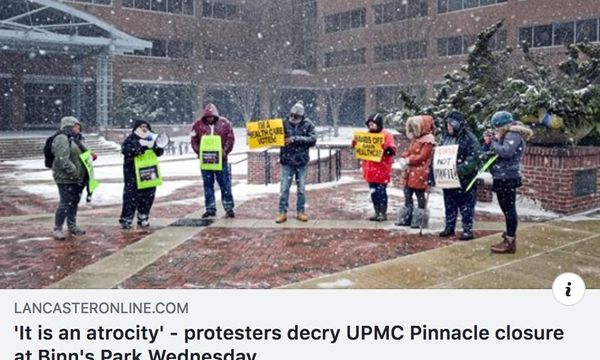
Lancaster Residents Dig in for a Fight “Keep these doors open UPMC!”
January 28, 2019FOR IMMEDIATE RELEASE Press Contact: Tammy Rojas (717) 205-3230tammyrojas1977@gmail.com Lancaster Healthcare Rights CommitteePut People First! PALancaster Residents Dig in for a Fight To Keep UPMC Open Put People First! PA – Lancaster Healthcare Rights Committee to rally at office…
Read more →2018 4 posts
Put People First! PA holds Statewide Week of Action against Healthcare Profiteers
September 19, 2018 IMMEDIATE RELEASE Put People First! PA holds Statewide Week of Action against Healthcare Profiteers Last week, September 10th-17th, Pennsylvanians experiencing poverty, disability, or difficulty meeting their basic needs held public demonstrations as part of a Statewide Week of…
Read more →PPF Fall 2018/Winter 2019 Keystone News is here!
The Fall 2018/Winter 2019 Keystone News is here! The Keystone News is Put People First! PA’s entirely member-produced newsletter, coordinated by our all-volunteer Media and Communications Team. This edition features updates on our Healthcare Is a Human Right Campaign and how we’re building a…
Read more →
Put People First! PA Statement on Attacks on Medicaid and SNAP
Living in poverty is hard. It’s a daily struggle to survive. Every year, the Harrisburg power holders attack the poor of Pennsylvania by trying to force hard-working folks off of Medicaid (welfare insurance) and SNAP (food stamps). Unfortunately, this year is no different. House Bills 2138 and HB…
Read more →
Pennsylvania joins 32-state launch of Poor People’s Campaign
Poor People’s Campaign: A National Call for Moral Revival Media Advisory for February 5, 2018 Contact: Nijmie Dzurinko 215-667-0066 nijmie@putpeoplefirstpa.org Poor People, Clergy and Activists to go to the Capitol, Demanding Moral, Just Political Agenda; Vow Historic Wave of Nonviolent Civil…
Read more →2017 17 posts
Embodying Our Power at the IBX Tower
Embodying Our Power at the IBX Tower by Anna Cibils, Philly I didn’t grow up going to protests or actions. For years after moving to the US I was in the process of applying for US citizenship, and so I learned that any expression of any kind of political opinion could cost me and my …
Read more →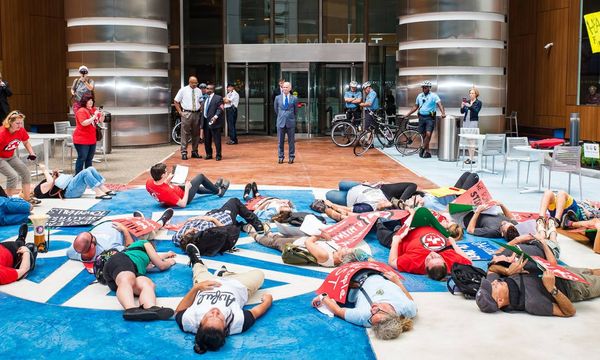
Victory! PPF Wins Town Halls Across PA
by Hilary O’Connell, Philly, and Campaign Team Photo: Put People First Members from Philly and South Central PA staged a die-in outside Independence Blue Cross (IBX) Headquarters in Philadelphia, demanding IBX’s attendance at the Southeast PA Town Hall. Credit: Chris Baker Evens At a Put People…
Read more →PPF Newsletter Fall 2017-Winter 2018
Check out the PPF Fall ’17-Winter ’18 newsletter! Featuring articles from members across the state and curated by the Media and Communications Team! PPF Fall-Winter 2017
Read more →PPF in the Fight for the ACA
by Irish, Pittsburgh There is a lot of insecurity in my family around healthcare. Our income has been unstable, and often shrinking, since 2013 when Lyme disease and cancer stopped my partner and me, respectively, from working. The ACA made it possible for us to have access to health insurance, but…
Read more →Insurance Town Halls: Reflection from Altoona
By Danelle Morrow, PPF member in Johnstown, PA On August 14th in Altoona, the Pennsylvania Insurance Department held the second of nine promised Town Hall meeting about ACA/Obamacare insurance rate hikes. We won these Town Halls — making them an official part of the rate-setting process — after…
Read more →Put People First! PA joins nationwide effort to defend Medicaid, fight ACA repeal without better replacement and call for universal healthcare!
**MEDIA ADVISORY FOR WEDNESDAY, JULY 19** Contact: Nijmie Dzurinko, Put People First Campaign Team (484) 619-2306 Put People First! PA joins nationwide effort to defend Medicaid, fight ACA repeal without better replacement and call for universal healthcare! In wake of healthcare bill collapse…
Read more →PGH: Put People First! PA and SEIU Healthcare PA hold memorial, call for better care and wages outside of local nursing home
Put People First! PA and SEIU Healthcare PA hold memorial, call for better care and wages outside of local nursing home On Saturday afternoon about 20 people rallied outside of ManorCare Health Services – Pittsburgh, calling for better care for patients and better wages for workers at the facility…
Read more →How Put People First says “yes” to universality
Read an excerpt from a workshop by PPF member, leader and co-founder Nijmie Dzurinko at the Philly Leadership Institute last month! One way that a human rights framework is strategic is that when we talk of universality, it’s about opening up the space. We need healthcare for people who are locked…
Read more →Small moments of connection are our victories
the following is an anonymous member reflection Having a rough day at work and wanted to share a small victory I had thanks to — and a moment that made it clear to me once again, why we need universal health care and so much more… **The only trauma talked about below is related to …
Read more →Como educación y mi activismo cambió la opinión de mi esposo
Articúlo original: http://www.truth-out.org/speakout/item/39326-an-almost-trump-voter-how-education-and-my-activism-changed-my-husband-s-opinion Jueves, 2 de febrero, 2017. Danielle Morrow (traducción: Anna Cibils) Mi esposo, Kevin, fue un casi-votante de Trump. Nosotros vivimos en el condado de…
Read more →Keystone News: A Member Newsletter, Spring-Summer 2017
Read on for stories and poems from members across PA! PPF Spring-Summer 2017 Newsletter
Read more →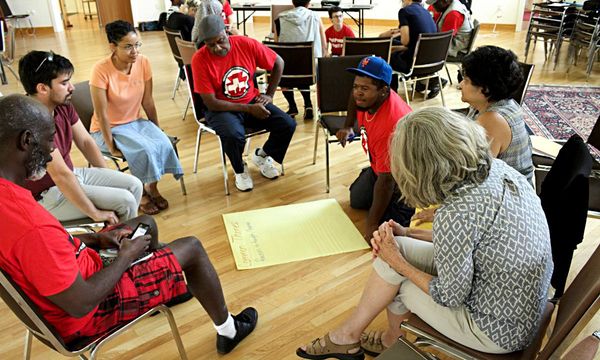
Register for the 2017 Leadership Institutes
Fill out the form below to register for our 2017 Leadership Institute! It’s a free one-day experience that has prepared dozens of community leaders to build lasting commitment and involvement and to move from mobilization to organization. This year, the Leadership Institute, grounded in the…
Read more →WATCH: Healthcare is a Human Right video!
Want to know what victory feels like? Watch this new video about Put People First and the Healthcare is a Human Right Campaign by Desi Burnette.
Read more →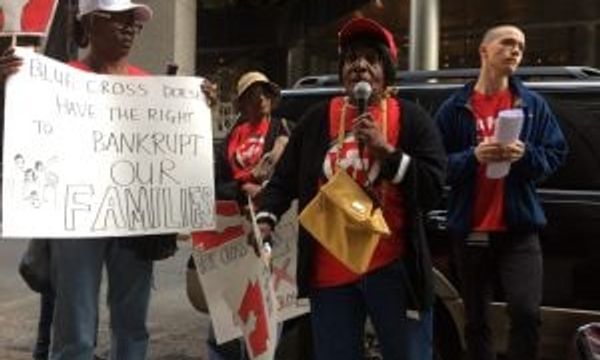
Five Key Things to Know about the Republican Healthcare Plan
Paul Ryan and the House Republicans finally put out their health care plan, the American Health Care Act (AHCA), though the plan is in fact less about health care than it is about redistributing wealth. The plan would deliver half a trillion dollars in tax cuts to corporations and the wealthy by…
Read more →“Health and dignity for everybody — not just a few.” PPF leader Farrah speaks out
On January 26th while the Republican leadership was in Philadelphia, PPF joined thousands in the streets and demanded health care. Put People First leader and fundraising team member Farrah Samuels gave a speech. Watch it here and read the transcript below! We believe that health care is a basic…
Read more →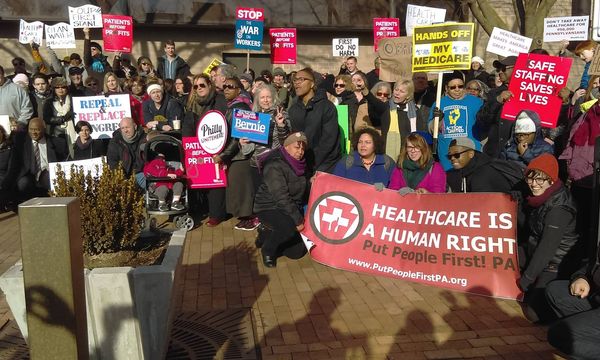
Put People First Turns Out for Health Care, Sanctuary Cities, #reclaimMLK and more!
Put People First PA joined millions of people across the United States and world between January 14-20 demonstrating around Martin Luther King Jr. Day and at actions demanding positive change and policy for our communities and families. January 14 LANCASTER In Lancaster, PPF representing the Poor…
Read more →
In Loving Memory of Isabella Oliveras
On Jan. 10, 2017, Isabella (Bella) Oliveras, a PPF Member from Johnstown, PA, passed away in her sleep at home with her husband, Daniel. Bella was a new member of PPF, having joined the Johnstown OC in 2016, but her impact on the organization was distinct. She brought her entire self to the…
Read more →2016 37 posts
Remembering Fallen Member Tiffany Walker
Tiffany Lynn Walker: 5/21/75 – 12/13/16 Last Tuesday, Johnstown Put People First member Tiffany Walker passed away at home. Another PPF member, Bella Oliveras, was with her when she passed. Tiffany was a new member — she had been in PPF for less than a year — but she made a major impact on the …
Read more →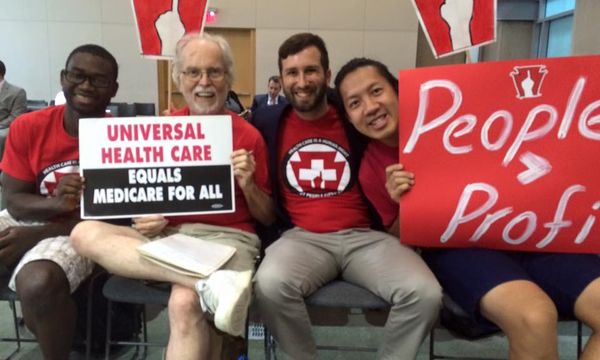
Attacks on health care: what we expect
Ben Palmquist, member of the Put People First! PA Campaign Team and Campaign Manager for the National Economic and Social Rights Initiative, wrote the following guide to help us understand the upcoming threats, challenges, and opportunities with healthcare in the U.S. Put People First is committed…
Read more →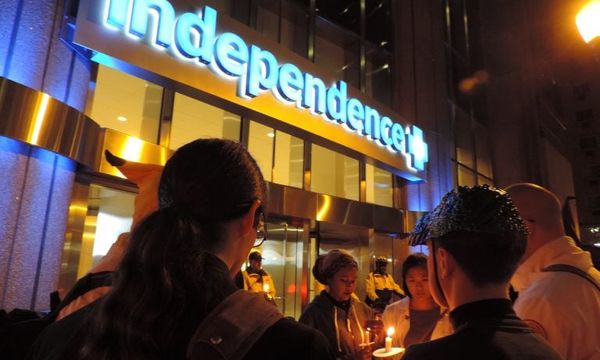
PPF Represents at Students for a National Healthcare Program #TrickNotTreat Action
feature image via SNaHP and Amanda Malik Check out Put People First campaign team member and medical student Karim Sariahmed speaking with other medical students, PPF members and local activists at Students for a National Healthcare Program’s #TrickNotTreat action! Demonstrators gathered at…
Read more →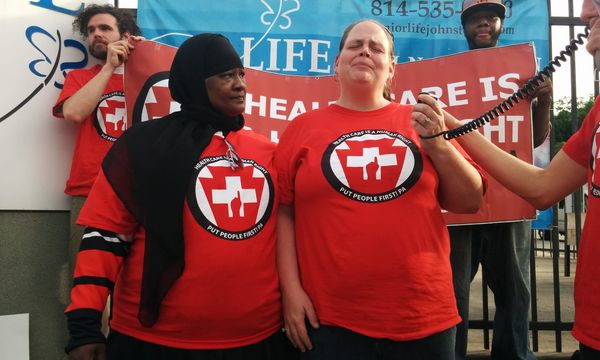
Put People First! PA: Statement on the 2016 Presidential Election
Two visions were on the table in this election: One, an America that uses words like “freedom” and “liberty,” but takes us back to a time before social movements won civil rights for women, black people, LGBTQ people, disabled people and others. The second, an America where anyone can get ahead no…
Read more →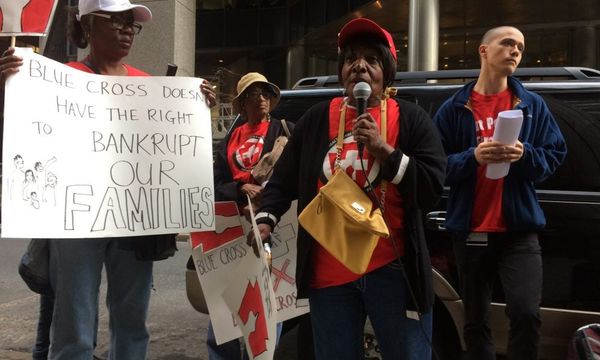
Dozens Protest ACA Insurance Rate Hikes at IBX Headquarters
On November 3, dozens of Philadelphians demonstrated outside the corporate headquarters of Independence Blue Cross at the height of rush hour traffic in Center City to speak out against rising Affordable Care Act premium rates that are impacting residents across Pennsylvania. Members of grassroots…
Read more →York OC Hosts Healing Halloween
The York OC spent Halloween building community in West York at the Hallo-WE Together Festival. York PPF members stepped up to organize the festival after its usual sponsor backed out. They gathered donations and volunteers from throughout the community to create a safe and fun space for area…
Read more →
Poem: “What it means to be a vibrant woman”
Johnstown member Isabella (Bella) Oliveras is a poet. She penned the following poem after the membership assembly in October, reflecting on the importance of women leaders in our movement, particularly the legacy of Mother Jones and Johnnie Tillmon, who Bella recognized as advocates and leaders. We…
Read more →PPF Denounces Attack on MST National School
On Friday November 4th in the state of São Paolo, Brazil, 10 vehicles from the Civil Police broke into the National School Florestan Fernandes (ENFF), in the town of Guararema. Two Movimiento Sem Terra (MST/Landless Workers Movement) organizers were arrested. The MST is one of the largest social…
Read more →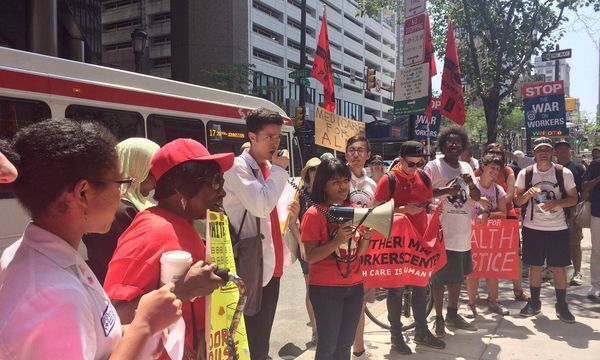
Media Advisory: Philadelphians to Protest ACA Insurance Rate Hikes
MEDIA ADVISORY For release October 25th, 2016 Philadelphians to Protest ACA Insurance Rate Hikes Who: Put People First! PA, a statewide grassroots organization bringing everyday people together to fight for health and dignity. More at www.putpeoplefirstpa.org When: Thursday, October 27th, 4:30pm…
Read more →HB 1885 Will Endanger our Communities and Families. Tell PA legislators and Gov. Wolf to say NO!
Text and video by Krissy Mahan HB1885 seeks to divide the people of Pennsylvania. There are 32 Counties in PA that have some type of policy restricting access of Immigration and Customs Enforcement (ICE) to people in police custody. Sanctuary Cities have a tremendous impact on the immigrant…
Read more →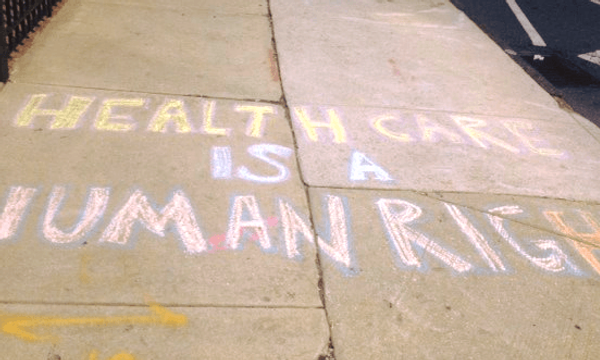
What are YOUR barriers to care? York OC hosts community healthcare forum
A healthcare forum, hosted by the York O.C. of Put People First – PA in partnership with the York NAACP and Centro Hispano Jose Hernandez of York, was held on September 27, 2016 at the Crispus Attucks Community Center. Nearly 40 residents of York County across the spectrums of age, race, ability…
Read more → Help Johnstown Member Bella Bounce Back!
Isabella (Bella) Oliveras is an amazing leader who recently joined the blossoming Johnstown organizing committee. About a dozen people from Johnstown made the trip to Harrisburg for the Membership Assembly on October 1-2. Bella brought warmth and passion to the membership assembly. She called us to…
Read more →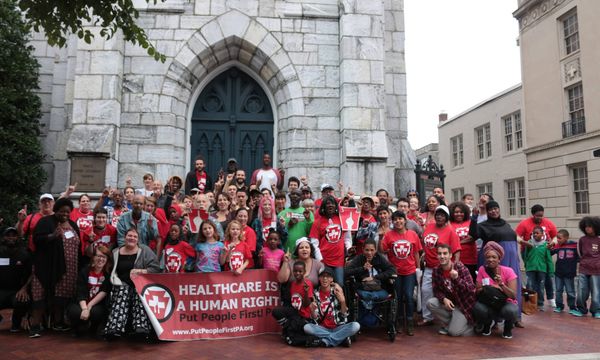
Reflecting on My First PPF-PA Membership Assembly
By Farrah Samuels 10/5/16 I’m still riding high off the buzz I got from being at the 4th Annual PPF Membership Assembly (MA) — my first! I had no idea what to expect, but I’m incredibly grateful to and in awe of the organizers and members who made this an amazing and unforgettable experience…
Read more →2017 Insurance Rates: Will they be a Trick or a Treat?
This month, the Pennsylvania Insurance Department will announce health insurance premium rates on individual and small group plans for 2017, just ahead of the open enrollment period that begins in November. In July, the Department held its first annual public informational hearing on proposed rate…
Read more →York Organizing Committee Stands up for Human Rights in York County
In the midst of a presidential contest in which 1.5 billion dollars have already been spent, West York Borough, a municipality in York County, is making national and even international news right now. The mayor of West York, who also is a Republican, posted racist and oppressive public images on…
Read more →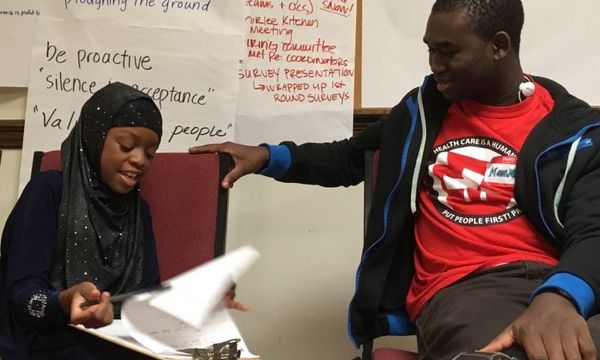
What is your favorite part of Put People First?
Put People First just came back from our fourth annual Membership Assembly in Harrisburg, PA. We spent the weekend discussing our campaigns, reflecting on what it means to be a member of PPF, sharing about gender power and gender oppression, and celebrating our victories and each other. We are…
Read more →PPF Fall 2016 Winter 2017 Newsletter
The Fall 2016/Winter 2017 Newsletter is here! Our bi-annual newsletter is hot off the presses, chock full of great contributions from our members. This past year has been an amazing one for Put People First! Read about the “2016 Summer of Action” including articles like “PPF Wins Insurance…
Read more → The people have spoken: don’t balance insurance company losses on the backs of everyday people
FOR IMMEDIATE RELEASE Contact: Nijmie Dzurinko, Put People First! PA Campaign Team Coordinator (484) 619-2306 What: Dozens from across Pennsylvania travel hundreds of miles to attend the first ever public informational hearing on proposed rate increases for individual health plans held on Wednesday…
Read more →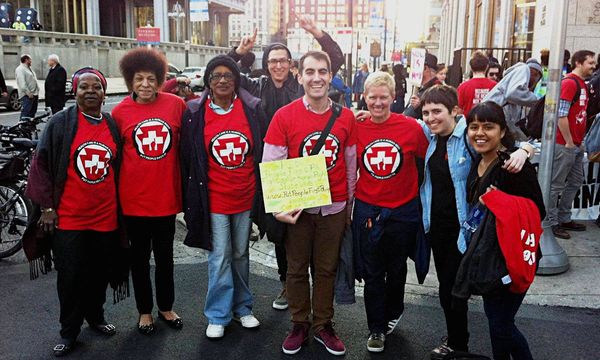
Patients and Medical Students of Pennsylvania Take Action at Independence Blue Cross During the DNC
Two IBX Customers Deliver Letter Seeking Resolution To Predatory Billing Cases FOR IMMEDIATE RELEASE Contact: Sheila Quintana, 610-732-0116, sheila26qu@gmail.com What: Patients and medical students take action to hold Independence Blue Cross accountable. Who: Put People First! Pennsylvania and…
Read more →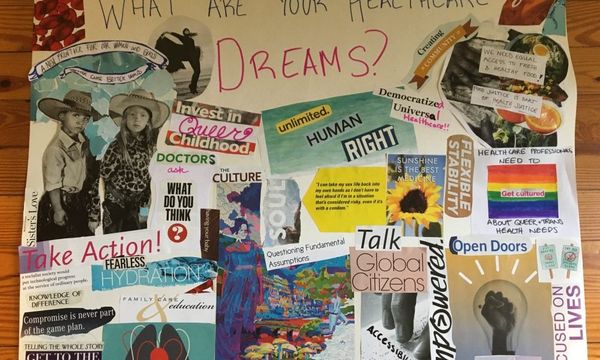
Calling Queer and Trans Voices of Put People First!!
Summer is Pride season for queer and trans communities around the world. This year, even as we celebrate ourselves, we continue to feel the aftershocks of the attacks on Latinx Night at Pulse Nightclub in Orlando. We also feel the continuing impact of transphobic and homophobic violence from…
Read more →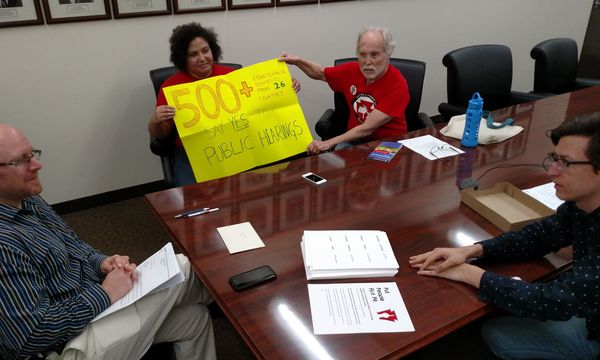
Insurance Department Hearing won by the people
July 13, 2016 FOR IMMEDIATE RELEASE Contact: Nijmie Dzurinko, Put People First! PA Campaign Team Coordinator (484) 619-2306 PA residents win first ever public hearing on rising health insurance premiums What: Public informational hearing on proposed rate increases for individual health plans Who…
Read more →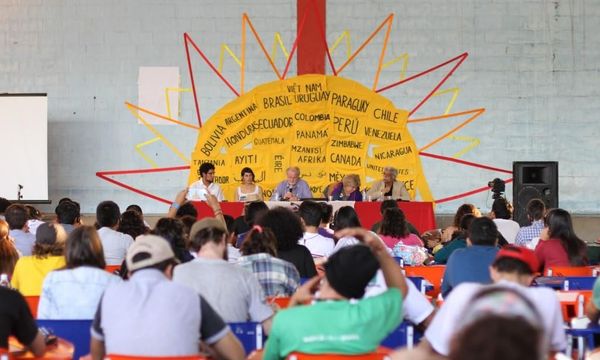
Put People First Goes to Brazil
by Roger Swartz It was a once in a lifetime opportunity and journey to the other side of the world. Brazil, a vast and beautiful landscape unlike anywhere else on the planet. It’s a country of people that have deep ancestral roots and a strong connection to the culture that is borne from those…
Read more →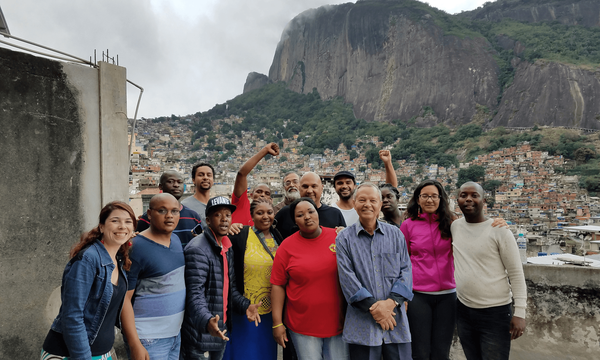
Rio Lights Up the Darkness
by Eboni Taggart Recently, on an especially lackluster day while I laid in the fetal position in bed and contemplated life, I received a text from a fellow PPF member, “Hey Eboni! I hope all is well! Would you have some time to talk later about the possibility of going to Brazil to attend an …
Read more →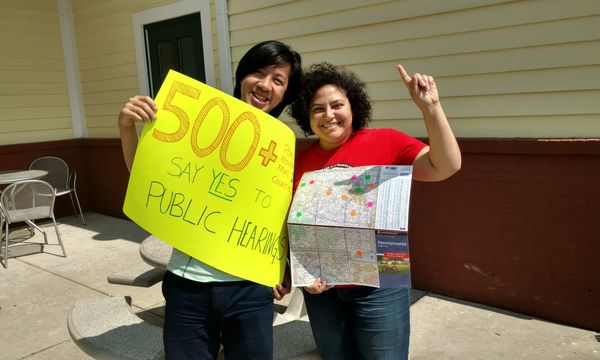
Urgent Action Needed On Health Insurance Hearings in PA
This May, we collected 500 signatures from 26 counties, requesting a public hearing before any new rate increases on Affordable Care Act plans are approved by the Pennsylvania Department of Insurance. For 2017, insurance companies have requested rate increases of up to 48% on some plans. Thank you…
Read more →PPF Statement of Solidarity and Love after Orlando Shooting
“Pulse has shown us how vital our mission is, how necessary.” Across the country these past few weeks, members of every community have felt the pain rippling from Orlando, Florida after the mass shooting at Pulse Nightclub. 49 beautiful and unique individuals, mostly from the LBGTQ community, and…
Read more →Johnstown Vigil: healing to family and heat to Senior LIFE
On Saturday, 6/18, the family of Marie Funk as well as community members and extended family from Put People First! PA gathered to pay her tribute and call attention to the negligence in her care perpetrated at the end of her life by Senior LIFE, a local healthcare provider for low-income seniors…
Read more →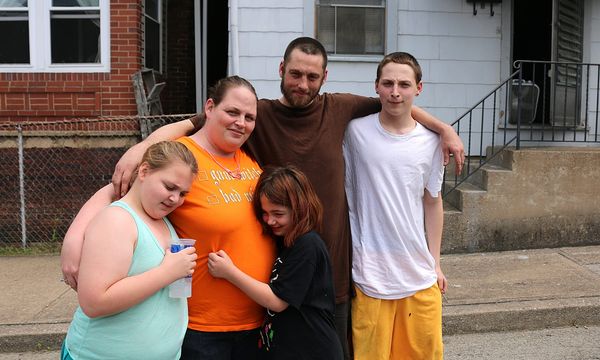
Senior Strife: Vigil for healing and accountability in Johnstown
FOR IMMEDIATE RELEASE Contact: Danelle Morrow (814) 254-6647 Senior Strife: Family and supporters to hold vigil Saturday to honor Marie Funk, call for accountability from local senior care provider What: Vigil for community healing and accountability Who: Family of late local resident Marie Funk…
Read more →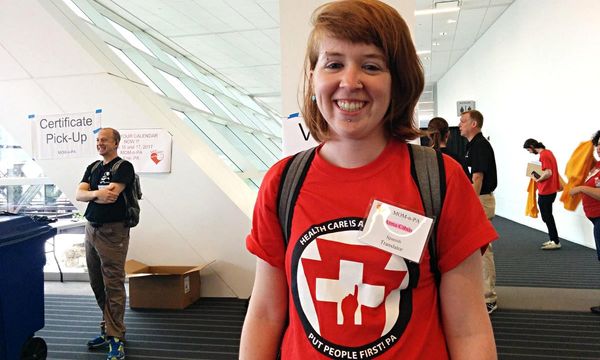
Organizing and helping out at the Mission of Mercy 2016 Free Dental Clinic
Written by Anna Cibils, PPF Base Building and Fundraising Teams Last weekend (June 3rd-5th), eight Put People First! PA members from Pittsburgh, Johnstown, York, and Philadelphia volunteered at the Mission of Mercy (MOM-n-PA) Dental Clinic in Pittsburgh. MOM is a free dental clinic that happens…
Read more →Petition Delivery A Huge Success
Today, PPF members delivered 500 signatures from Pennsylvanians in 26 counties who are requesting a public hearing before any new rate increases on Affordable Care Act/Marketplace (Obamacare) plans are approved by the Pennsylvania Department of Insurance. Also today, insurance companies’ initial…
Read more →500 join PPF’s request to the PA Insurance Department for public hearings
PA Residents Request Hearing Before Healthcare Premium Increases Over 500 PA residents from 26 counties sign petition requesting the PA Insurance Department hold public hearings on the impact of premium increases Contact: Nijmie Dzurinko (484) 619-2306 Who: Put People First! PA, a statewide…
Read more →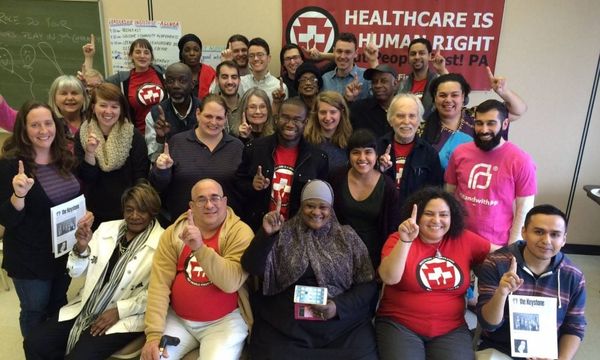
Building Leaders From Within: April Leadership Institute Report Back
by Krissy Mahan I attended the Put People First Pennsylvania Leadership Institute on April 10, 2016, held at the Hafer Center of the Lancaster Theological Seminary. I am a new member of PPF, and I feel really lucky that I was able to meet so many dynamic people from all over Pennsylvania, and to…
Read more →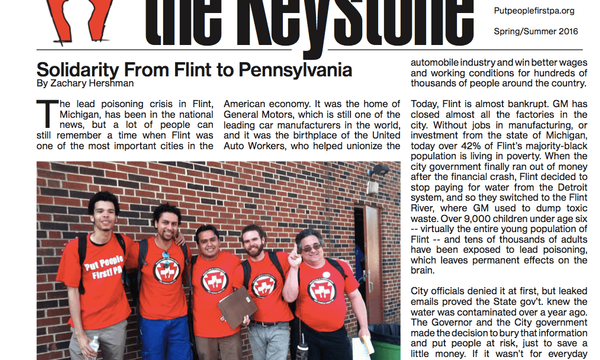
The ‘Keystone News’ for Spring/Summer 2016 is Here!!
Check out the latest edition of the Keystone News, PPF’s biannual newsletter! Featuring articles from: Danelle Morrow Zack Hershman Carla Christopher Terrell Nowlin Dan Jones Ben Palmquist and Nijmie Dzurinko with artwork from Ruth Scott and a poem by Javier Cotal PPF Newletter Spring/Summer 2016
Read more →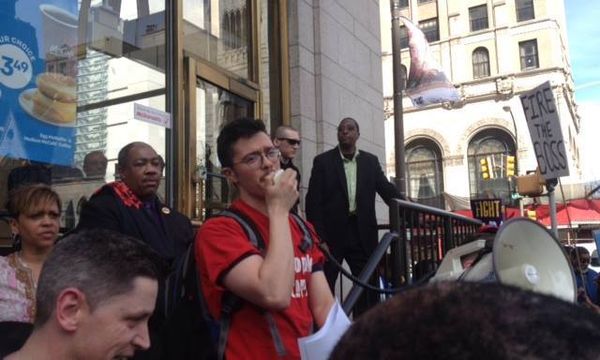
Permission to Speak
by Karim Sariahmed this piece was originally posted at In-Training.org Almost every morning, one of our physiology lecturers asks a question. Usually, it’s a question to which most of my 200 classmates would know the answer. The silence lingers until finally they get a response, often whispered…
Read more →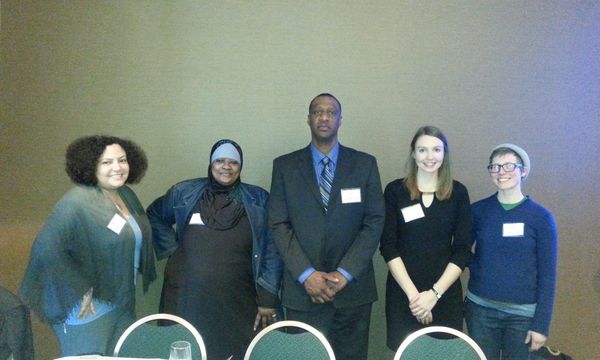
Fayette Health Justice Campaign Speaks Out at Harrisburg Summit
On Saturday, February 20th, members of the Fayette Health Justice Campaign from Put People First (PPF), the Center for Coalfield Justice (CCJ), the Human Rights Coalition (HRC) and HOPE for La Belle (via video) presented at the PA Progressive Summit in Harrisburg. The panel, entitled Uniting PA for…
Read more →We’re hiring for our video project!
Starting in the next month, we’re looking to start a video project, including short videos highlighting the stories of PPF members, documentation of our events, and longer videos that can get the word our about our campaigns and our vision. We’re interested in hiring a professional filmmaker or…
Read more →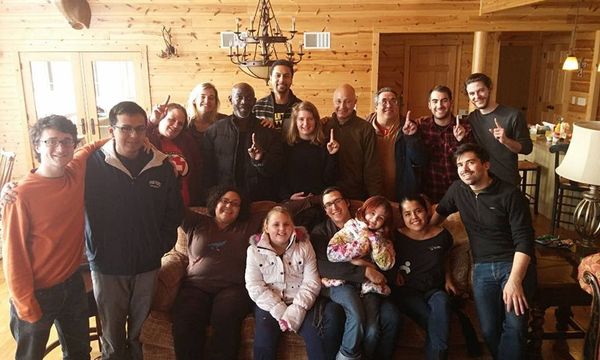
Reflecting on our Winter Retreat
A Foot Deep in Snow and Marching into the Year Ahead Put People First! PA held our first ever Winter Teams and Organizing Committees retreat In beautiful Shade Gap (Huntingdon County) on the weekend of January 23rd, 2016. This was the jump off point for the new year. We couldn’t have asked for a…
Read more →Insurance Department asks for Feedback and PPF Responds
January 29th was the date of the last PA Insurance Department’s e-newsletter. The newsletter contained an article with the following headline: “Insurance Department Issues Guidelines for 2017 Health Insurance Rate Filings”. The guidelines can be found here. What are these “guidelines” and what do…
Read more →2015 12 posts
How We Love Each Other
by PPF Member Danelle Morrow The philosophy of love goes back as far as time. Love is never-ending, and stronger than the flow of a river roaring down the mountain rushing toward the ocean. There are many types of love, and though everybody perceives it differently, the philosophy remains the same…
Read more →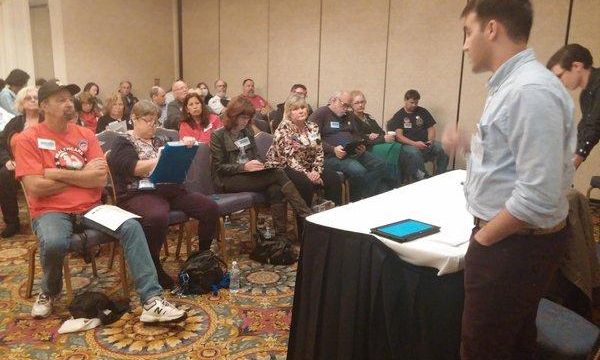
Organizing Our Whole Selves: Reflections on the 2015 Single Payer Strategy Conference
reposted from the Healthcare is a Human Right Collaborative website by Jonathan Kissam (VT Workers’ Center) and Karim Sariahmed (Put People First! PA) November 30, 2015 At the end of October, we traveled with four other people from the Healthcare Is a Human Right Collaborative to Chicago for the…
Read more →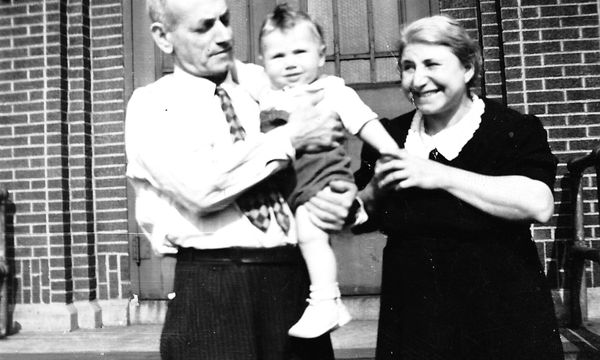
Refuge, Reason and Resolve
Read Put People First member Nijmie Dzurinko’s recent reflection on Syrian refugees and Pennsylvania – excerpt below: “We have to ask ourselves, are the Syrian refugees the source of these problems? Will not admitting refugees fleeing war and poverty solve the problems that we as poor and working…
Read more →Kingsessing residents speak out on health care challenges and rising insurance premiums
Press Release: Human Rights Town Hall in Kingsessing, Philadelphia Contact: Sheila Quintana sheila@putpeoplefirstpa.org Who: Southwest Philadelphia Organizing Committee of Put People First! PA When: Thursday, November 12th, 6pm Where: Kingsessing Recreation Center, 49th and Kingsessing Ave…
Read more →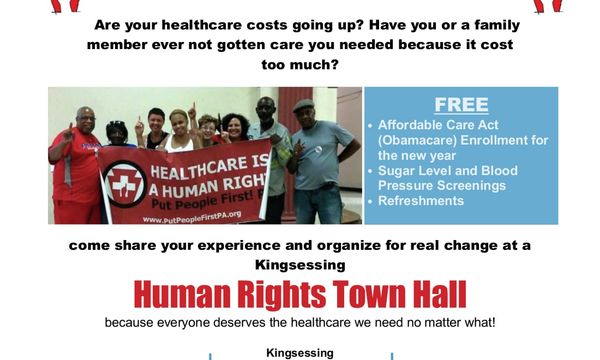
November 12th Human Rights Town Hall – Kingsessing, Philadelphia
When: Thursday November 12th, 6pm Where: Kingsessing Recreation Center (49th St. and Kingsessing Ave. Philadelphia, PA) Health insurance premiums on Affordable Care Act plans are increasing this year throughout Pennsylvania. Many of us are already struggling to get the health care we need for…
Read more →PPF Testifies at PA Insurance Dept. Hearing
On Thursday October 1, three members of Put People First attended a public hearing called by PA Insurance Commissioner Teresa Miller on “surprise billing”, which is when a person receives a bill that they weren’t expecting after getting medical care that they believed was covered by their…
Read more →The Keystone News Fall/Winter 2015 Edition is Here!
Check out the Put People First’s Fall/Winter Newsletter! This edition of the Keystone News features articles from our own Dinah DeWald, Nijmie Dzurinko, Roger Swartz, Rich Burrill and Eliel Acosta, with an interview with Kim J. Atland, and a poem by Javier Cotal. Click the link below to read on…
Read more →Join Us in Supporting Marie’s Crowdfunding Campaign for Her Cremation
by Nijmie Dzurinko When Marie Funk, mother of PPF member Danelle Morrow, first spoke with a recruiter from Senior Life of Johnstown after moving there from Altoona in January 2015, she was told she “would never have another worry about her health.” That sounded pretty great to this 69-year old…
Read more →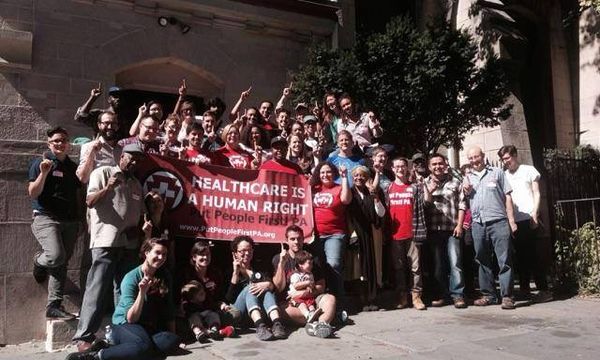
Our Third Annual Membership Assembly!
On behalf of the Membership Assembly Planning Team we are so excited to have you at the Third Annual Put People First! PA Membership Assembly coming up on in York, PA at the Unitarian Universalist Congregation of York, 925 S. George St., 17403. All of the information in this e-mail can also be…
Read more →
Alan Pean + Medical Organizing Right Now
I first heard about the shooting of Alan Pean by off-duty policemen at St. Joseph Medical Center in Houston twenty minutes after I got my first anatomy exam of medical school back. This news sounded like so much of the news I’ve gotten for the past year: an unarmed black person was shot by police …
Read more →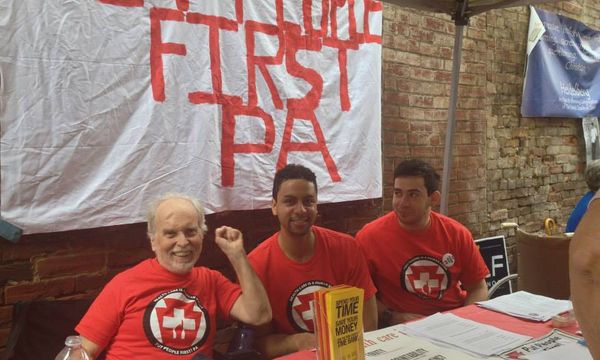
Together We Will Do This by Richard Burrill
Together We Will Do This by Richard Burrill “Money doesn’t talk, it swears.” – Bob Dylan Two years ago I attended a forum sponsored by a group called Healthcare4All at Franklin & Marshall College in Lancaster, PA. When I left that meeting, I was convinced that single-payer healthcare* was the way…
Read more →PPF-PA Statewide Healthcare Survey – Take it Today!
Put People First! PA invites you to participate in building a grassroots movement for health and dignity in our state by taking our healthcare survey and sharing it with your family, friends, neighbors, co-workers, and other community members. Over the next two months, our Healthcare is a Human…
Read more →2014 8 posts
Statement of Support for the Vermont Workers Center
Put People First! PA Stands with the Vermont Workers Center Put People First! PA stands with the Vermont Workers Center in this critical time. Right before Christmas, Vermont Governor Shumlin backtracked on his commitment to follow through on Act 48, a state law passed in 2011 requiring the state…
Read more →Demonstrating what our human right to health care looks like
Demonstrating what our human right to health care looks like Put People First Free Health Screening Clinics in PA Communities by Ash Robbins This Summer Put People First held Health Screening Clinics at outdoor community events in Central and Southeast Pennsylvania. Volunteer nurses offered blood…
Read more →Symptoms of an Undocumented Life
by Eliel Acosta, Field Coordinator, Central PA “You’re not poor because you’re an immigrant, you’re an immigrant because you’re poor” – Willie Baptist What’s the impact of living as an undocumented immigrant on one’s mental health? Does having to worry about deportation of your family or friends…
Read more →What is Single Payer?
An interview with Mark Dudzic of the Labor Campaign for Single Payer Healthcare What’s an easy way to define “single-payer” health care that everyone can understand? When you ask the American people what kind of health care system they deserve, most will agree that healthcare should be treated as a…
Read more →Statewide Membership Call Thursday September 4th @ 7 pm
Join the Statewide Membership Call Thursday September 4th at 7 pm. Hear the voices of PPF members from around the state. Find out about our upcoming Membership Assembly. Share what’s going on in your area!
Read more →Statewide Membership Call Thursday September 4th @ 7 pm
Join the PPF Statewide Membership Call Thursday September 4th at 7 pm. Hear the voices of other members from around the state. Find out more details about the upcoming Membership Assembly. Share what’s going on where you are!
Read more →Field updates from across the state
NEPA Pride “On August 11, 2014 Put People First! PA in the Northeast held our first tabling event at the NEPA Pridefest at Kirby Park in WIlkes Barre. Members Paul Deppen, Brad and Gail Artley, Alia Trindle and Nijmie Dzurinko worked together for a very successful event. Over 70 people took the…
Read more →Reserve your seat – “Mercy Killers” is coming to York, PA!
Put People First presents the acclaimed play Mercy Killers for one night only in York, Saturday August 30 at 7 pm! Mercy Killers has been called a “raw, topical piece that shows the collision of ideas and reality in a system where health and well-being go up against profits. It is a show that is…
Read more →