
Documentary screening of Healthcare in Cuba, a video about the 2024 Nonviolent Medicaid Army Brigade to Cuba
May 20, 2025
What if you could get the health care you need when you need it without worrying about a bill? Whether dental, medical, wellness, maternity, mental/behavioral, physical therapy, vision or hearing care, glasses or hearing aids, what if you could get it and not have to pay a bill? It would mean healthcare is a respected human right! It would be good, less stressful, you could feel better & live healthier and longer. And that’s what a group of Nonviolent Medicaid Army (NVMA) leaders found in Cuba, when we visited in the spring of 2024. We visited with doctors at their offices and at the Martin Luther King Center (CMLK) in Havana, sharing our experiences of healthcare in the U.S. and learning how Cuba delivers healthcare, their current challenges and what they have to share with the rest of the world that can help us build a movement for us to also have healthcare as a right for all.

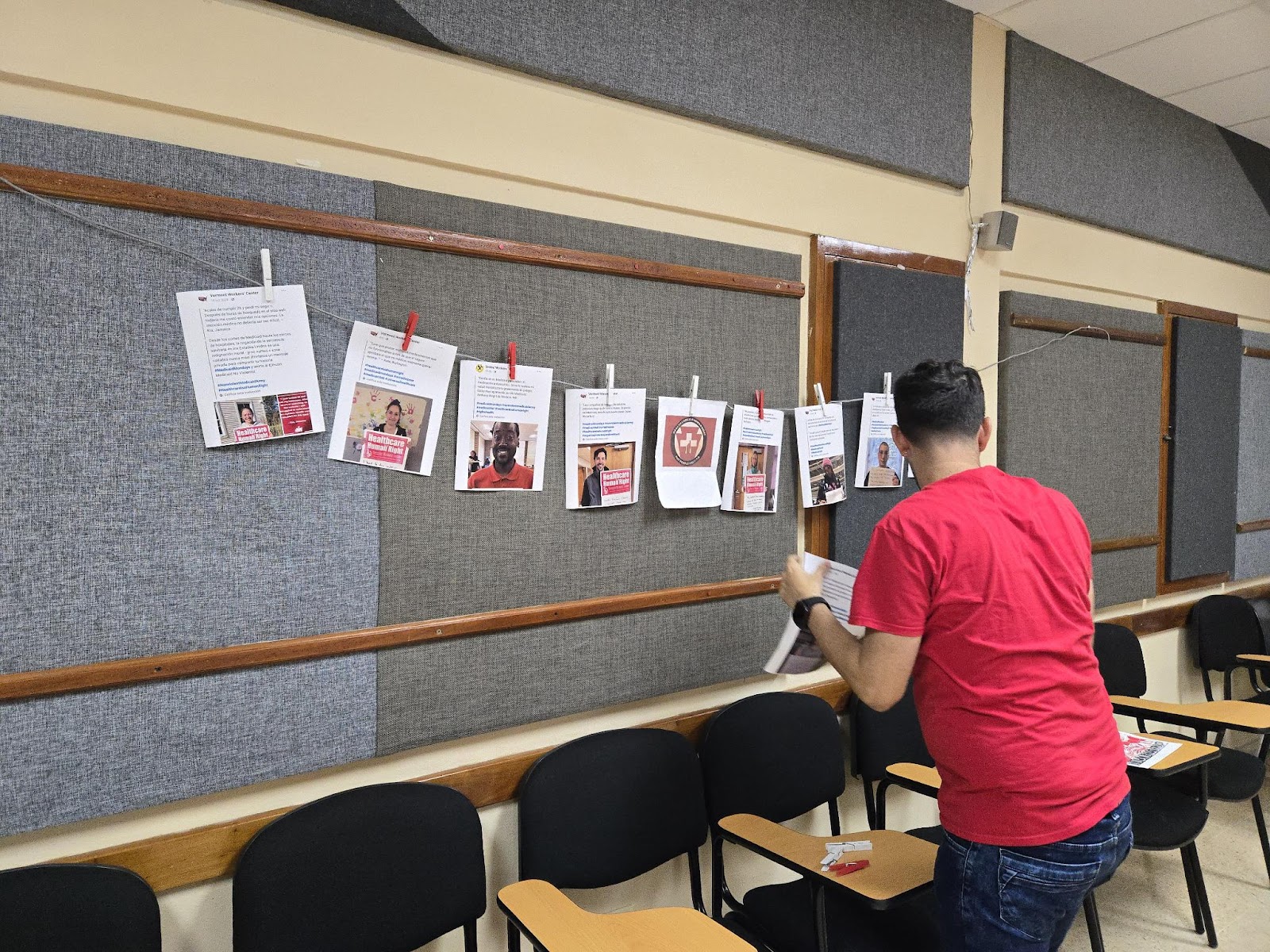
A little over one year after the brigade, and to commemorate the anniversary of the first policlinico in Cuba which opened in May 1964, the MLK center (CMLK) screened the Healthcare in Cuba documentary, a video about the 2024 Nonviolent Medicaid Army Brigade to Cuba. A policlinico is a government-backed people’s clinic open to all. Natalia & Stacey, two members of the NVMA who hosted the screening, said they wanted to “deepen the relationship with the Martin Luther King Center and other folks on the island, building on the path of transnational unity of the poor and dispossessed.” The session was also important to thank the MLK center for hosting what we hope to be the first of many NVMA healthcare brigades, and to share about our current campaign fighting the Medicaid cut-offs in the U.S.
Some of those attending were Hilario, the husband of Dr. Barbara whom the 2024 brigade met and sadly died within the last year. Also attending was Dr. Manuel Raices who shared Cuban medical research with us, such as an injection for diabetic foot sores that could also save lives in the U.S. if it were allowed. Arianne, a medical student at ELAM; Alejandro from MEC, the student Christian movement; Nivia from MST, the Brazilian Landless Workers Movement; Dayanis and Leo from CMLK center solidarity team; Yohana and Marilin from CMLK coordination; Idael from Ebenezer church; Joel Suarez CMLK founder, and other CMLK folks and Edelso, brigade interpreter, were all in attendance to see the video and dialogue about it. Everyone agreed the documentary is very moving, and remembered the brigade as full of feelings, and very “human”.
Click here to watch the documentary here.
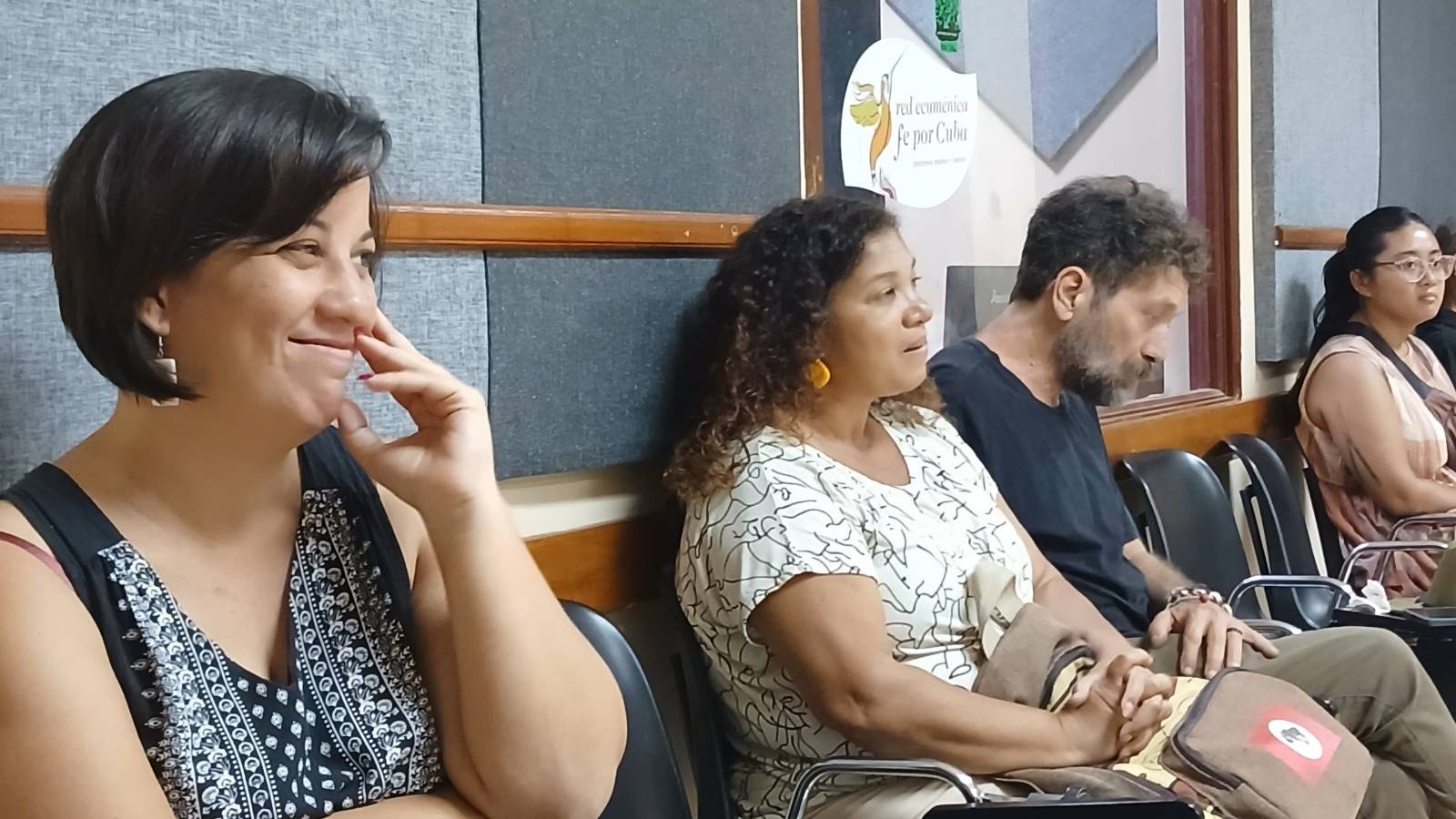
Other comments from participants at the screening:
Nivia from the MST said we need to share this documentary in other exchanges, in Latin America and the Caribbean, and shared how Brazil is trying to privatize healthcare.
Nivia connected with the “coming here we confirm we are not crazy” phrase from Terrell. This is a deep insight from the brigade – we know a for-profit system is not good for us, and we are not crazy to be seeking healthcare as a human right.
Dr. Wilfredo pointed out the contradiction of people fighting for something so fundamental as the right to dignified healthcare (the fight for life itself) in the middle of so much abundance.
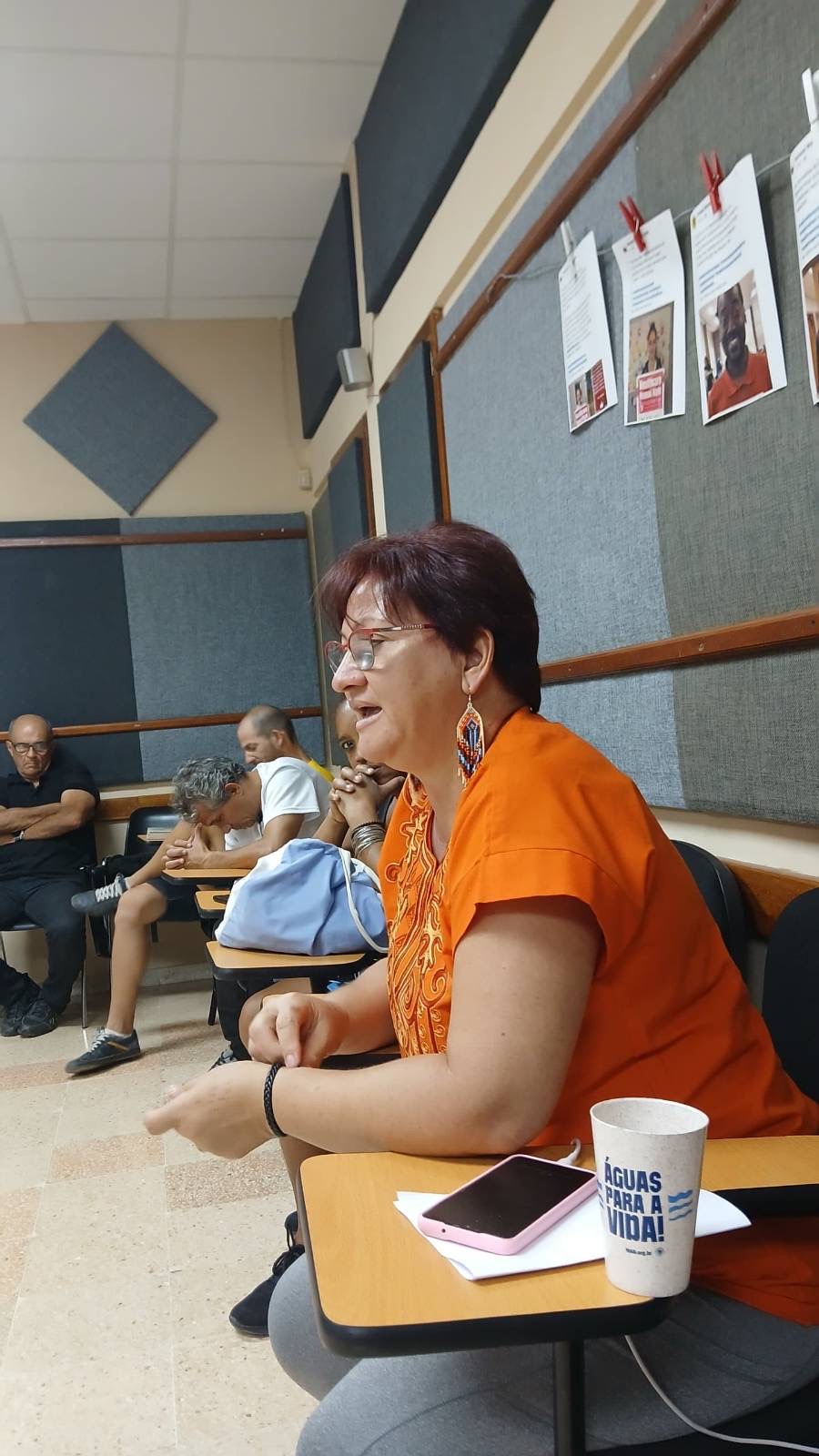
Dr Manuel Raices emphasized that wounds and ways to heal are not Republican or Democratic, communists or not, but they are human. “You cannot dispute data.”
Loyet commented on how surprised/impacted he felt by how visibly sick (physically and mentally) the U.S. society is. Natalia emphasized that we are organizing the most fundamental base, uniting the poor from all over the U.S.
Natalia commented: “Seeing Loyet of the CMLK and Dr. Wilfredo wear their NVMA shirts so proudly along with Stacey and I, reminded me of the red wave of “emotional thinking, and both raw and polished experiences” the brigade brought to the CMLK a year ago.
Our interpreter Edelso mentioned talking to Americans that he was translating for in Santiago de Cuba, and hearing about their healthcare stories and fears of going to the hospital.
The diversity of attendees and the depth of the post documentary discussion speaks to the strength of our relationship with the CMLK.
Why is the documentary important?
Stacey says “the documentary explains well not only how the human-centered Cuban healthcare system works, but also shows the values and humanness embodied by the doctors through their words. For example, Dr. Barbara Romero Sanchez shared how she sometimes tastes the food of families, or Dr. Raices expressing his sadness of how the blockade hurts the people in both Cuba and the U.S. in getting the care they need. And that’s powerful! Before I committed to studying abroad in Cuba, Joe (a brigade member) had mentioned to me Dr. Raices’s sentiments as a significant moment that helped him see how a society that puts people first also transforms the people in it. I also appreciated words from the brigade members in the documentary, who also give a glimpse of what we are fighting for as NVMA, especially for our Cuban audience that already understands the Cuban healthcare system.” Natalia added, “Having a tool to ‘show more than tell’ both the achievements and challenges of the healthcare system in Cuba, and the struggle for healthcare as a human right in the U.S, which can be shared in less than 20 minutes, is a tremendous win for our movement, IF we continue to use it to educate and agitate.”
How does this help build our leadership development?
Natalia commented on the commitment to build the movement of the poor & dispossessed, and clarity to stay on course despite busy schedules. Furthermore, she found this screening helped her build on her competence to speak & share about what we have in common, “because we are confronting the idea that says the poor from the north have little in common with our siblings in other parts of the world.” Stacey believes the event connected her more to the folks at the CMLK and Natalia, politically as well as socially. “It also felt like a good exercise to think through what to talk about for our CMLK audience based on the goals, especially how to make it clear what NVMA is fighting for, and how to show that solidarity between the global south and poor people in the U.S. is not only possible but makes a lot of sense.” And speaking about her healthcare story & the NVMA in Spanish helped build that competence. Stacey also shared that the Medicaid Mondays made the abstractions of the US health system more personal and allowed people to connect with our experiences and to connect with the idea that this is a movement led by the poor & dispossessed.
Photo credits: Alejandro Fernández Lezcano, Cuba’s Student Christian Movement
- Healthcare is a Human Right Campaign, Nonviolent Medicaid Army
- brigade, cuba, Healthcare, nonviolent medicaid army