
Frequently asked questions about Put People First! PA’s Campaign and Organizing plan and the arc of the year
By Nijmie D., Legislative & Research Team & Root Coordinator
How do we create our Campaign and Organizing Plan?
The specifics evolve a bit every year, because we are a learning organization and we make the struggle a school. However, many things are time-tested, based on our human rights principles, and they remain consistent. For instance, participation. The process to review and ratify the Campaign and Organizing Plan is an important part of our internal democracy. We make sure that every active member is invited to review a draft plan, and contribute questions, ideas, suggestions and challenges to the plan and its feasibility. Another practice that remains consistent is the organization of the plan around the components of our organizing model: the Class Struggle (our campaign), the Class Organization (our structure), and the Classroom (our study process). Under the Class Struggle fall our campaign pillars: Build the Nonviolent Medicaid Army, Expose and Target Profiteers, Hold All Powerholders Accountable, and a new pillar: Shift the Narrative. This year for the first time, we piloted a 3-year Campaign and Organizing Plan: 2025-2027. Additionally, this year is the first time that the Roots Collective as a whole drafted the plan.
Are the phases of the year connected? If so, how?
Definitely! Like the Nonviolent Medicaid Army nationally, we tend to think of our year as an “arc” with each phase building on the next.
In the winter season in the early part of the year, we study, train and prepare – with activities like
- Landscape Assessment, where we dig into the political, economic and social conditions of the counties where we organized. We share information about what we know from our own experience, we ask others, and we also do research.
- Training: In 2025, Put People First! PA collaborated with the PA Poor People’s Campaign on a Holding Powerholders Accountable series focused on understanding how things work in Harrisburg and why.
- The Winter Study (a six week course on key topics) for active Healthcare Rights Committee (HRC) and Team members (and sometimes focused on people coordinating now or in the future) in collaboration with the National Nonviolent Medicaid Army.
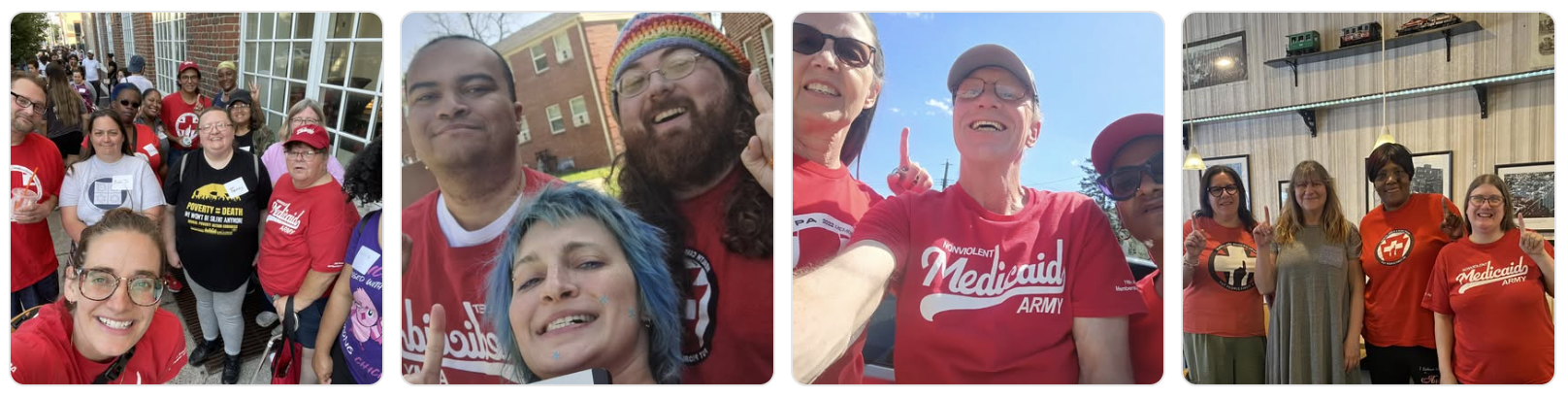
In the spring and summer we move from research, training and study and reflection to on the ground organizing solidly and simultaneously in multiple places across our 5 regional Healthcare Rights Committees. We focus on connecting with our base of those on or excluded from Medicaid. Each Healthcare Rights Committee makes a plan to do a regular public base building event or Project of Survival once a month or more. We also conduct our summer study, or Solidarity School, with the NVMA.
The months between April and September are when we come into contact with hundreds and even thousands of people in our communities, letting them know there is a movement to abolish poverty led by the poor that they can not only be a part of, but also help to lead! The Landscape Assessment we conduct during the winter months guides us in planning our base building. The training and study keeps us connected to each other, strengthening the relationships which are necessary to engage in the struggle while also providing key information, insights, and lessons which help us to work smarter. We generally hold a New Member Orientation during the summer to welcome folks who have gone through the New Member Enlistment process to officially become active members!
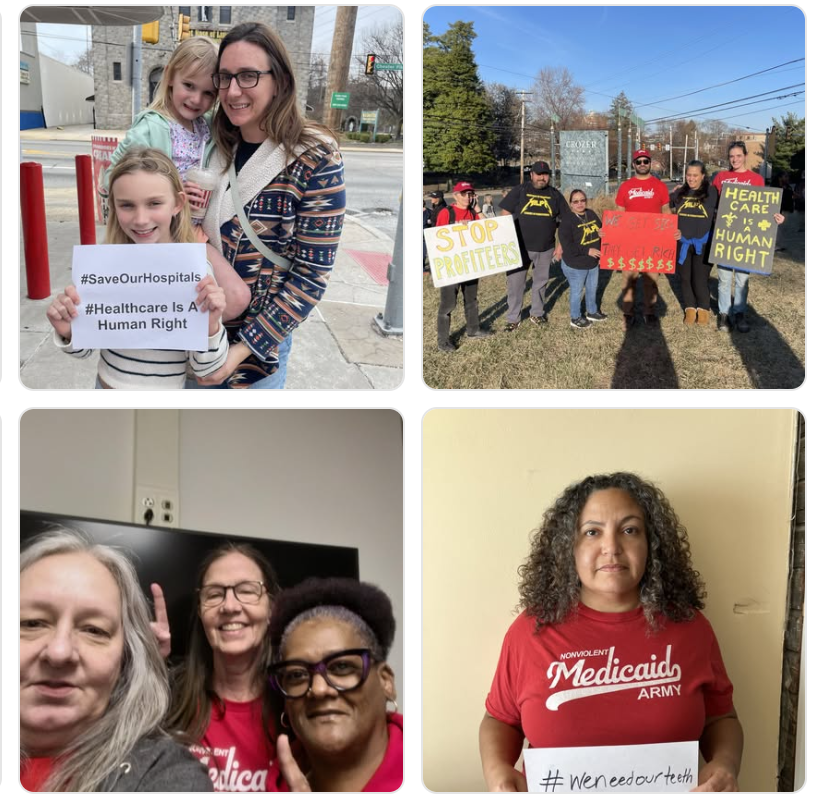
In the fall we take the energy and momentum of all the new, developing and experienced leaders and direct our efforts toward two major events: the National Day of Action with the Nonviolent Medicaid Army and the PA Membership Assembly. We also continue to build our base, incorporating new leaders into the process throughout the fall and winter!
What does the “arc” of the year mean and why does it matter?
The phases of the year we just talked about make up the arc of the year. It means that there is a pattern to how we do things, that we repeat, and improve over time. Each season brings some specific areas of focus, they are all connected, and each one builds on the next and then the cycle repeats. We try to get better and better each time, and we make the struggle a school, consistently debriefing and analyzing our own work and what we’re up against. Understanding the arc of the year can help us see that every meeting, every visit with a legislator, every 1 on 1, every People’s Clinic, every statewide call, every action is not an end in and of itself, but part of a larger plan. Understanding that helps us make the most of each opportunity.